
Scar Removal Singapore
Ice-pick, rolling, raised and surgical scars need different tools. At IN Eternity Clinic, Dr Sin Yong names each scar type before choosing TCA CROSS, subcision, laser or injections.
In short: scar removal in Singapore usually means scar improvement: laser, injections and minor procedures can make a scar flatter, smoother and less visible, but rarely erase it.
WhatsApp to Enquire →Key facts ↓Scar removal is treatment that remodels a scar to be flatter, softer and less noticeable; no scar removal treatment erases a scar. The treatment follows the type: TCA CROSS for ice-pick acne scars, subcision for rolling scars, fractional CO2 or RF microneedling for boxcar scars and stretch marks, steroid injections and silicone for keloids, and staged care for surgical scars. Dr Sin Yong identifies each scar type first.
Indented acne scars have their own page: acne scar treatment in Singapore, matched to ice-pick, boxcar and rolling scars.
Scar removal at a glance
| Scar removal at IN Eternity Clinic | |
|---|---|
| What it is | Treatment that remodels scars to be flatter, softer and less noticeable, matched to each scar type; scars are remodelled, not erased. |
| Used for | Ice-pick, boxcar and rolling acne scars, raised and keloid scars, surgical and injury scars, stretch marks, burn and chickenpox scars. |
| How it works | TCA CROSS for ice-pick scars, subcision for rolling scars, fractional CO₂ or RF microneedling for boxcar scars and stretch marks, steroid injections and silicone for raised scars. |
| Typical sessions | TCA CROSS typically three to six sessions; keloid injections often several; layered acne scar protocols one to three sessions with refinement afterwards. |
| Downtime | Varies with the method: a controlled injury, so redness, small crusts or swelling are expected for days after most treatments. |
| When results show | Change is gradual and judged on standardised photographs; scars keep remodelling for 12 to 18 months, sometimes up to two years. |
| Who should avoid or wait | Active acne, a tan, infection or cold sores can mean postponing; scars that need surgery, radiotherapy or a burns team are referred. |
| Who performs it | Medical Director Dr Sin Yong, who names each scar type and plans the sequence. |
Dr Sin Yong, Medical Director of IN Eternity Clinic, explains that most scar plans disappoint because one tool is asked to solve three problems; a pit, a band and a mark need three different answers, so each scar type is named before treatment is chosen.
On this page
- What is realistic: scars are remodelled, not removed: flatter, softer and less visible.
- Acne scars: TCA CROSS, subcision, fractional CO2, RF microneedling and collagen stimulation, matched to scar type.
- Raised scars: steroid injections and silicone first; excision only with an adjuvant.
- Surgical scars: silicone and sun protection early; laser and resurfacing once the scar matures.
- Marks vs scars: flat red or brown acne marks are not scars and are treated with gentler pigment care.
- Where: IN Eternity Clinic, 9 Scotts Road, #12-01 Pacific Plaza, Singapore.
- First-line for raised scars: international recommendations on scar management give silicone gel sheeting and steroid injections into the scar a primary role. (Source: Mustoe 2002) [1]
- Vitamin E: in 15 patients after skin surgery, topical vitamin E made no difference or worsened scars in 90 in 100 cases, and a third developed contact dermatitis. (Source: Baumann 1999) [10]
- Laser safety: of 961 fractional laser treatments, 73 (about 8 in 100) had a complication; acne-like breakouts and cold sores were the most frequent. (Source: Graber 2008) [8]
- Stretch mark creams: a review found only 11 studies testing topical products for stretch marks, too few for firm conclusions. (Source: Ud-Din 2016) [5]
- Why keloids are not simply cut out: recurrence after surgical excision alone has been reported in up to every case in some series. (Source: Gold 2020) [11]
Can scars be removed completely?
Not in the sense most people hope. Once the dermis has healed with scar tissue, its collagen never returns to the pattern of uninjured skin. What treatment can do is remodel the scar so that it is flatter or shallower, softer, closer in colour to the surrounding skin and much harder to notice. “Scar removal” is the phrase people search for; “scar revision” is closer to what actually happens.
How much change is possible depends on the type of scar, its depth, its age, where it sits and how your skin heals. Two scars that look alike in a photograph may need entirely different treatments. That is why the first step at IN Eternity Clinic is naming each type present, and why this page is a map that points to the detailed page for each.
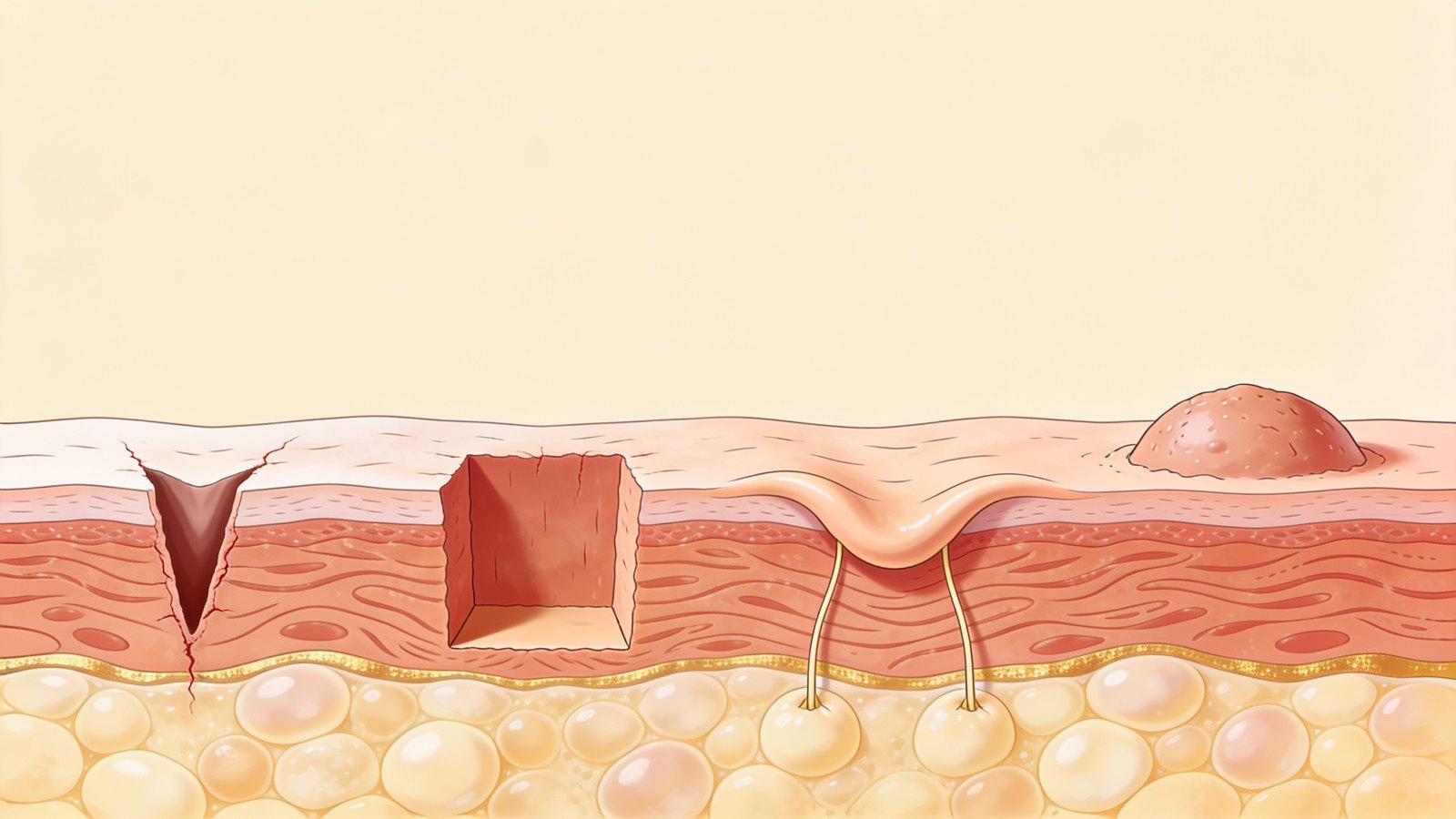
What type of scar do you have, and what treats it?
Scars fall into a few broad groups. The table matches each to the options used at IN Eternity Clinic and to the page that explains them in detail.
| Scar type | What it is | Options at IN Eternity | Read more |
|---|---|---|---|
| Ice-pick acne scars | Narrow, deep pits | TCA CROSS, then fractional CO2 to blend | TCA CROSS |
| Boxcar acne scars | Broader dips with steep edges | Fractional CO2 (S3), RF microneedling, TCA CROSS for narrow ones | Acne scar treatment |
| Rolling acne scars | Soft waves tethered by fibrous bands | Subcision, then resurfacing and collagen stimulation | Subcision |
| Mixed, moderate to severe acne scars | Several types together | Layered plan in one protocol | 4D Scar Reconstruction |
| Keloid and hypertrophic scars | Raised scars from excess collagen | Steroid injection, silicone, selected laser; referral for excision with adjuvant | Keloid treatment |
| Surgical and injury scars | Lines or patches after wounds | Wait for maturity, silicone, laser for redness and texture | Surgical scars |
| Stretch marks | Dermal scars from rapid stretching | Fractional laser, RF microneedling | Stretch marks |
| Red or brown acne marks | Pigment or vessels, not true scars | Gentle pigment laser, time, sun protection | Acne marks treatment in Singapore |
If your concern is on the back or chest, where skin is thicker and raised scars are more common, see back acne scar treatment. For scarring after tattoo removal, including scars that were already in the tattoo, see the dedicated guide.
Acne scar removal: ice-pick, boxcar and rolling scars
Acne scars are the commonest reason people in Singapore look for scar removal, and they are rarely one type. Inflammation deep in a follicle destroys collagen; if the repair falls short, a dip forms whose shape depends on how the damage spread. Narrow, deep ice-pick scars need treatment inside the shaft. Steep-edged boxcar scars need their edges softened and their floors raised. Rolling scars are pulled down by fibrous bands that must be released before resurfacing can help.
That is why a single laser, however strong, usually leaves some scars untouched. At IN Eternity Clinic the tools are matched to the types: TCA CROSS for ice-pick scars, subcision for tethered scars, fractional CO2 on the DEKA Tetra Pro for edges and texture, RF microneedling where a lower pigment risk matters, and collagen stimulation where volume is lost. Active acne is settled first, because new spots in freshly treated skin create new marks. The full approach is on acne scar treatment in Singapore.
Surgical and injury scars: when should treatment start?
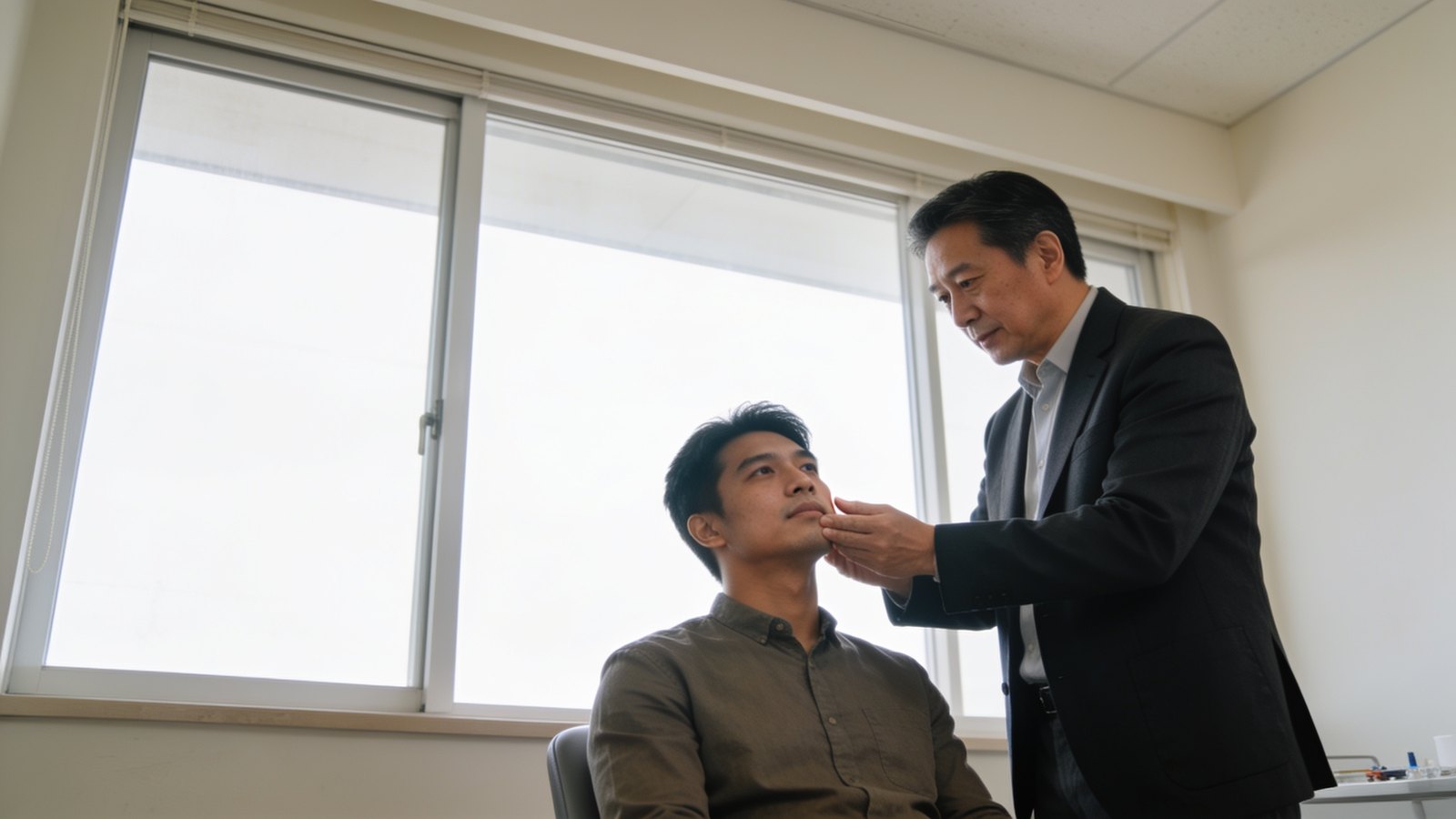
A new scar keeps remodelling on its own for twelve to eighteen months. In the first weeks it is often red, raised and firm; most soften and fade substantially without help. Treatment is therefore staged by the scar’s age.
- Weeks after the wound closes: silicone gel or sheets, sun protection, and taping where tension is high. These are simple and well supported for prevention.
- Months 2–6: if a scar is thickening, itching or staying very red, early injection or laser to calm redness may be considered.
- After maturity: fractional resurfacing to soften texture and blend edges, and treatment of any lingering pigment.
Intervening too aggressively on an immature scar can be counterproductive, and a scar that is widening across a joint or contracting may need a surgical opinion instead. See surgical and trauma scars.
Keloid removal and raised scars
Raised scars are handled differently from indented ones. A hypertrophic scar stays within the wound and often settles with time; a keloid grows beyond it and tends to return. The usual first step for both is a series of steroid injections into the scar, every four to six weeks, with silicone in between. Laser is added once the scar is flatter. Cutting a keloid out on its own carries a high chance of recurrence, so excision is combined with an adjuvant and may be referred to a hospital team.
Earlobe keloids after piercing and chest or shoulder keloids after acne are the commonest in Singapore. The detail, including prevention, is on keloid and hypertrophic scar treatment.
“Most scar plans disappoint because one tool is asked to solve three problems. A pit, a band and a mark need three different answers.”
Stretch mark removal: red marks and white marks
Stretch marks are scars in the dermis, formed when skin stretches faster than its collagen and elastin can adapt, as in pregnancy, growth spurts, weight change or muscle gain. Early marks (striae rubrae) are red or purple and still active; mature marks (striae albae) are white, thin and settled.
Red marks generally respond better, because the tissue is still remodelling. Fractional lasers and RF microneedling create controlled injury in the dermis so that new collagen forms; they can make marks narrower, flatter and closer in texture to the surrounding skin, but white marks rarely regain normal colour. Creams help comfort and may help early marks a little; they do not reach mature striae. See stretch mark treatment and pregnancy stretch marks.
Burn scars and chickenpox scars
Chickenpox scars are usually round, indented scars that behave like boxcar or ice-pick acne scars, and are treated in a similar way, with TCA CROSS, subcision or resurfacing chosen for each scar’s shape.
Burn scars vary from flat, discoloured patches to thick, tight scars that restrict movement. Small, mature burn scars on the face or limbs may be softened with fractional laser and their colour evened over a course. Large burns, scars that contract across joints, and those still actively thickening belong with a hospital burns or plastic surgery team, and Dr Sin Yong will say so where that is the better route.
Acne marks are not scars: red and brown marks after acne
Many people who ask about scar removal have marks rather than scars. Brown marks are post-inflammatory hyperpigmentation, common in skin types III to V; red or purple marks are small vessels that stayed dilated after a spot. Neither has a change in texture: run a finger over them and the skin is smooth.
Marks usually fade over months by themselves, faster with daily sunscreen and, where needed, gentle pigment laser such as laser toning or pico laser. Treating marks with an aggressive resurfacing laser meant for scars can make pigment worse. Marks and scars often sit side by side, and they are planned separately. See acne marks treatment in Singapore.

How scar treatment is planned at IN Eternity Clinic
- Assessment by the doctor. Dr Sin Yong examines each area in side lighting, stretches the skin to check for tethering, and records the scar types present.
- Standardised photographs. Taken in the same light at each visit, because scar change is gradual and easy to misjudge in a mirror.
- Sequencing. Active acne is settled first; release and depth work usually come before surface work; pigment is treated separately.
- Asian skin. Settings, spacing and aftercare are planned around the risk of post-inflammatory hyperpigmentation, which is lowered rather than removed.
- Honest limits. If a scar needs surgery, radiotherapy or a burns team, you will be told and referred.
Your scar treatment day, step by step
The steps vary with the scar, but most treatment days at IN Eternity Clinic follow the same shape.
- Review with Dr Sin Yong. Scar types are confirmed, healing since the last visit is checked, and active acne, a tan, infection or cold sores can mean postponing.
- Preparation. Cleansing and standard photographs. Numbing cream before laser or RF microneedling, local anaesthetic for subcision, and usually numbing cream only for injections into raised scars.
- The treatment. Matched to the scar: TCA CROSS inside ice-pick scars, subcision under rolling scars, fractional CO2 on the DEKA Tetra Pro or RF microneedling for texture, and injections into raised scars. Several can be combined in one visit for mixed acne scarring.
- Straight after. Cooling, ointment or a light dressing and written aftercare. Lasered skin feels like sunburn for the rest of the day.
- The next days. About a week of crusting after CO2 or TCA CROSS, one to two weeks of bruising after subcision, and tenderness for a day or two after injections.
- Review. At four to eight weeks, photographs are compared in the same light and the next step is planned.
Scars after surgery are timed differently; see surgical and trauma scars.
How many scar removal sessions are needed, and what do results look like over time?
The number of sessions depends on the scar type and severity, and is adjusted to your response.
| Stage | What usually happens |
|---|---|
| First visit | Scar types named in side lighting, tethering checked, standardised photographs taken |
| Sequencing | Active acne settled first; release and depth work before surface work; pigment treated separately |
| Course | TCA CROSS typically three to six sessions; keloid injections often several; layered acne scar protocols one to three sessions with refinement |
| Between sessions | Change builds gradually and is judged on photographs in the same light |
| 12 to 18 months | Scars keep remodelling, sometimes up to two years; new scars are treated gently, mature scars more actively |
Who is scar removal not suitable for, or when should it wait?
Most scars can be improved, but timing and the right team matter.
- Active acne, a tan, infection or cold sores in the area: treatment is postponed, because new spots or irritation in freshly treated skin create new marks.
- Scars that need surgery, radiotherapy or a burns team: you are told and referred.
- Keloid-prone skin: any controlled injury can, rarely, trigger a raised scar, so methods are chosen with care.
- Red or brown marks after acne: these are not scars and are treated as pigment or redness instead.
Side effects and risks of scar treatment
Every scar treatment works by causing a controlled injury, so some reaction is expected. Reviews of fractional laser describe the main complications (Graber et al., 2008; Metelitsa and Alster, 2010), and pigment change is the one that matters most in Singapore skin (Davis and Callender, 2010).
Common and expected
- Redness, swelling and tenderness for a few days.
- Crusting or flaking for about a week after laser or TCA CROSS.
- Bruising for one to two weeks after subcision.
- Tenderness for a day or two after injections into raised scars.
Uncommon
- Post-inflammatory hyperpigmentation in the weeks after a session.
- Prolonged redness, lighter patches, infection or a cold sore flare.
- A firm lump after subcision, usually softening over weeks.
- Thinning or a dip after injections into a raised scar.
- Rarely, a raised scar worsening or a new keloid in keloid-prone skin.
When to contact the clinic
- Pain or swelling that is getting worse after the third day.
- Pus, spreading redness or a fever.
- A patch that darkens as it heals.
- A raised scar that starts to grow quickly.
WhatsApp the clinic on +65 8815 3008, ideally with a photograph, or call during opening hours; if you are unwell or the problem is severe out of hours, go to a GP or an emergency department. How the main acne scar tools compare is set out in CO2 vs RF microneedling vs pico for acne scars.
What affects the cost of scar removal in Singapore?
Cost depends on the scar types present, the area involved, how many sessions are needed and how many methods are combined. A few ice-pick scars treated with TCA CROSS is a very different plan from a full-face layered protocol for mixed scarring, or a course of injections for a keloid. At IN Eternity Clinic the plan and its cost are set out after assessment, before anything is agreed, and the consultation fee is waived with any medical treatment. See acne scar removal cost for the factors in more detail.
At IN Eternity Clinic a consultation fee applies, and it is waived if you go ahead with any medical treatment; the fee is S$120. See fees.
What should you avoid doing to a healing scar?
Avoid sun on the scar, picking scabs, stretching the wound, untested home remedies and smoking; each prolongs the inflammation that thickens and darkens scars.
| Habit | Why it matters | Better instead |
|---|---|---|
| Sun on a new scar | UV darkens healing skin, especially in skin types III to V | Cover it, then use sunscreen daily for a year |
| Picking scabs | Reopens the wound and deepens the injury | Leave scabs to lift; keep the area moist with a bland ointment |
| Stretching the wound early | Tension widens scars, particularly on the chest, shoulders and joints | Taping or silicone sheets where tension is high |
| Vitamin E oil and home remedies | Little evidence of benefit; allergy and irritation are common | Silicone gel or sheets once the wound has closed |
| Smoking | Slows healing and blood supply | Stop or cut down around any procedure |
| Treating too hard, too early | Aggressive treatment of an immature scar can inflame it | Staged care as the scar matures |
Raised or itchy scars are covered in keloid removal and indented acne scars in acne scar treatment in Singapore.
Can a Caesarean section scar be improved?
Yes, usually: once it has matured, a Caesarean scar can often be made flatter, paler and less tight, and raised or itchy parts are treated early with silicone or injections.
A low Caesarean scar is planned like other surgical scars: silicone and sun protection while it heals, injections if a section thickens or itches, and fractional resurfacing to soften texture once mature. A fold of skin above the scar is a body-contour change rather than part of the scar, and is discussed separately; see after pregnancy.
Scars that pull, restrict movement or sit across a joint may need a surgical revision opinion, and Dr Sin Yong will say when that is the better route.
White scars and pale marks: can the colour come back?
Pale scars rarely regain full colour, because pigment cells in scar tissue are reduced; treatment aims to blend the edge and texture so the contrast is less noticeable.
Fractional resurfacing can soften the border and surface of a white scar, and some people see slight repigmentation at the edges, but results vary and are partial. Avoiding a tan on the surrounding skin also reduces the contrast. Pale patches after a previous laser or peel are assessed differently, because they are pigment changes rather than scars.
How a surgical scar remodels, and why timing matters
Wound healing lays down collagen in a disorganised pattern. Over the following months the scar remodels, but the fibre orientation never returns to that of uninjured skin, so the realistic aim is a scar that is flatter, paler, softer and less noticeable rather than absent. A scar less than several months old is often still remodelling on its own, and intervening too early can be counterproductive.
Fractional laser works with this process: it treats the skin in narrow columns of controlled heat and leaves untreated skin between them, so the surface heals quickly while the scar is remodelled over the following months (Manstein et al., 2004).
Comfort during treatment, injectables for scars and combining
Is scar treatment painful?
Most scar treatments feel like a prickling or heat. Numbing cream is applied for lasers, RF microneedling and peels, and local anaesthetic is used for subcision, punch techniques and some injections. Discomfort usually settles within hours. Tell the doctor if you are anxious about pain so the plan can include more numbing.
Can injectable treatments help scars?
Yes. Steroid injections soften and flatten raised scars and keloids. Hyaluronic acid filler or a collagen stimulator can lift some depressed scars, often after subcision releases them. Skin boosters may improve the texture of the surrounding skin. The scar type decides which injection, if any, is suitable.
Can different scar treatments be combined in one session?
Often yes. Subcision, TCA CROSS, laser and RF microneedling can be combined on the same day for mixed acne scars, because each targets a different scar type. Combining reduces the number of visits but increases downtime. The doctor plans which steps are done together and which are spaced apart.
Frequently asked questions
What is the best treatment for surgical scars?
Early silicone and sun protection; then fractional laser or vascular laser for redness and texture, and injections if the scar thickens. Timing matters: the first year is the window.
What types of scars are there?
The main groups are indented acne scars (ice-pick, boxcar and rolling), raised scars (hypertrophic scars, which stay within the wound, and keloids, which grow beyond it), surgical and injury scars, stretch marks, and burn and chickenpox scars. Flat red or brown acne marks are colour rather than true scars. Each type needs a different approach, so it is named before treatment is chosen.
How does laser scar removal work?
Fractional lasers such as the DEKA Tetra Pro CO2 create controlled micro-injuries in the dermis so the scar heals with remodelled collagen, softening edges and texture. Laser rarely works alone: ice-pick scars usually need TCA CROSS and tethered scars subcision, while raised scars are flattened with steroid injections first. Scars are remodelled, not erased, and results vary.
How can I tell an acne scar from an acne mark?
Look in side light and run a finger over the area. A mark is flat colour: brown post-inflammatory hyperpigmentation or red dilated vessels, with smooth skin. A scar changes the contour, as a dip, pit or raised bump. Marks usually fade over months with sunscreen and gentle care, while scars need remodelling, and the two are often planned separately.
Can stretch marks be removed?
They can be improved but not removed. Stretch marks are scars in the dermis. Early red or purple marks generally respond better because the tissue is still remodelling. Fractional laser and RF microneedling can make marks narrower, flatter and closer in texture to the surrounding skin, but white marks rarely regain normal colour. Creams have limited evidence.
What is the downtime after scar removal?
It varies with the method, because each treatment is a controlled injury. Lasered skin feels like sunburn for the rest of the day, and redness, swelling and tenderness last a few days. Expect about a week of crusting after CO2 or TCA CROSS, one to two weeks of bruising after subcision, and tenderness for a day or two after injections into raised scars. Review follows at four to eight weeks.
Can scars be removed permanently?
Scars can be remodelled, not erased. Treatment makes them flatter or shallower, softer and less noticeable, and the change from collagen remodelling is long-lasting, but the skin never returns exactly to how it was before the injury. Raised scars such as keloids can also return.
What is the most effective scar removal treatment?
There is no single one, because scar types differ. Ice-pick scars respond to TCA CROSS, rolling scars to subcision, boxcar scars to resurfacing, and keloids to injections. Most people with acne scars need a combination matched to the types present.
How long after surgery can I treat a scar?
Silicone and sun protection can start once the wound has closed. Laser or injections may be considered from a few months if a scar is thickening or staying very red. Resurfacing for texture is usually done once the scar has matured, often after six to twelve months.
Can laser remove acne scars?
Laser, especially fractional CO2, can soften scar edges and improve texture, and is a central part of many plans. It rarely reaches the base of deep ice-pick scars or releases tethered rolling scars on its own, which is why it is combined with TCA CROSS and subcision.
Do scar creams work?
Silicone gels help prevent raised scars and soften early ones. Most other creams improve comfort and hydration but do not change the structure of an established indented scar, a mature stretch mark or a keloid.
Is scar removal suitable for darker or Asian skin?
Yes, with care. The main risk is post-inflammatory hyperpigmentation, so settings, the choice between laser and RF microneedling, session spacing and sun protection are planned around your skin type. The risk is lowered, not removed, and is discussed at assessment.
How many sessions does scar treatment take?
It depends on the type and severity. TCA CROSS is typically three to six sessions; keloid injections often several; layered acne scar protocols one to three sessions with refinement afterwards. The number is set after assessment and adjusted to your response.
Can old scars be improved, or only new ones?
Both. New scars are often easier to influence because they are still remodelling, which is why silicone and early care matter after surgery. Older scars can still be remodelled with resurfacing, subcision or TCA CROSS, because treatment starts a fresh healing response in the dermis. The age of a scar matters less than its type, depth and tethering.
Does scar removal leave a new scar?
Resurfacing, TCA CROSS and subcision work through tiny controlled injuries that heal without a new visible scar in most people. Punch excision and surgical revision do leave a fine line, which is the trade for removing a deep pit or a wide scar. Rarely, any procedure can heal with a raised scar in keloid-prone skin, which is why your history is checked first.
Can scars on the body be treated as well as the face?
Yes. Back and chest acne scars, surgical scars, stretch marks and injury scars on the limbs are all treated, though skin on the trunk and limbs is thicker, heals more slowly and forms raised scars more readily. Settings and spacing are adjusted. See back acne scar treatment for the trunk.
Is scar treatment covered by insurance or MediSave?
Usually not when it is aesthetic. Coverage depends on whether a treatment is medically necessary and on your scheme and insurer, and scars that restrict movement or follow certain injuries may be assessed differently. The clinic can explain what applies to you; see MediSave and insurance claims.
What is the difference between scar revision and scar removal?
Scar removal is the phrase most people search for; scar revision describes what actually happens. Treatment changes a scar’s shape, depth, colour and texture so that it is less noticeable, but scar tissue does not return to the pattern of uninjured skin. A plan that promises complete removal deserves caution.
Does vitamin E help scars?
The evidence says it rarely does. In a study of 15 people after skin surgery, topical vitamin E made no difference or worsened scars in nine of ten cases, and a third developed an allergic rash. Silicone gel or sheets, sun protection and leaving the wound alone have better support while a scar heals.
How long do scars take to fade?
Most scars keep changing for 12 to 18 months, sometimes up to two years: red and firm at first, then flatter and paler. Treatment can speed or improve the change but works better when timed to the scar’s stage, which is why new scars are usually treated gently and mature scars more actively.
Can scars come back after treatment?
Improvement in an indented scar from remodelling is usually long-lasting, although ageing skin can make scars look deeper again over years. Raised scars and keloids are different: they can grow back, particularly after removal by cutting alone, which is why keloids are treated with injections and an adjuvant and followed up.
Should I see a doctor or a plastic surgery team about my scar?
Most cosmetic scars, from acne scars to mature surgical scars and stretch marks, can be improved in a doctor-led aesthetic clinic. Scars that restrict movement, contract across a joint, follow large burns or need cutting out and re-stitching belong with a plastic surgery team, and Dr Sin Yong will refer where that is the better route.
Can a keloid be treated with laser alone?
Usually not. Keloids tend to need a combination, often starting with injections to flatten them, and they carry a real risk of returning. Laser may be added to help colour and texture, with close follow-up.
How much does scar removal cost in Singapore?
It depends on the scar type and the method: injections for raised scars are priced per visit, laser and RF microneedling per session, and subcision or excision per procedure, with most scars needing a short course. Clinic prices are confirmed at the consultation rather than listed here; see the acne scar treatment cost guide for what moves the figure.
Book an assessment
IN Eternity Clinic, 9 Scotts Road, #12-01 Pacific Plaza, Singapore 228210. By appointment with Medical Director Dr Sin Yong. Monday to Saturday, 11am to 8pm. WhatsApp or call +65 8815 3008. The consultation fee is waived with any medical treatment.
International KOL — CLASSYS · HIRONIC · DEKA · ALMA · FOTONA · LUTRONIC
References
- Mustoe TA, Cooter RD, Gold MH, et al. International clinical recommendations on scar management. Plast Reconstr Surg 2002;110(2):560-571. doi:10.1097/00006534-200208000-00031
- Jacob CI, Dover JS, Kaminer MS. Acne scarring: a classification system and review of treatment options. J Am Acad Dermatol 2001;45(1):109-117. doi:10.1067/mjd.2001.113451
- Fabbrocini G, Annunziata MC, D'Arco V, et al. Acne scars: pathogenesis, classification and treatment. Dermatol Res Pract 2010;2010:893080. doi:10.1155/2010/893080
- Ogawa R. Keloid and hypertrophic scars are the result of chronic inflammation in the reticular dermis. Int J Mol Sci 2017;18(3):606. doi:10.3390/ijms18030606
- Ud-Din S, McGeorge D, Bayat A. Topical management of striae distensae (stretch marks): prevention and therapy of striae rubrae and albae. J Eur Acad Dermatol Venereol 2016;30(2):211-222 (online 2015). doi:10.1111/jdv.13223
- Davis EC, Callender VD. Postinflammatory hyperpigmentation: a review of the epidemiology, clinical features, and treatment options in skin of color. J Clin Aesthet Dermatol 2010;3(7):20-31. PMID 20725554
- Singapore Medical Council. Guidelines on Aesthetic Practices for Doctors (2016 edition). healthprofessionals.gov.sg/smc
- Graber EM, Tanzi EL, Alster TS. Side effects and complications of fractional laser photothermolysis: experience with 961 treatments. Dermatol Surg 2008;34(3):301-307. doi:10.1097/00042728-200803000-00003
- Metelitsa AI, Alster TS. Fractionated laser skin resurfacing treatment complications: a review. Dermatol Surg 2010;36(3):299-306. doi:10.1111/j.1524-4725.2009.01434.x
- Baumann LS, Spencer J. The effects of topical vitamin E on the cosmetic appearance of scars. Dermatol Surg 1999;25(4):311-315. doi:10.1046/j.1524-4725.1999.08223.x
- Gold MH, Nestor MS, Berman B, Goldberg DJ. Assessing keloid recurrence following surgical excision and radiation. Burns Trauma 2020;8:tkaa031. doi:10.1093/burnst/tkaa031
- Manstein D, Herron GS, Sink RK, Tanner H, Anderson RR. Fractional photothermolysis: a new concept for cutaneous remodeling using microscopic patterns of thermal injury. Lasers Surg Med 2004;34(5):426-438. doi:10.1002/lsm.20048
These sources describe mechanisms and general evidence. They are not a promise of any individual result; suitability is decided at an in-person assessment.