Skip to content
Acne Scar Removal Singapore · Pimple Scar Treatment · 4D Scar Reconstruction · Subcision · S3 Resurfacing Laser · Dr Sin Yong

4D Scar Reconstruction

4D Scar Reconstruction — Smooth, Rebuilt

4D Scar Reconstruction is IN Eternity Clinic’s layered protocol for mixed rolling, boxcar and ice-pick acne scars, planned across surface, depth, tethering and volume by Medical Director Dr Sin Yong. For every option, see acne scar treatment in Singapore.

4 Dimensions
Addressed
All Scar Types
Protocol
DEKA KOL
Dr Sin Yong
Scar-Type
Matched Plan
In short

4D Scar Reconstruction is IN Eternity Clinic’s layered protocol for mixed acne scars. Instead of one laser, it plans four things together: surface texture (CO2 point-shots and fractional passes), dermal depth, tethering (subcision) and lost volume (Radiesse, with TCA CROSS for ice-pick scars). It suits mixed atrophic scarring once acne is controlled; scars are remodelled, not erased.

Reviewed by Dr Sin Yong, Medical Director, IN Eternity Clinic · Updated
What the research says
  • In fractional laser treatment of Asian patients, high-energy, low-density settings were linked with less post-inflammatory pigmentation (7.1%) than low-energy, high-density settings (12.4%), so density is kept low for darker skin (Lasers Surg Med 2007)
Figures taken from the published abstracts, checked against PubMed · Reviewed by Dr Sin Yong, Medical Director ·
At a glance

4D Scar Reconstruction at a glance

4D Scar Reconstruction at a glance: a summary of this page, not a personal plan. Details are confirmed at assessment.
What it isIN Eternity Clinic’s layered protocol for mixed acne scars, planned across surface, depth, tethering and volume.
Used forMixed atrophic acne scarring: rolling, boxcar and ice-pick scars side by side, often with tethering and lost volume.
How it worksCO2 point-shots and fractional passes (S3 Resurfacing), subcision to release tethered scars, Radiesse for lost volume and TCA CROSS for ice-pick scars, sequenced in one plan.
Typical sessionsUsually three to six sessions, six to eight weeks apart, with lighter refinement afterwards where needed.
DowntimeAbout five to seven days of scabbing; bruising over released scars for one to two weeks; redness fades over two to four weeks.
When results showChange builds across sessions and continues for three to six months after the last one, as collagen remodels.
Who should avoid or waitActive acne, recent oral vitamin A acne tablets, raised (hypertrophic or keloid) scars and a keloid tendency are deferred or planned differently.
Who performs itPlanned and performed by Medical Director Dr Sin Yong.

Dr Sin Yong, Medical Director of IN Eternity Clinic, explains that mixed scars respond more fully when surface, depth, tethering and volume are planned together, because a laser pass alone leaves tethered and hollow scars untouched; scars are remodelled, not erased.

Assessed and planned by Dr Sin Yong, Medical Director · MBBS (NUS) · MRCS (Edinburgh) · MSc Aesthetic Medicine (London) · MSc Practical Dermatology (Cardiff) · Professional Diploma in Obstetrics & Gynaecology (RCPI) · Designated DEKA Centre of Excellence
4 Dimensions
Addressed
All Scar Types
Protocol
DEKA KOL
Dr Sin Yong
Scar-Type
Matched Plan
About This Treatment

Addressing All Four Dimensions of Scar Architecture

Acne scars tend to respond more fully when all four architectural dimensions of scarring are planned together: surface texture (the visible irregularity), dermal depth (the vertical tissue deficit), subcutaneous tethering (the fibrous bands pulling the scar base down), and volumetric deficit (the lost tissue volume within the scar). No single treatment addresses all four at once — which is why single-method plans often give partial results.

The 4D Scar Reconstruction protocol, designed by Dr Sin Yong, achieves this through specialised subcision (releasing fibrous scar bands), Radiesse (a collagen-stimulating agent), point-shot ablations targeting individual pits, and fractional ablation — all performed in a single coordinated session. The sequence matters: subcision releases the tethering before laser energy adds structural collagen above.
The 4D Protocol — Four Simultaneous Dimensions

01
D1 — Surface Texture (Point-Shot & Fractional Ablation)
Precision point-shot ablations target individual scar pits directly, followed by fractional ablation across the treatment zone — stimulating intense collagen remodelling to progressively smooth surface textural irregularity.
02
D2 — Dermal Depth (Collagen Stimulation)
Deep collagen stimulation gradually fills the vertical tissue deficit within the scar — raising the scar floor progressively over multiple sessions.
03
D3 — Subcutaneous Tethering (Subcision)
Subcision releases the fibrous bands tethering the scar base to deeper tissue — allowing the scar floor to rise before laser resurfacing adds structural collagen.
04
D4 — Volumetric Deficit (TCA Cross / Radiesse)
TCA Cross addresses icepick scar volumes with chemical stimulation. Radiesse — a collagen-stimulating agent — is injected beneath released scar tissue to restore volumetric deficit while simultaneously triggering the body's own collagen production. This combination of support and collagen stimulation is why it is used here after subcision.

What to Expect

Sessions & Spacing

Plans typically run 3–6 sessions, depending on severity, spaced 6–8 weeks apart, with lighter refinement afterwards where needed. Change builds across sessions because collagen is remodelled, not just filled; the number is set after assessment.

Downtime

5–7 days of scabbing following treatment, and 7–14 days of possible bruising from the subcision component. Most patients are socially presentable after 7–10 days. Redness gradually fades over 2–4 weeks as the skin heals and remodels.

Degree of Improvement

How far scars change varies with their type, depth and how your skin heals, so no percentage is promised. The protocol plans texture, depth, tethering and volume together, and progress is reviewed with standardised photographs.

Further Refinement

For residual superficial scarring following the 4D protocol, Dr Sin Yong transitions to S3 Resurfacing Laser and FSX Laser (Flawless Smooth Skin) — optimised for finer surface refinement once the deeper structural components have been addressed.

Frequently Asked Questions

Standard laser resurfacing addresses surface texture only (one dimension). 4D Scar Reconstruction simultaneously addresses surface texture, dermal depth, fibrous tethering and volumetric deficit — all four architectural dimensions of the scar.
Typically 3–6 sessions, depending on severity, spaced six to eight weeks apart, with lighter refinement afterwards where needed. The number depends on scar depth and type and is set after assessment.
5–7 days of scabbing following treatment, and 7–14 days of possible bruising. Redness, mild swelling and scabbing are expected and resolve progressively. Most patients are socially presentable after 7–10 days.
Rolling scars, boxcar scars, icepick scars, hypertrophic scars, post-surgical scars and stretch marks — each using the most appropriate component of the 4D protocol.
Significant improvement is visible from session 2 onwards. Final results continue developing for 3–6 months after the final session.
The 4D Scar Reconstruction protocol starts with a consultation at IN Eternity Clinic; the fee is waived with any medical treatment. Treatment pricing depends on the extent of scarring, number of dimensions addressed and number of sessions required — Dr Sin Yong will provide a personalised quote at consultation. The number of sessions depends on scar depth and type and is set after assessment.

Most patients feel warmth or brief deep pulses as energy is delivered, with settings adjusted for comfort. Any sensation is momentary and passes as each area is completed. What to expect is explained beforehand at IN Eternity Clinic.

Results from 4D Scar Reconstruction develop over the months following treatment as collagen renews, and are commonly maintained with periodic sessions. The interval depends on your baseline and rate of change, and is planned individually.

Deep and severe scars generally need more than resurfacing — a combination that rebuilds the scarred tissue at depth, such as the 4D Scar Reconstruction protocol at IN Eternity Clinic, pairing depth-reaching laser with subcision, TCA CROSS and collagen stimulation. What is realistic depends on the scarring and is discussed honestly at assessment.

The Four Dimensions Explained

A laser pass on its own mainly works on the surface and upper dermis, leaving tethering and lost volume untouched. That is a common reason repeated laser sessions give less change than expected.

Dimension 1 — Surface Texture: Irregular pitting and roughness. Treated with S3 Resurfacing Laser fractional ablation.

Dimension 2 — Dermal Depth: The vertical tissue deficit inside the scar. Treated with point-shots and collagen stimulation over sessions.

Dimension 3 — Fibrous Tethering: Subcutaneous bands anchoring rolling scars. Treated with subcision to release the tethering.

Dimension 4 — Volume Deficit: Tissue lost beneath released scars, and the narrow shafts of ice-pick scars. Treated with Radiesse under released scars and TCA CROSS inside ice-pick scars. Leftover red or brown marks are treated separately with pigment lasers.

Treatment Modalities

S3 Resurfacing Laser (DEKA) — Ablates microthermal zones triggering wound healing with new collagen deposition. Precise calibration of ablation depth and density per scar type and skin tone.

Subcision — Fine needle or cannula mechanically severs fibrous bands beneath rolling and tethered scars, allowing them to rise toward the surface. A haematoma forms beneath, acting as a natural spacer preventing rebinding.

TCA CROSS — Highly concentrated trichloroacetic acid applied precisely to icepick and narrow boxcar scars, triggering reconstruction of the scar channel. Particularly suited to icepick scars unresponsive to laser alone.

Collagen Stimulating Agent Post-Subcision — Radiesse (calcium hydroxylapatite) is injected beneath the released scar tissue — stimulating the body's own collagen production while providing immediate volumetric support. Unlike standard HA fillers or poly-L-lactic acid, Radiesse delivers both structural lift and long-term biological collagen stimulation, which is why it is used here after subcision.

Realistic Expectations

No scar treatment erases scars. The aim of 4D Scar Reconstruction is a smoother, more even surface; how much change is possible depends on scar grade, type and healing, and is discussed honestly at assessment. Sessions are usually spaced 6–8 weeks apart.

Photography is performed under standardised lighting at every session to track objective progress. Dr Sin Yong reviews this with each patient and adjusts the protocol based on documented response. The time between sessions matters as much as the sessions themselves — each treatment initiates a wound-healing response that must complete before the next begins.

Comfort

Does it hurt? Comfort and numbing

4D Scar Reconstruction combines several steps in one visit, and each feels different, so comfort is planned step by step. A numbing cream is applied to the treatment area for about 45 to 60 minutes beforehand. For subcision, Dr Sin Yong also injects local anaesthetic under the scars being released. That injection stings for a few seconds and then leaves the area numb, so the release itself is felt mostly as pressure and a faint tugging rather than sharp pain.

The laser point-shots and fractional pass feel hot and prickly, with cooled air directed at the skin between passes. TCA CROSS is dabbed into individual ice-pick scars with a fine applicator and causes a brief sting that settles within a minute or two. Where a collagen-stimulating injectable is placed after subcision, it goes into skin that is already numb. Afterwards the face feels like a moderate sunburn for a day or two, and subcised areas can stay tender a little longer. Simple painkillers are usually enough, and you can ask for a pause at any point.

Myths and facts

Common myths, answered

  • Myth: One strong laser session can clear deep acne scars.
    Fact: A laser works on the surface and the dermis. Rolling scars held down by fibrous strands need release, and ice-pick scars need treatment inside the shaft, which is why the protocol combines steps and why change builds across sessions.
  • Myth: Acne scars fade on their own if you wait long enough.
    Fact: Red and brown marks after acne often fade over months. Depressed scars are a structural change in the dermis and do not fill in by themselves.
  • Myth: Scar treatment is unsuitable for Asian skin.
    Fact: Asian skin carries a higher risk of post-inflammatory hyperpigmentation, so settings, spacing and aftercare are chosen around it. The risk is lowered rather than removed, and it is discussed openly at assessment.
  • Myth: Filler alone can fix acne scars.
    Fact: Filler can support volume under a released scar, but a scar still tethered from below, or with an uneven surface, also needs subcision and resurfacing.
“Four dimensions means four questions about every scar: how rough, how deep, how tethered and how much volume is missing. A laser answers only the first.”
— Dr Sin Yong, Medical Director, IN Eternity Clinic
Suitability

Who 4D Scar Reconstruction suits, and who it does not

The protocol is designed for mixed atrophic scarring: faces where rolling, boxcar and ice-pick scars sit side by side, often with tethering and some loss of volume. It is usually less suitable, or deferred, when:

  • acne is still active, because new inflammation creates new scars and raises the risk of infection; see acne treatment;
  • oral vitamin A acne tablets have been taken recently; timing follows current guidance, set out in laser after acne tablets;
  • the scars are raised (hypertrophic or keloid), which are flattened rather than resurfaced;
  • the concern is flat red or brown marks only, which are not scars and respond to simpler care;
  • scarring is shallow and uniform, where a single method such as RF microneedling or fractional CO2 laser may be enough.

Not every plan uses all four steps. The scar map decides which dimensions need treating; a face with mainly rolling scars may need subcision and resurfacing but no TCA CROSS, while scattered ice-pick scars may need TCA CROSS and point-shots only.

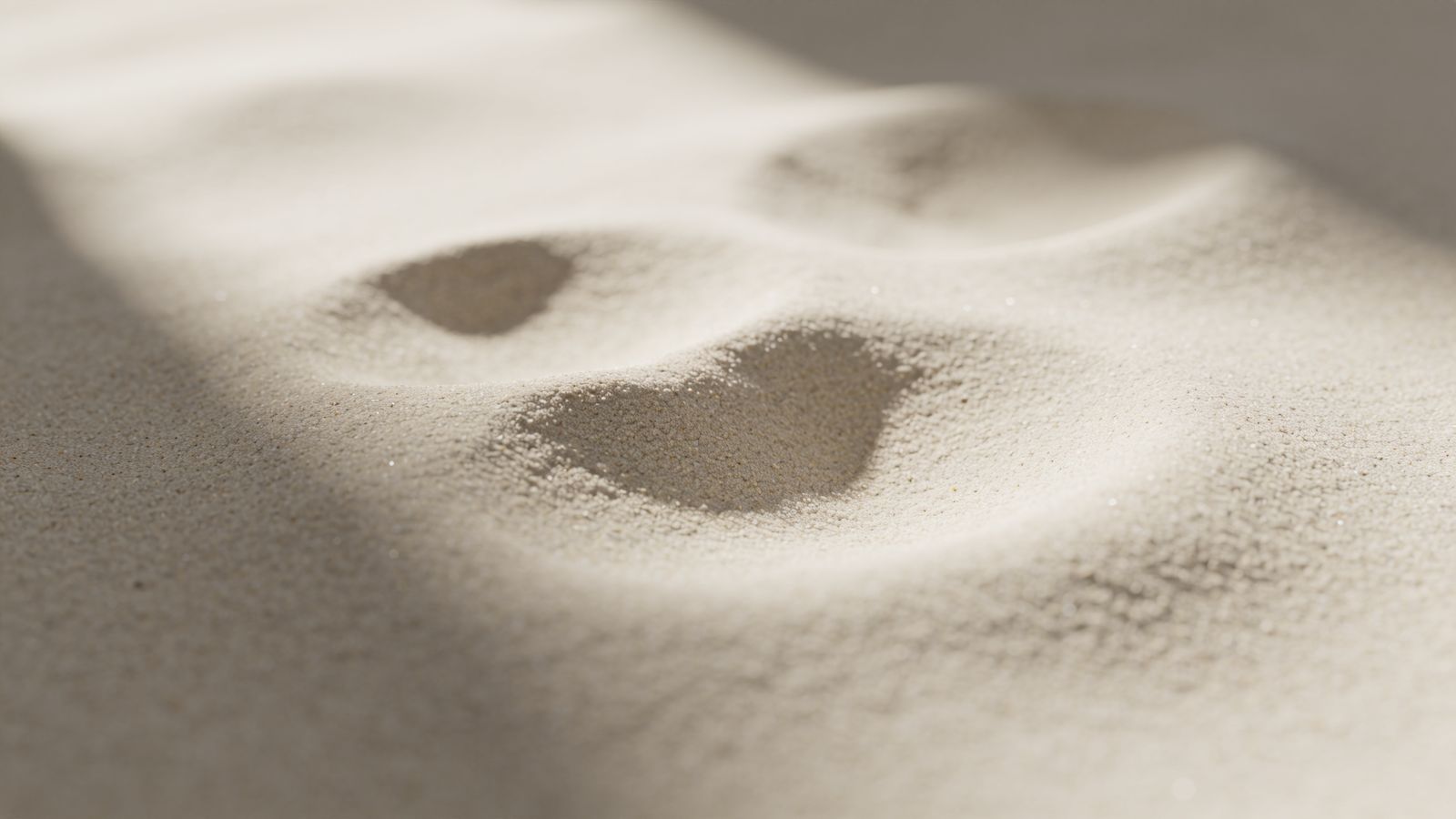
Shallow hollows in smooth sand under raking light, representing rolling acne scars – 4D scar reconstruction
Rolling scars show as soft hollows in side light; ice-pick and boxcar scars have sharper edges.
Planning

How a 4D Scar Reconstruction plan is built

At the first visit Dr Sin Yong examines the scars in flat and side light, takes standard photographs and maps each area by scar type. The plan then lists which steps each area needs and in what order. On treatment day, numbing cream is applied first; tethered scars are released by subcision under local anaesthetic, and the laser steps are placed after release so they work on a scar floor that can rise.

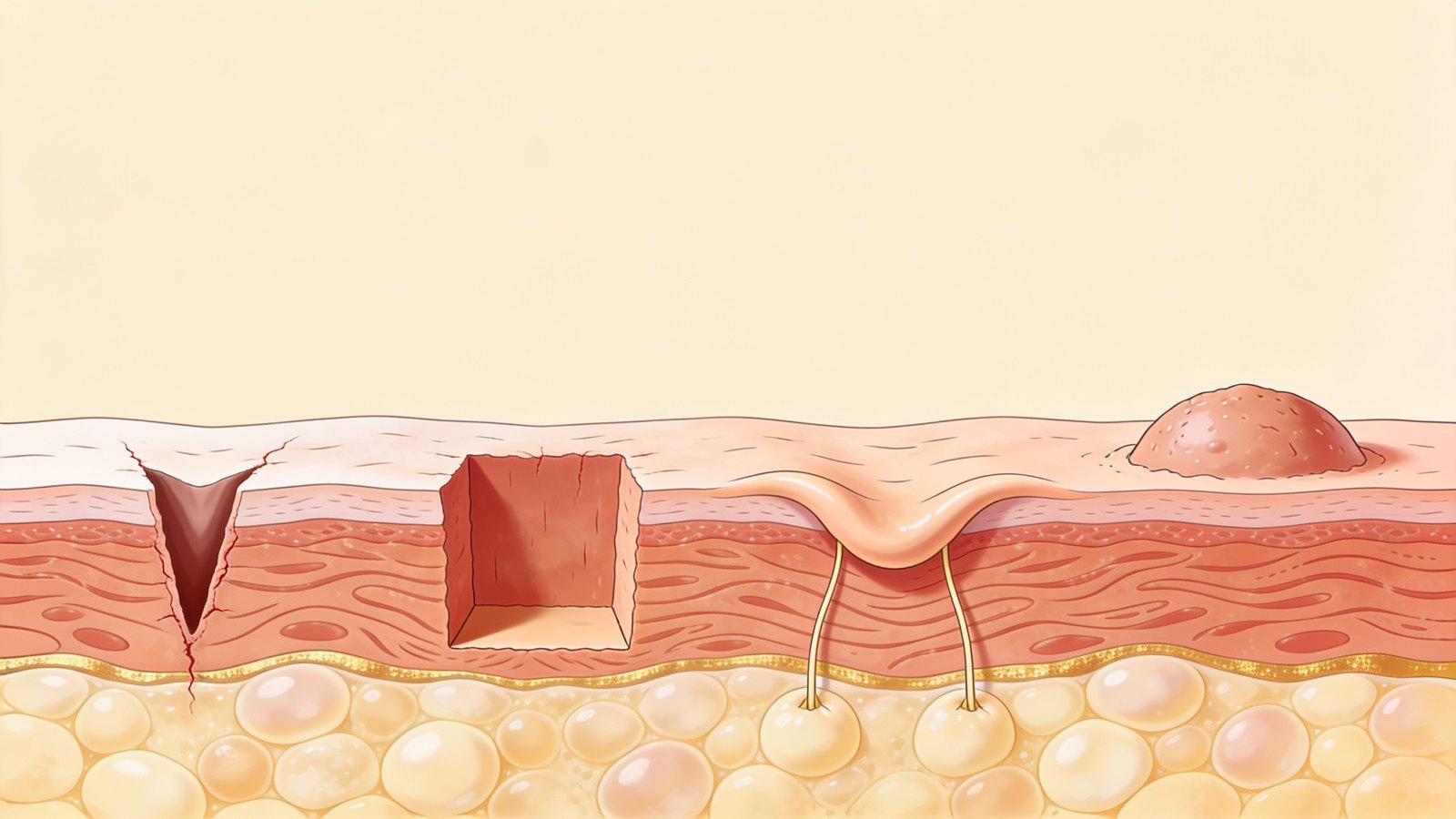
Acne scar types in a stylised skin cross-section: a narrow ice-pick pit, a flat-floored boxcar scar, a rolling scar tethered by fibrous bands, and a raised scar
The scar type decides the treatment. Illustration, not a patient photo.

Aftercare is written for each step: gentle cleansing and ointment while the laser columns heal, cool compresses for subcised areas, and strict sun protection, which matters more in Singapore’s year-round sun. Progress is reviewed at six to eight weeks against the baseline photographs, and the next session is adjusted to how each area responded.

How 4D Scar Reconstruction is done, step by step

  1. Map the scars. Each area is examined in flat and side light, photographed and mapped by scar type.
  2. Numb the skin. Numbing cream is applied for about 45 to 60 minutes; local anaesthetic is added where scars will be released.
  3. Release tethered scars. Subcision frees the fibrous bands under rolling scars.
  4. Resurface and treat pits. CO2 point-shots and fractional passes follow the release, with TCA CROSS for ice-pick scars and Radiesse where volume is lost.
  5. Review and repeat. Photographs are repeated at every session and the next step is adjusted to how the skin has healed.
Cost

What affects the cost of 4D Scar Reconstruction in Singapore

There is no single price for 4D Scar Reconstruction, because the protocol is assembled from the steps your scars need rather than sold as a fixed package. Two people with acne scars can need very different plans. The factors below decide the total. How the clinic’s fees work is explained on fees and consultation, and how the cost of each step adds up is explained in the acne scar removal cost guide.

What affects the costWhy it matters
Areas treatedBoth cheeks and the temples take more time, and often more product, than a small patch on one cheek.
Number of sessionsMixed scarring is treated as a course spaced weeks apart. The count is set after the scar map and reviewed against photographs.
Steps and devices usedEach dimension adds a step: subcision, TCA CROSS, point-shots and a fractional pass on the DEKA Tetra Pro, or RF microneedling where pigment risk is higher.
Product amountWhere Radiesse is placed under released scars, the amount needed for the hollows decides part of the cost.
Combination with other careAcne control, treatment of red or brown marks and later refinement with FSX laser are planned and priced separately.
Assessment findingsScar depth, tethering, skin type and pigment history decide how conservative each session must be, and so how many are needed.

At IN Eternity Clinic a consultation fee applies, and it is waived if you go ahead with any medical treatment; the fee is S$120.

Over time

What do 4D Scar Reconstruction results look like over time?

Change is gradual: most of the visible difference comes across the course and in the months after it, not after one session.

Typical pattern only; it varies between people and is reviewed at each visit. No result is promised.
StageWhat usually happens
First weekScabbing for about five to seven days; bruising and tenderness over released scars for one to two weeks.
Weeks two to fourRedness fades as the skin heals and remodels.
Across the courseUsually three to six sessions, six to eight weeks apart; change is often visible from the second session.
Three to six months after the last sessionCollagen keeps remodelling, so the clearest comparison is made with your first photographs.
LaterResults are commonly maintained with periodic sessions, planned individually.

Before a wedding or event: because of the scabbing and bruising above, sessions are usually planned well ahead of a date rather than in the weeks before it.

Safety

Side effects and risks of 4D Scar Reconstruction

Because the protocol combines several steps, its side effects are the sum of those steps. Most are expected parts of healing; a few are uncommon but worth knowing before you book. Reviews of fractional laser describe the same pattern of expected and uncommon effects (Graber et al., 2008).

Common and expected

  • Redness, swelling and a sunburnt, tight feeling for the first few days.
  • Fine crusting over lasered skin for about five to seven days, then pinkness that fades over weeks.
  • Bruising and tenderness over subcised areas for one to two weeks.
  • Small white, then dark, dots in scars treated with TCA CROSS, shedding in about a week.
  • Temporary lumpiness under released scars while swelling settles.

Uncommon

  • Post-inflammatory hyperpigmentation: a brown haze two to six weeks after a session, more likely in skin types III to V and after sun exposure (Chan et al., 2007).
  • Redness that lasts longer than a few weeks.
  • A firm lump under a subcised scar, which usually softens over weeks.
  • Infection, or a cold sore flare in people prone to them.
  • Rarely, a lighter patch, a widened scar or a raised scar, especially in people who form keloids.

When to contact the clinic

  • Pain, swelling or heat that is getting worse after the third day.
  • Yellow crusts, pus, spreading redness or a fever.
  • Clusters of small painful blisters, which can be a cold sore.
  • A patch that starts to darken in weeks two to six.
  • After an injectable, skin that turns pale or dusky, or any change in vision: call immediately.

WhatsApp the clinic on +65 8815 3008, ideally with a photograph, or call during opening hours; if you are unwell or the problem is severe out of hours, go to a GP or an emergency department. How these risks are planned around in Asian skin is covered under treatment for darker skin tones.

Questions

More questions answered

Can I go back to work after 4D Scar Reconstruction?

Most people take several days away from work or meetings. Expect fine scabbing for about 5 to 7 days and possible bruising from subcision for up to two weeks; many feel comfortable being seen after 7 to 10 days, and make-up can usually go back on once the scabs have come away. Book a session at least two weeks before any important event.

Can I have scar treatment while I still get breakouts?

Active acne is usually brought under control first, because new inflamed spots in freshly treated skin add new marks and raise the risk of infection and pigmentation. Some oral acne medicines also change how skin heals, so the timing of a scar procedure after them is decided by Dr Sin Yong. An occasional mild spot does not always delay treatment; this is judged at assessment.

Will people notice I had something done?

During the first week, yes: the skin is red with fine scabs and there may be bruising. After that, most people simply look as if their skin is a little pink. Because collagen remodels gradually over the following months, friends tend to remark that your skin looks smoother rather than spotting that you had a procedure.

Do I need all four steps of 4D Scar Reconstruction?

Not always. The scar map decides which dimensions need treating. Mainly rolling scars may need subcision and resurfacing only, while scattered ice-pick scars may need TCA CROSS and point-shots. Dr Sin Yong explains which steps your scars need, and why, before anything is booked.

Is 4D Scar Reconstruction suitable for Asian skin?

Usually yes, with adjustments. Post-inflammatory hyperpigmentation is the main risk, so laser density, spacing between sessions, skin preparation and sun protection are planned around it. For some skin, subcision, TCA CROSS and RF microneedling are weighted more heavily than CO2.

When will I see change after 4D Scar Reconstruction?

Swelling and bruising settle over one to two weeks, which can briefly make scars look better or worse than they are. Collagen remodelling continues for months, so change is judged at review against standard photographs, usually from six to eight weeks onwards.

How is 4D Scar Reconstruction different from other acne scar treatments?

It is a way of combining treatments rather than a separate device. The individual steps (subcision, TCA CROSS, fractional CO2 and collagen stimulation) are described under acne scar treatment in Singapore; 4D Scar Reconstruction plans them together for mixed scarring.

Is 4D Scar Reconstruction worth it for mild acne scars?

Often it is more than mild scarring needs. For shallow, uniform scars, a single method such as RF microneedling or a fractional laser course may be enough. The layered protocol earns its place where rolling, boxcar and ice-pick scars sit together, often with tethering. How the types differ is set out on acne scars, and Dr Sin Yong says at assessment when a simpler plan fits better.

Can 4D Scar Reconstruction be done on the back or chest?

Parts of it can. Back skin is thicker, heals more slowly and forms raised scars more readily, so raised scars are flattened first and laser settings are kept conservative. Subcision and RF microneedling are often weighted more heavily on the trunk. The approach is described on back acne scar treatment, and suitability is decided once the scars are mapped.

Is punch excision part of 4D Scar Reconstruction?

It can be. Punch excision, elevation and grafting are offered at IN Eternity Clinic for scars too deep or steep-walled for other steps. Nowadays, though, S3 (SCAR3) resurfacing on the DEKA Tetra Pro is more often used for those scars, because in Dr Sin Yong’s experience it usually gives a smoother result. Whether a punch step is worth it for a particular scar is decided at assessment; see ice pick scar treatment.

What should I avoid before a 4D Scar Reconstruction session?

Usually: tanning and strong sun for a few weeks, exfoliating acids, scrubs and retinoid creams for about a week, and, where it is medically safe to pause them, supplements that thin the blood before subcision. Tell the clinic about any oral acne medicine, cold sores or keloids. Exact advice is given at assessment, because it depends on which steps your plan includes.

SY
Dr Sin Yong
MBBS (NUS, Singapore) · MRCS (Royal College of Surgeons, Edinburgh)
MSc Practical Dermatology (University of Cardiff, UK) · MSc Aesthetic Medicine (University of London)
Graduate Diploma Sports Medicine (Singapore)
International Key Opinion Leader — CLASSYS | HIRONIC | DEKA | ALMA | FOTONA | LUTRONIC

4D Scar Reconstruction is one pathway within acne scar treatment in Singapore, used where scarring is mixed; it combines resurfacing, subcision and collagen stimulation in one plan.

Where scars carry residual pigmentation, the DEKA TORO — a Q-Switched Nd:YAG with picosecond 785nm and nanosecond 1064nm and 532nm wavelengths — is used to brighten and tone, complementing the structural scar reconstruction for a smoother, more even result.

Considering 4D Scar Reconstruction? At IN Eternity Clinic on Orchard Road, every consultation begins with listening — never a treatment menu. Whether your interest is acne scar, fractional CO2 laser or CO2 laser, Medical Director Dr Sin Yong shapes a plan to your face, your skin and your life, for restoration that looks natural and timeless. Founded by AYA, IN Eternity Clinic pairs the care of a doctor-led aesthetic clinic in Singapore with genuine, unhurried care.

4D Scar Reconstruction Consultation

Structural scar remodelling, planned by Dr Sin Yong.

Book My Appointment

References

  1. Orentreich DS, Orentreich N. Subcutaneous incisionless (subcision) surgery for the correction of depressed scars and wrinkles. Dermatol Surg 1995;21(6):543-549. doi:10.1111/j.1524-4725.1995.tb00259.x
  2. Lee JB, Chung WG, Kwahck H, Lee KH. Focal treatment of acne scars with trichloroacetic acid: chemical reconstruction of skin scars method. Dermatol Surg 2002;28(11):1017-1021. doi:10.1046/j.1524-4725.2002.02095.x
  3. Chan HH, Manstein D, Yu CS, et al. The prevalence and risk factors of post-inflammatory hyperpigmentation after fractional resurfacing in Asians. Lasers Surg Med 2007;39(5):381-385. doi:10.1002/lsm.20512
  4. Graber EM, Tanzi EL, Alster TS. Side effects and complications of fractional laser photothermolysis: experience with 961 treatments. Dermatol Surg 2008;34(3):301-307. doi:10.1097/00042728-200803000-00003

These sources describe mechanisms and general evidence. They are not a promise of any individual result; suitability is decided at an in-person assessment.

WhatsApp us