Skip to content
Ultherapy Singapore · HIFU · FDA-Cleared · Skin Lifting · Collagen Stimulation · Dr Sin Yong

Ultherapy Singapore

Ultherapy — Seen, Then Lifted

Ultherapy at IN Eternity Clinic on Orchard Road: micro-focused ultrasound with live imaging for early laxity of the brow, jawline, under-chin and neck. Medical Director Dr Sin Yong explains what the treatment can and cannot do, how Ultherapy Prime differs from the original, and how it compares with HIFU and Thermage, before anything is planned. Ultherapy price depends on the areas and lines treated.

FDA
Cleared for Lifting
SMAS
Foundational Depth
2–3 mo
Peak Results
1–2
Sessions Typically
Assessed and planned by Dr Sin Yong, Medical Director · MBBS (NUS) · MRCS (Edinburgh) · MSc Aesthetic Medicine (London) · MSc Practical Dermatology (Cardiff) · Professional Diploma in Obstetrics & Gynaecology (RCPI) · Designated DEKA Centre of Excellence
In short · Doctor’s answer

Ultherapy is a non-surgical lift using micro-focused ultrasound with live imaging to place heat at set depths, including the SMAS; IN Eternity Clinic in Singapore offers it. Ultherapy in Singapore suits mild to moderate laxity of the brow, jaw and neck, and change builds over two to three months, usually after one session. Dr Sin Yong plans and places the lines himself, and after assessment may suggest an alternative such as VF Lift where your face calls for a different approach.

Key points
  • Sessions: Most Ultherapy plans are a single session reviewed at about three months; some people with more laxity have a second.
  • Recovery: Most people go back to work the same day; tenderness, mild swelling or small bruises can last a few days.
  • Comfort: The deeper lines feel like a deep ache or prickle, strongest over bone; numbing cream is applied and lines are paced with breaks.
  • Cost: Depends on the areas and the number of lines, with a written quote after assessment; the S$120 consultation fee is waived with any medical treatment.
  • Who treats you: Dr Sin Yong plans and places the lines.

Ultherapy Prime is the newer Ultherapy platform; like the original, it uses micro-focused ultrasound with real-time imaging, and who it suits, downtime and results are covered below. Results vary.

Answer by Dr Sin Yong, Medical Director, IN Eternity Clinic · Last reviewed
At a glance

Ultherapy at a glance

Ultherapy at a glance, summarised from this page. Sessions, downtime and suitability vary between people and are decided at assessment.
QuestionUltherapy
What it isA non-surgical lift using micro-focused ultrasound with live imaging (visualisation).
Used forMild to moderate laxity: an early jowl, a softening jawline, a heavy outer brow, and loosening under the chin, on the neck and décolletage.
How it worksEach transducer images the layers, then places a row of small heat points at one fixed depth, including the SMAS, prompting contraction and new collagen.
Typical sessionsMost plans are a single session, reviewed at about three months; some people with more laxity have a second.
DowntimeUsually back to work the same day; tenderness, mild swelling or small bruises for days.
When results showChange builds over two to three months, with improvement continuing up to about six months.
Who should avoid or waitHeavy excess skin, fullness that is mainly fat, or a very lean face; deferred in pregnancy or with active infection or acne in the area; planned around recent fillers or metal implants.
Who performs itDr Sin Yong, who plans and places the lines; after assessment he may also suggest an alternative such as VF Lift.

Dr Sin Yong, Medical Director of IN Eternity Clinic, explains that Ultherapy is for tissue that has started to loosen, not tissue that has gone, so a lean face or heavy skin needs a different plan.

Key facts · what the studies report
  • Brow lift: in a rater-blinded study of 35 people given focused ultrasound to the face and neck, masked raters judged about six in seven to have a clinically significant brow lift, averaging about 2 mm. (Source: Alam 2010) [2]
  • Asian skin: in 22 Korean patients treated once, nasolabial folds and jawlines improved in all, with more dermal collagen on biopsy. (Source: Suh 2011) [8]
  • Comfort and bruising: in 49 Chinese patients over 68 sessions, pain was rated severe in just over half of sessions and focal bruising occurred in up to a quarter; pigment change was seen twice. (Source: Chan 2011) [5]
  • Against radiofrequency: in a randomised split-face trial of 20 people, focused ultrasound with visualisation and monopolar radiofrequency both reduced face and neck laxity from day 30 to day 180, with no significant difference between them. (Source: Alhaddad 2019) [9]
  • Rare serious events: five cases of blistering, ulceration or deep swelling followed by atrophy after a single session were reported in a case series; the authors call them rare. (Source: Friedmann 2018) [6]
Figures describe study groups, not individual results; numbers were checked against each source on 27 October 2026. Reviewed by Dr Sin Yong, Medical Director, IN Eternity Clinic ·

Consultations in English and Mandarin (面诊可使用英语或华语). This page is also available in: 中文 · Bahasa Indonesia.

FDA
Cleared for Lifting
SMAS
Foundational Depth
2–3 mo
Peak Results
Minimal
Downtime
The Technology

How Ultherapy Lifts: Three Depths

Ultherapy delivers focused ultrasound energy at three depths, one transducer at a time: 4.5 mm (SMAS layer), 3.0 mm (deep dermis) and 1.5 mm (superficial dermis). At each depth small thermal coagulation points are created, triggering a wound-healing response that leads to tissue contraction and new collagen. Reaching the SMAS, the support layer addressed in a surgical facelift, is what lets it tighten deeper tissue rather than only the skin.

The Experience

Real-Time Visualisation

Ultherapy uses DeepSEE® ultrasound imaging to show the tissue layers before energy is placed, which helps confirm that each line is delivered at the intended depth and away from bone. Dr Sin Yong can show you the image during treatment so you can see which layer is being treated. Changes from day one to six months are set out in the Ultherapy results timeline.

Ultherapy treatment depths: focused ultrasound heat points at 1.5 mm (superficial dermis), 3.0 mm (deep dermis) and 4.5 mm (SMAS), checked on real-time ultrasound imaging
Ultherapy works one depth at a time, checked on the ultrasound image before each line. Simplified illustration, not to scale.

Areas Ultherapy Can Treat

Lower Face & Jowls

Lift descended tissue along the jawline and jowl area for improved jaw definition and reduced jowling.

Brow & Upper Face

Lift the lateral brow for a more refreshed, open-eyed appearance and address forehead skin laxity.

Neck & Décolletage

Tighten the neck and address crepey skin on the décolletage — areas where Ultherapy has specific FDA clearance.

Mid-Face

Address early mid-face descent by tightening the SMAS; lost volume needs a different approach.

Submental Area

Improve the neck-chin transition and address early submental laxity for a more defined profile.

Eye Area

Target fine lines and skin laxity around the eyes with the 1.5mm superficial transducer.

The Treatment Process

01

Consultation

Dr Sin Yong assesses your skin laxity, tissue quality and goals to determine whether Ultherapy alone or in combination with other treatments is optimal for you.

02

Preparation

Skin is cleansed. A topical anaesthetic is applied for comfort. Ultrasound gel is applied to the treatment area.

03

Treatment

Focused ultrasound energy is delivered using multiple transducers. Dr Sin Yong monitors depth and placement using real-time DeepSEE® imaging throughout.

04

Little Downtime

Treatment takes 60–90 minutes depending on the area treated. Most people return to normal activities the same day. Mild redness or tingling usually settles within hours.

SY
Dr Sin Yong
MBBS (NUS, Singapore) · MRCS (Royal College of Surgeons, Edinburgh)
MSc Practical Dermatology (University of Cardiff, UK) · MSc Aesthetic Medicine (University of London)
Graduate Diploma Sports Medicine (Singapore)
International Key Opinion Leader — CLASSYS | HIRONIC | DEKA | ALMA | FOTONA | LUTRONIC
Protocols Developed Time Freeze Laser LCLR® · VF Lift · RVR ProLift · S3 Resurfacing · FSX Laser · 4K Body Lift · G Lift · Luminescence Laser

Ultherapy is a widely used option for skin tightening in Singapore, using focused ultrasound to lift the SMAS layer for a natural, non-surgical result.

Considering Ultherapy in Singapore? At IN Eternity Clinic on Orchard Road, every consultation begins with listening — never a treatment menu. Whether your interest is Ultherapy prime or Ultherapy treatment, Medical Director Dr Sin Yong shapes a plan to your face, your skin and your life, for restoration that looks natural and timeless. Founded by AYA, IN Eternity Clinic pairs the care of a doctor-led aesthetic clinic in Singapore with genuine, unhurried care.

Who it suits

Who is Ultherapy suitable for — and who is it not?

It suits adults with mild to moderate laxity: an early jowl, a softening jawline, heaviness of the outer brow, or loosening under the chin and on the neck, with reasonable skin thickness. It is often used to hold a result for longer in people in their late 30s to 50s.

It is less suitable where there is heavy excess skin, where fullness is mainly fat, or where the face is already very lean, as deep energy may make it look thinner. It is deferred in pregnancy, with active infection or acne in the area, and is planned carefully around recent fillers or metal implants. Dr Sin Yong will say plainly if another option fits better.

Sessions

How many Ultherapy sessions are needed?

Most plans use a single session, reviewed at around three months with standardised photographs taken in the same light and position. Some people with more laxity benefit from a second session, but not before the first has had time to remodel. Maintenance is typically discussed at 12 to 18 months.

For how fees are worked out, read the Ultherapy cost guide; for how it compares, see Ultherapy vs Thermage vs HIFU and Ultherapy vs HIFU; and for a frank view of value, see is Ultherapy worth it?

From this page; line counts and depths are recorded on your plan.
SituationUsual planReview
Mild to moderate laxity, average facial fatA single sessionStandardised photographs at about three months
More laxityA second session, not before the first has remodelledPlanned after review
Lean or hollow faceUsed with caution, or another planVF Lift or volume restoration often considered
MaintenanceDiscussed at 12 to 18 monthsVaries between people
Ultherapy Prime Singapore

Ultherapy Prime in Singapore: what is new, and what is the same?

Searches for “Ultherapy Prime Singapore” have grown quickly, mostly from people trying to work out whether Prime is a different treatment, a stronger one, or simply a newer machine. According to its maker, Merz Aesthetics, Ultherapy Prime is the newest generation of the Ultherapy platform, launched in the United States in September 2024. The manufacturer describes a larger, brighter imaging display with faster image refresh, a newer operating system, revised ergonomics and quicker sessions. In November 2025 the US FDA cleared Prime for skin laxity on the arms and abdomen, in addition to the face, neck and décolletage uses of the original system. Merz has also said it will end support for the original platform in 2027, so clinics are likely to move to Prime over the next few years.

What has not changed is the treatment itself. Both generations deliver micro-focused ultrasound with visualisation: the same transducer images the layers and then places a line of small heat points at one fixed depth, 1.5 mm, 3.0 mm or 4.5 mm at the SMAS. The way tissue responds, the comfort measures, the recovery and the two-to-three-month timeline are the same. A sharper image can help the operator confirm contact and depth in thin areas such as the jawline and neck; it does not make collagen respond differently to the heat once it is placed.

Based on the manufacturer’s descriptions and US clearances. Not a ranking; suitability depends on your face.
Original UltherapyUltherapy Prime
EnergyMicro-focused ultrasoundMicro-focused ultrasound
Live imagingYesYes; larger, brighter display with faster refresh (manufacturer)
Facial depths1.5, 3.0 and 4.5 mm1.5, 3.0 and 4.5 mm
WorkflowEstablished platformNewer software; manufacturer reports quicker sessions
US-cleared areasBrow, under the chin, neck, décolletage linesThe same, plus arm and abdominal laxity (2025)
Head-to-head results dataNone publishedNone published

Does Ultherapy Prime give a better lift? There is no published head-to-head evidence that Prime lifts the face more than the original system. Results depend far more on whether your face suits focused ultrasound, how the lines and depths are planned, and realistic expectations agreed beforehand. Which Ultherapy system is used for your session is confirmed at consultation, and Dr Sin Yong will answer plainly if the generation matters to you.

Ultherapy Prime price in Singapore. Prices are set by the area and the number of lines rather than by the console, so the generation alone says little about cost.

At IN Eternity Clinic the plan and its cost follow the assessment, and a written quote is given before treatment; the consultation fee is S$120, waived with any medical treatment. A fuller comparison of the two generations is in Ultherapy vs Ultherapy Prime, and how the cost is built is in the Ultherapy cost guide.

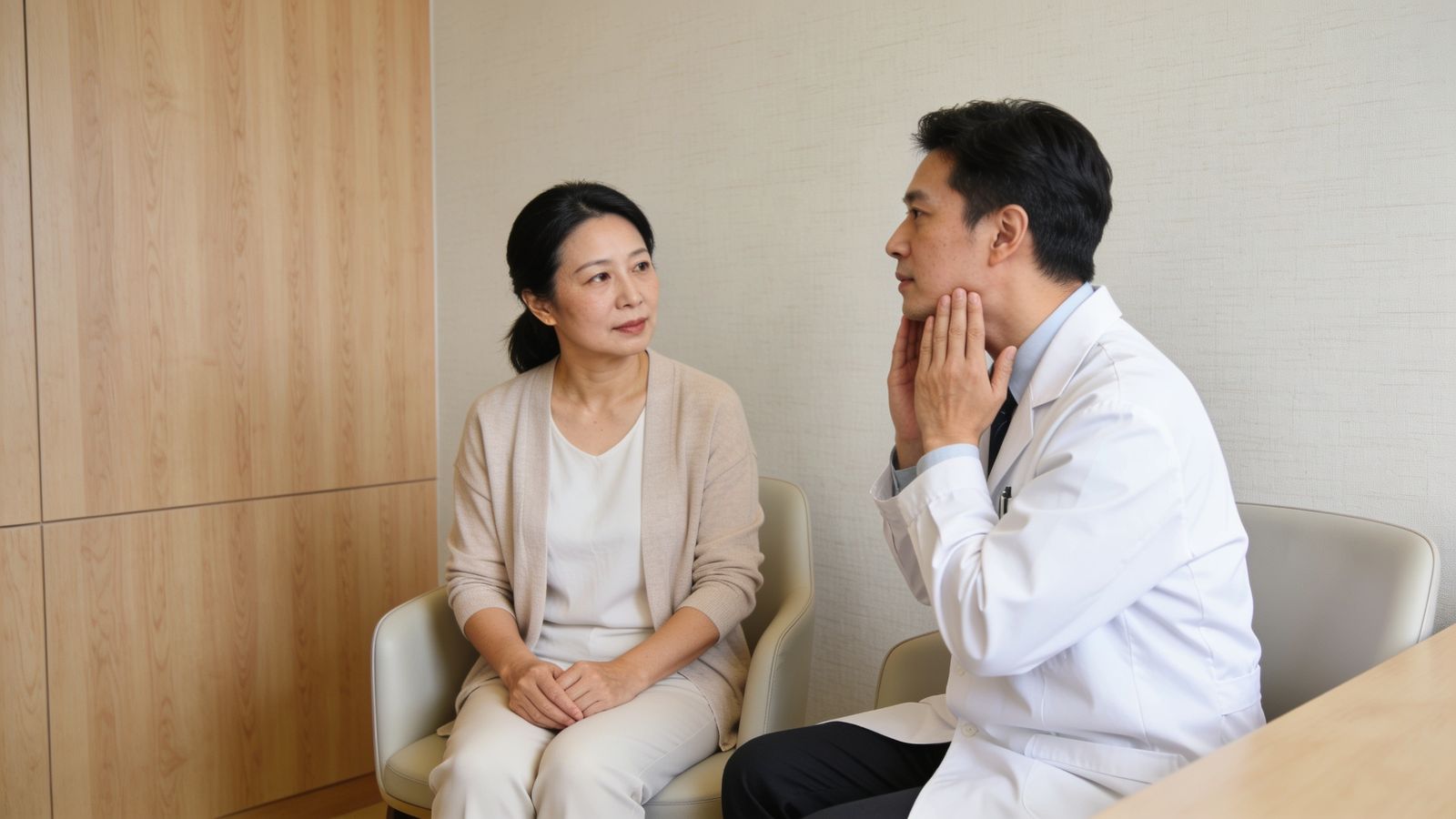
A woman in her forties with a natural jawline listening to a doctor during an Ultherapy consultation, both whole heads in frame (Ultherapy Prime) – Ultherapy price and plan discussion
Illustrative image. Not a patient of IN Eternity Clinic.
Comparison

Ultherapy vs HIFU vs Thermage: the short answer

Ultherapy is one branded form of focused ultrasound, distinguished by live imaging. HIFU is the wider category; at IN Eternity Clinic it is delivered on the CLASSYS Ultraformer MPT. Thermage FLX uses monopolar radiofrequency to heat the deep dermis more broadly.

UltherapyHIFU (Ultraformer MPT)Thermage FLX
EnergyMicro-focused ultrasoundHigh-intensity focused ultrasoundMonopolar radiofrequency
Live imagingYesNoNot applicable
Often chosen forEarly laxity where tissue thickness variesJawline, jowl, under-chin and brow laxityCrepey texture, mild laxity, eyelids
Change builds overTwo to three monthsTwo to three monthsThree to six months

The full side-by-side comparison, including depths and comfort, is on our HIFU Singapore page, and radiofrequency tightening is covered on Thermage FLX.

Recovery

Ultherapy downtime: what to plan for

Ultherapy leaves no wound, so most people go back to work the same day. What there is to plan around is tenderness and, occasionally, swelling or small bruises.

  • Work and make-up: usually the same day, once the gel has been cleaned off.
  • Exercise: light exercise the next day; avoid saunas, hot yoga and very strenuous sessions for a day or two if the face is swollen.
  • Other treatments: avoid facial massage, strong peels or other energy treatments on the same area for about a week unless they were planned together.
  • Events: allow at least a week for tenderness or faint marks to settle; the change itself takes two to three months.
  • Sun and travel: no special restriction from the treatment; daily sunscreen as usual.

Tell the clinic promptly about a blister, a raised line that does not fade within a few days, numbness that is spreading, or any change in your smile. These are uncommon, and they are reviewed rather than waited out.

A doctor assessing a patient’s jawline during a consultation about focused ultrasound lifting – Ultherapy treatment in Singapore
Illustrative image. Not a patient of IN Eternity Clinic.
Safety

Ultherapy side effects and risks

Ultherapy places heat beneath an intact surface, so most effects are mild and short-lived. In a safety study of focused ultrasound in Chinese patients, bruising was the most common effect and post-inflammatory hyperpigmentation occurred in a small number of cases (Chan 2011); a case series and review describe the uncommon complications below (Friedmann 2018).

  • Common and expected: pinkness and mild swelling for a few hours; tenderness when pressing on the jaw or neck for days to a few weeks; small bruises or faint raised lines.
  • Uncommon: temporary numbness in a small patch; nerve irritation that briefly weakens part of the smile and usually recovers over weeks; a small burn or blister; brown marks in darker skin; slight hollowing in a face that starts lean.
  • When to call the clinic: contact the clinic on +65 8815 3008 for a blister, a raised line that does not fade, numbness that is spreading, or any change in your smile.

How much it is felt during treatment is covered in is HIFU painful?.

Cost

How much does Ultherapy cost in Singapore, and what affects the price? What affects it

Ultherapy is priced by the plan for your face, so a meaningful figure follows assessment. A written quote is given before treatment, and the consultation fee is waived with any medical treatment.

FactorWhy it changes the cost
AreasBrow, lower face, full face, under-chin, neck and décolletage each need their own lines.
Number of linesSet by tissue thickness and laxity, zone by zone, rather than by a fixed package.
DepthsEach depth uses a separate transducer, so plans treating more layers take longer.
CombinationUltherapy is sometimes planned with fillers, skin boosters or a separate lifting protocol.
Review and maintenanceA review at about three months; maintenance is usually discussed at 12 to 18 months.

The Ultherapy cost guide explains each factor in more detail.

How consultation and treatment fees are handled is explained on our fees page. At IN Eternity Clinic a consultation fee applies, and it is waived if you go ahead with any medical treatment; the fee is S$120.

Published price ranges in Singapore. The table below summarises prices other Singapore clinics publish, as a guide to the market; it is not a quote. Your plan and cost are set at consultation (S$120, waived if you go ahead with treatment the same day).

Lowest to highest list price published on each clinic’s own website, read on 17 October 2026. Some prices exclude 9% GST. These are other clinics’ prices, shown as a market range; they are not IN Eternity Clinic’s prices.
Treatment variantPublished rangeNumber of clinicsSources
Ultherapy / Ultherapy PRIME (all published lines)S$1,800–S$4,500
(includes “from” prices)
8V Medical Aesthetics & Laser Clinic, SL Aesthetic Clinic, Sozo Aesthetic Clinic, Lux Medical Aesthetic Clinic, David Loh Aesthetics, Halley Medical Aesthetics, Illumia Medical Aesthetics, Bay Aesthetics Clinic
read 17 Oct 2026
Lower face with under-chin or upper neckS$2,520–S$2,800
(includes “from” prices)
2Lux Medical Aesthetic Clinic, David Loh Aesthetics
read 17 Oct 2026
Full face and neck (line count stated by two clinics)S$2,800–S$4,0003V Medical Aesthetics & Laser Clinic, Halley Medical Aesthetics, Bay Aesthetics Clinic
read 17 Oct 2026
Scope not stated (“from” or range)S$1,800–S$4,500
(includes “from” prices)
3SL Aesthetic Clinic, Sozo Aesthetic Clinic, Illumia Medical Aesthetics
read 17 Oct 2026
Planning

Ultherapy for Asian faces: what changes in planning?

Faces in Singapore often differ from the faces in much of the early Ultherapy research: a broader, flatter mid-face, thicker skin, and either more soft tissue over the jaw or very little. Two things follow. Line counts and depths are planned zone by zone rather than copied from a template. And the risk to watch is not pigment, because the surface is not heated and pigment change is uncommon, but hollowing in a lean face.

That is why fat and bone support are assessed before any lines are counted. Focused ultrasound has also been studied specifically in Asian skin, and that work is listed in the references below.

“Ultherapy is for tissue that has started to loosen, not tissue that has gone. If the face is lean or the skin is heavy, the honest answer is a different plan.”
— Dr Sin Yong, Medical Director, IN Eternity Clinic
Authenticity

How do I know my Ultherapy treatment is genuine?

Ask to see the live ultrasound image on the screen during treatment and the record of lines delivered; a genuine Ultherapy system images the tissue before each line is placed.

  • The screen shows a moving ultrasound image of the skin layers before each line; without imaging it is focused ultrasound, but not Ultherapy.
  • Each transducer is labelled by depth (1.5, 3.0 or 4.5 mm on the face) and is matched to the zone being treated.
  • A record of transducers and lines per zone is kept on your file, so a later session can be compared.
  • The system and transducers come from the manufacturer, Merz Aesthetics, through its authorised supply channel; it is reasonable to ask.
  • The person treating you can explain why each depth is used in each zone.

Ultherapy is a brand of micro-focused ultrasound with visualisation; HIFU on other devices uses the same physics without the image. The differences are set out on our HIFU Singapore page and in Ultherapy vs HIFU.

Evidence

What do the Ultherapy studies show, and what do they not show?

Studies show a modest, gradual lift and tightening after one session, with bruising and pain the commonest issues; they do not show how long results last for any one person.

Separate studies, not head-to-head comparisons of clinics or devices. Figures describe study groups, not individual results; checked against each source on 27 October 2026.
StudyWho was treatedWhat was found
Alam 201035 people, face and neckClinically significant brow lift in about six in seven; average about 2 mm
Suh 201122 Korean patients, one sessionFolds and jawlines improved in all; more dermal collagen on biopsy
Chan 201149 Chinese patients, skin types III–IVPain severe in just over half of sessions; bruising up to a quarter; pigment change twice
Alhaddad 201920 people, split faceFocused ultrasound and radiofrequency both improved laxity to six months, without a significant difference
Friedmann 2018Five case reportsRare blistering, ulceration and swelling that led to atrophy after one session

That is why the plan is framed in terms of what focused ultrasound can do for your laxity, and why, when the face is lean or the aim is more than a modest lift, Dr Sin Yong may discuss an alternative such as the VF Lift.

Who it may not suit

Suitability is decided at an in-person assessment with Dr Sin Yong. Treatment is usually deferred or an alternative is suggested in these situations:

  • Pregnancy or breastfeeding
  • Active infection or open wounds in the area
  • Implanted electronic devices or metal implants near the field
  • Skin excess that needs surgery rather than tightening
Questions

Frequently asked questions about Ultherapy

Is Ultherapy Prime really effective?

Ultherapy Prime uses the same micro-focused ultrasound with real-time imaging as the original system; its main change is speed and workflow. Studies of the technology report a measurable brow lift and jawline tightening in many patients, though less than a surgical facelift. Results build over two to three months and vary between people.

What are the downsides of Ultherapy?

Treatment can be uncomfortable, and the change is gradual, usually building over two to three months rather than appearing straight away. Temporary redness, swelling, tenderness or bruising are common; less often there are raised welts, numb patches or nerve irritation, which usually settle. It suits mild to moderate laxity, results vary, and it cannot replace surgery for heavy sagging.

How long do Ultherapy results last?

How long results last varies between people; a review is often suggested at around 12–18 months. Collagen stimulation continues after the treatment, and maintenance sessions help sustain the effect over time.

Should I choose Ultherapy or HIFU?

Both use focused ultrasound to tighten deeper layers. Ultherapy shows a live ultrasound image so each line is placed at a confirmed depth, while HIFU devices such as the Ultraformer MPT are often quicker and more comfortable. The choice depends on skin thickness, the areas treated, comfort and budget, and is made after the face is assessed.

How much does Ultherapy cost in Singapore, and what affects the price?

Ultherapy pricing in Singapore depends on the areas treated — full face, lower face, neck or brow — and the number of lines required. A tailored plan and its cost are discussed at consultation at IN Eternity Clinic rather than quoted as a fixed price, since the right coverage differs by face.

Is Ultherapy Prime better than Ultherapy?

Ultherapy Prime is the newer version of the same micro-focused ultrasound technology, with updated imaging and a redesigned handpiece intended to make treatment more comfortable and planning more precise. The lifting mechanism is the same, so results depend mainly on the plan and depths used rather than on the version.

How long does Ultherapy Prime treatment last?

A session usually takes 60 to 90 minutes depending on the areas treated. The lift builds over two to three months and is generally maintained for around a year or more before natural ageing shows again, at which point many people repeat it. Results vary between people.

Is Ultherapy worth the money?

Ultherapy can be worth it for early to moderate sagging of the brow, jawline, under-chin and neck in people who want no incisions. It uses ultrasound imaging so energy is placed at a chosen depth, and tightening builds over two to three months. It is not a substitute for a surgical facelift when skin is very loose, which is assessed before treatment.

Is Ultherapy painful?

Focused ultrasound at SMAS depth can cause transient discomfort during delivery. Dr Sin Yong uses an optimised protocol including topical anaesthesia and patient-paced treatment to maximise comfort throughout the session.

When will I see results from Ultherapy?

Some patients notice an immediate effect, but peak results develop over 2–3 months as new collagen forms and tissue remodelling progresses. Improvement continues for up to 6 months after treatment.

How is Ultherapy different from Thermage?

Ultherapy uses focused ultrasound with imaging to place heat at fixed depths, including the SMAS. Thermage FLX uses monopolar radiofrequency to heat the deep dermis more broadly, and suits crepey texture and mild laxity. Some faces benefit from one, some from both.

What age is right for Ultherapy?

There is no set age. It suits early to moderate laxity, which most often appears from the mid-30s onwards. In younger faces without laxity it adds little, and skin thickness and facial fat matter more than age.

Is Ulthera the same as Ultherapy?

Yes, in everyday use. Ulthera is the name of the system and Ultherapy is the treatment, and people search for both. It is micro-focused ultrasound with live imaging, so each line is checked on screen before heat is placed at set depths, including the SMAS. Whether it suits your laxity, or whether another lift fits better, is decided at assessment.

How much is Ultherapy Prime in Singapore?

Fees for Ultherapy, on the original or the newer Prime platform, depend on the areas treated and the number of lines planned for each, so clinics quote after assessment rather than as a fixed package. At IN Eternity Clinic, the S$120 consultation fee is waived when you go ahead with treatment. How fees are worked out is set out in the Ultherapy cost guide, and the two platforms are compared in Ultherapy vs Ultherapy Prime.

References

  1. Laubach HJ, Makin IRS, Barthe PG, Slayton MH, Manstein D. Intense focused ultrasound: evaluation of a new treatment modality for precise microcoagulation within the skin. Dermatol Surg 2008;34(5):727-734. doi:10.1111/j.1524-4725.2008.34196.x
  2. Alam M, White LE, Martin N, et al. Ultrasound tightening of facial and neck skin: a rater-blinded prospective cohort study. J Am Acad Dermatol 2010;62(2):262-269. doi:10.1016/j.jaad.2009.06.039
  3. Fabi SG. Noninvasive skin tightening: focus on new ultrasound techniques. Clin Cosmet Investig Dermatol 2015;8:47-52. doi:10.2147/CCID.S69118
  4. Singapore Medical Council. Guidelines on Aesthetic Practices for Doctors (2016 edition). healthprofessionals.gov.sg/smc
  5. Chan NP, Shek SY, Yu CS, Ho SG, Yeung CK, Chan HH. Safety study of transcutaneous focused ultrasound for non-invasive skin tightening in Asians. Lasers Surg Med 2011;43(5):366-375. doi:10.1002/lsm.21070
  6. Friedmann DP, Bourgeois GP, Chan HHL, Zedlitz AC, Butterwick KJ. Complications from microfocused transcutaneous ultrasound: Case series and review of the literature. Lasers Surg Med 2018;50(1):13-19. doi:10.1002/lsm.22768
  7. Ayatollahi A, Gholami J, Saberi M, et al. Systematic review and meta-analysis of safety and efficacy of high-intensity focused ultrasound (HIFU) for face and neck rejuvenation. Lasers Med Sci 2020;35(5):1007-1024. doi:10.1007/s10103-020-02957-9
  8. Suh DH, Shin MK, Lee SJ, et al. Intense focused ultrasound tightening in Asian skin: clinical and pathologic results. Dermatol Surg 2011;37(11):1595-1602. doi:10.1111/j.1524-4725.2011.02094.x
  9. Alhaddad M, Wu DC, Bolton J, et al. A randomized, split-face, evaluator-blind clinical trial comparing monopolar radiofrequency versus microfocused ultrasound with visualization for lifting and tightening of the face and upper neck. Dermatol Surg 2019;45(1):131-139. doi:10.1097/DSS.0000000000001653

These sources describe mechanisms and general evidence. They are not a promise of any individual result; suitability is decided at an in-person assessment.

Ultherapy Consultation at IN Eternity Clinic

FDA-cleared micro-focused ultrasound, planned by Dr Sin Yong. Real-time tissue imaging. Lines planned layer by layer.

Book My Appointment

Related: Skin Tightening Singapore

At a glance

Combining, facial fat and how often to repeat

Can Ultherapy be combined with fillers or skin boosters?

Yes. Focused ultrasound lifts and tightens the deeper layers, while fillers restore lost volume and skin boosters improve skin quality, so they address different parts of ageing. Ultrasound is usually done first and fillers placed on the same day afterwards or a few weeks later. A doctor plans the order after looking at which layers have changed.

Can Ultherapy cause fat loss or a hollow look?

Fat loss is uncommon when the depths and energy are matched to the face. A lean face with little fat is treated with more caution, with fewer lines at the deeper fat layer and attention to the temples and cheeks. Combining with volume restoration where needed helps keep the face from looking hollow. Results vary.

How often should Ultherapy be repeated?

Most people repeat it about once every 12 to 18 months to maintain the result, because the face keeps ageing after treatment. Those with more laxity may plan a second session sooner, while younger skin may need it less often. The timing is reviewed at each visit rather than set in advance.

WhatsApp us