
Pigmentation Removal and Treatment in Singapore, by Pigment Type
Pigmentation is not one problem, so it is not one laser setting. At IN Eternity Clinic your pigment is typed first — sun spot, freckle, melasma or post-inflammatory — and then treated on picosecond platforms chosen for Asian skin, by Medical Director Dr Sin Yong.
- Doctor-performed
- DEKA Centre of Excellence
- Fotona StarWalker PQX & DEKA TORO
- Planned for Asian skin
Assessment with Dr Sin Yong · Mon–Sat 11am–8pm · Pacific Plaza, 9 Scotts Road
Pigmentation removal in Singapore starts with identifying the pigment, because sun spots, freckles, melasma and post-acne marks need different plans. Sun spots and freckles often lighten in one to three picosecond laser sessions. Melasma is controlled with gentle low-energy sessions and sun protection rather than cleared, and post-inflammatory marks are treated with skincare first and laser second. Dr Sin Yong uses the Fotona StarWalker PQX or DEKA TORO; see melasma treatment. Pigment with redness: R2T2 laser in Singapore. See also: Is pico laser painful? See also our guide to pico laser tattoo removal in Singapore.
Pico laser for pigmentation is a picosecond laser, used once the pigment is typed. Sun spots and freckles usually lighten in one to three sessions. Melasma is controlled with gentle low-energy sessions and sun protection rather than cleared, and post-inflammatory marks are treated with skincare first and laser second. At IN Eternity Clinic, Dr Sin Yong chooses the wavelength for each pigment on the Fotona StarWalker PQX or DEKA TORO.
For what sets the pico laser price in Singapore, see our guide.
For day-by-day pico laser downtime, see our guide.
For how radiofrequency microneedling is planned for scars, pores and laxity, see RF microneedling in Singapore.
How to check an aesthetic doctor’s registration and training is explained on aesthetic doctor in Singapore.
Pico laser for pigmentation at a glance
| What it is | A picosecond laser treatment for pigment, on the Fotona StarWalker PQX or DEKA TORO. |
|---|---|
| Used for | Sun spots, freckles and age spots, melasma (as part of long-term management), persistent post-inflammatory marks and uneven tone. |
| How it works | Pulses lasting trillionths of a second break pigment mainly by pressure (photoacoustic effect) rather than heat, so less heat reaches the surrounding skin. |
| Typical sessions | Sun spots and freckles often one to three sessions; melasma and toning a longer series of gentle sessions, then maintenance. |
| Downtime | Mild redness for a few hours to a day; treated spots may darken and flake over five to ten days. |
| When results show | Spots lighten as the darkened crusts flake; melasma and toning change gradually across a series. |
| Who should avoid or wait | Pregnancy (usually deferred), a fresh tan, active infection or cold sores, recent light-sensitising medicines, and any new or changing spot until it has been examined. |
| Who performs it | Medical Director Dr Sin Yong types the pigment and chooses the platform, wavelength and energy. |
Dr Sin Yong, Medical Director of IN Eternity Clinic, explains that different pigments need different plans, so he types the pigment first, settles unstable melasma and fresh marks before laser, and treats melasma as something controlled rather than cleared.
On this page
- Pico laser in Asian skin: pooled data on 200 Asian patients found about half were rated excellent for pigment clearance three months after picosecond laser, with similar results at 532, 755 and 1064 nm. (Source: Dong 2021)
- Freckles vs sun spots: in an Asian split-face trial, laser cleared freckles better than IPL, but darkening after laser was far more common in sun spots (8 of 17) than in freckles (1 of 15). (Source: Wang 2006)
- Melasma and toning: in 22 Asian patients given five weekly low-fluence toning sessions, melasma lightened, but 4 developed rebound darkening and the benefit was temporary. (Source: Wattanakrai 2010)
- Combining approaches for melasma: in a retrospective study, 56 people given toning with fractional RF microneedling improved more than 58 given toning alone, with less rebound. (Source: Kwon 2019)
- A case series of 14 Chinese women described mottled loss of pigment after repeated low-fluence Q-switched 1064 nm laser toning (6 to 50 sessions, mean 22) (Lasers Surg Med 2010)
- A meta-analysis reviewed picosecond laser studies specifically in Asian patients with pigmentary disorders, the first to pool this evidence for Asian skin (Dermatol Ther 2021)
- In a split-face melasma study, five sessions of low-fluence Q-switched Nd:YAG laser improved the melasma score by 75.9% against 24% on the untreated side, but three patients developed mottled pale patches and all had recurrence on follow-up (Dermatol Surg 2010)
The short answer
Is pico laser the right treatment for my pigmentation?
Often, but only after the pigment is identified. A picosecond laser fires pulses lasting trillionths of a second, which break pigment mainly through a pressure (photoacoustic) effect rather than heat, so less heat reaches the surrounding skin — the main reason it is favoured for Asian skin. Freckles and sun spots usually respond well in a few sessions. Melasma is managed rather than cured: it is treated gently over a longer series, alongside sun protection and skin care, because aggressive laser can make it worse. At IN Eternity Clinic every plan is set by Dr Sin Yong after examining the skin.
What we treat
Four kinds of pigment, four different plans
The most common reason pigmentation treatment disappoints is that different pigment types are treated as if they were the same. The wider plan, including creams and peels, is on pigmentation treatment in Singapore. These are the patterns seen most often in Singapore clinics, and how each is approached. How progress is judged is set out in the pico laser results timeline.

Sun spots (solar lentigines)
Flat brown marks on the cheeks, temples and hands from cumulative UV. Usually well defined and epidermal, so they tend to clear in one to three targeted sessions, with a short darkening-and-flaking phase.
Freckles
Small scattered spots that darken with sun. They respond readily to picosecond laser, but new freckles appear if sun exposure continues, so protection is part of the plan.
Melasma
Symmetrical patches on the cheeks, forehead or upper lip, driven by hormones, UV, heat and visible light. Treated conservatively with low-energy sessions and skin care; the goal is control, not a one-off clearance.
Post-inflammatory pigmentation (PIH)
Darkening left behind after acne, eczema, burns or aggressive treatments. Common in Asian skin. Topical care comes first; laser is added carefully for marks that persist.
Dermal pigment (e.g. Hori’s nevus)
Grey-brown pigment sitting deeper in the skin, often on the cheekbones. Needs longer wavelengths and more sessions, and is identified at examination rather than guessed.
Dull, uneven tone
Diffuse unevenness without a single cause. Gentle picosecond toning can brighten overall tone as part of a broader skin-quality plan.
Pigmentation removal in Singapore: which treatment for which pigment?
Laser is one tool among several. This is how each common pigment is usually approached at IN Eternity Clinic, and where laser sits in the plan.
| Pigment | Where it sits | Role of laser | What else matters |
|---|---|---|---|
| Sun spots (solar lentigines) | Upper skin (epidermis) | First line: targeted picosecond or Q-switched spot pulses | Daily sunscreen; new spots can form with sun |
| Freckles | Epidermis | Light spot treatment, if wanted | Freckles return with sun, so protection is part of the plan |
| Melasma | Epidermis and dermis, with hormonal and vascular drivers | Second line: gentle low-energy passes only | Sun and visible-light protection and topical care; see melasma treatment |
| Post-inflammatory pigmentation | Epidermis, sometimes dermis | Added for marks that persist | Settle the acne or eczema first; see PIH |
| Hori’s naevus and other dermal pigment | Dermis | Longer wavelengths, sessions months apart | Often mistaken for melasma; confirmed at examination |
| Seborrhoeic keratosis | A raised growth on the surface | Pigment lasers are a poor fit | Ablative laser or curettage; see seborrhoeic keratosis |
| Moles | Nests of pigment cells | Not treated as pigmentation | Examined first; see mole removal |
Key facts
Eight things worth knowing before pico laser
- Pulse length changes the mechanismPicosecond pulses are about a thousand times shorter than the nanoseconds of older Q-switched lasers, so pigment is shattered mainly by pressure (photoacoustic effect) rather than by heat.
- Smaller fragments, less heatFiner pigment particles are cleared more readily by the skin’s own immune cells, and less heat spreads to the surrounding skin.
- Heat matters most in Asian skinIn Fitzpatrick III–IV skin, excess heat can trigger post-inflammatory hyperpigmentation, which is why pulse duration and energy are chosen conservatively.
- Head-to-head evidence in AsiansIn a randomised split-face trial of solar lentigines in Asian patients, a 532 nm picosecond laser cleared more pigment than a Q-switched laser, with PIH in 5% of picosecond sides versus 30% of Q-switched sides.
- Pooled outcomesA meta-analysis of 200 Asian patients treated with picosecond lasers for pigmentary disorders reported that most were rated excellent or good at three months.
- Melasma is managed, not curedMelasma behaves like a chronic, photo-aggravated condition with changes in the deeper skin, so it tends to recur and needs maintenance and sun protection.
- Laser is second line for PIHFor post-inflammatory hyperpigmentation in skin of colour, reviews place lasers after topical treatment, as an adjunct for resistant marks.
- Wavelength follows pigment depthShorter wavelengths (532 nm) suit superficial brown spots; longer wavelengths (785–1064 nm) reach deeper pigment and are gentler on the skin surface.
I do not chase melasma with heat. The question is never how strong the laser is — it is what kind of pigment you have, and how much your skin will tolerate before it answers back with more.
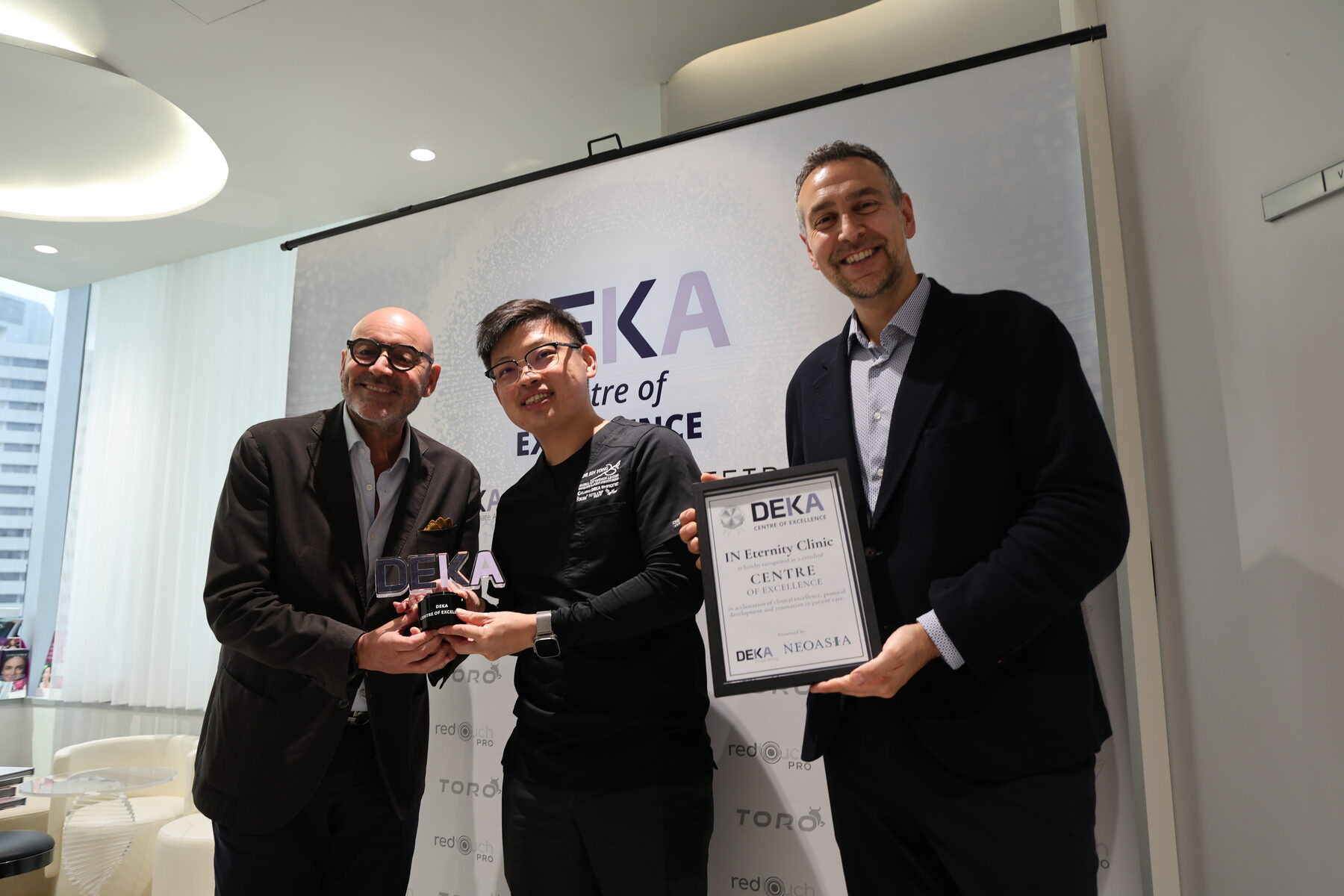
IN Eternity Clinic was designated a DEKA Centre of Excellence by DEKA and NeoAsia in July 2026.
Who treats you
Assessed and planned by Medical Director Dr Sin Yong
Dr Sin Yong examines the pigment himself, decides whether laser is appropriate at all, and selects the platform, wavelength and energy for your skin. IN Eternity Clinic is a designated DEKA Centre of Excellence, and Dr Sin Yong is an International Key Opinion Leader for DEKA and FOTONA, regularly invited to share his clinical expertise on laser treatment of Asian skin.
- MBBS, National University of Singapore
- MRCS, Royal College of Surgeons of Edinburgh
- MSc Aesthetic Medicine, University of London
- MSc Practical Dermatology, Cardiff University
International Key Opinion Leader · CLASSYS · HIRONIC · DEKA · ALMA · FOTONA · LUTRONIC
How it works at IN Eternity
From first message to a written plan
WhatsApp us
Send a message (and photos in natural light if you like). Our team will arrange an assessment slot at Pacific Plaza.
Pigment assessment
Dr Sin Yong examines the skin under magnification to type the pigment — epidermal, dermal, hormonal or post-inflammatory — and checks for anything that should not be lasered.
Your plan
Platform, wavelength, number of sessions and home care are agreed, with costs explained before anything is done. A test area may be advised for sensitive skin.
Treatment and review
Sessions take about 20–30 minutes. Progress is reviewed between sessions and settings adjusted to how your skin responds.
Pico vs other options
Pico laser compared with Q-switched laser and IPL
Patients often ask which device is “better”. Each has a role; the choice depends on the pigment and the skin carrying it.
| Picosecond laser | Q-switched (nanosecond) laser | IPL (intense pulsed light) | |
|---|---|---|---|
| Pulse duration | Picoseconds (10-12 s) | Nanoseconds (10-9 s) | Milliseconds, broad spectrum |
| Main action | Photoacoustic — pigment shattered by pressure | Photothermal and photomechanical | Photothermal (heat) |
| Heat to surrounding skin | Lowest | Moderate | Higher |
| Typical role | Sun spots, freckles, deeper pigment, gentle toning | Sun spots, freckles, toning | Diffuse sun damage and redness in lighter skin |
| Asian-skin consideration | Favoured where PIH risk is a concern | Effective; PIH risk higher in some studies | Used cautiously in darker skin types |
Summary based on the references below. Device choice at IN Eternity Clinic is made at assessment.
The technology
Two picosecond platforms, chosen per pigment
StarWalker PQX
Picosecond and Q-switched modes with 1064, 532, 585 and 650 nm wavelengths, giving options for superficial brown spots through to deeper pigment, plus FracTAT and fractional modes.
DEKA TORO
Picosecond 785 nm alongside nanosecond 1064 and 532 nm. The 785 nm wavelength sits between classic options and is used at IN Eternity for tone and pigment in Asian skin (see T2 Frax Radiance).
What to expect
Sessions, downtime and results
| Session length | About 20–30 minutes, including skin preparation and cooling |
| Comfort | Described as a quick snapping or warm prickling; numbing cream can be used |
| Downtime | Mild redness for a few hours to a day. Treated spots may darken and flake over 5–10 days |
| Number of sessions | Sun spots and freckles: often 1–3. Melasma and toning: a longer series of gentle sessions, then maintenance |
| Interval | Usually 2–4 weeks for toning; 4–8 weeks for targeted spot treatment |
| When results show | Gradually over 2–6 weeks after each session as fragments are cleared |
| Aftercare | Daily broad-spectrum sunscreen, gentle skin care, no scrubs or picking for a week |
Typical ranges only. Your own plan, number of sessions and cost are set at consultation after assessment.
Suitability & safety
Who pico laser suits — and when we wait
Usually a good fit
- Sun spots, freckles and age spots on the face or hands
- Melasma, as part of a gentle, long-term management plan
- Persistent post-inflammatory marks after acne
- Dull or uneven tone in Asian skin types
- Patients able to use daily sun protection
Treated with caution or deferred
- Pregnancy (treatment is usually deferred)
- Active infection, cold sores or open wounds in the area
- A pigmented lesion that is changing, irregular or bleeding — examined first, not lasered
- Recent heavy tanning or planned intense sun exposure
- Use of photosensitising medication, reviewed at consultation
Possible effects include temporary redness, swelling, darkening of treated spots and, less commonly, post-inflammatory pigmentation or lightening. These are discussed at your assessment.
Laser treatment for pigmentation: what else is used besides pico?
Picosecond pulses suit many pigments, but some plans work better with a different tool or a combination. For the technology itself, including its uses, downtime and cost factors, see pico laser in Singapore. Which wavelength suits which pigment matters more than the brand; Fotona StarWalker vs pico laser compares the platforms by concern.
- Laser toning. Low-fluence Q-switched 1064 nm passes for diffuse uneven tone and selected melasma, as a series with little downtime. See laser toning.
- Clinic protocols. T2 Frax Radiance on the DEKA TORO for pigment already in the skin, and R2 Glow on the Lutronic Clarity II for dull tone where inflammation plays a part.
- Chemical peels. Lift surface pigment and help topical care work; strength is chosen carefully in darker skin. See chemical peels.
- Topical care. Sunscreen with visible-light protection and pigment-regulating creams do most of the work in melasma and PIH. See when pigmentation creams stop working.
Why does pigmentation come back in Singapore?
Singapore sits near the equator, so the UV index is high all year rather than in one season. Three local factors add to it: heat, which can aggravate melasma even without direct sun; visible light, which ordinary sunscreens block only partly; and humidity with friction, which drives darkening in skin folds such as the underarms. Laser clears pigment that is there. Sun protection decides how much of it comes back.
- A broad-spectrum sunscreen every morning, reapplied when outdoors; a tinted formula with iron oxides helps against visible light in melasma.
- Shade and a hat around midday, when UV is strongest.
- Not picking spots or acne, which leaves post-inflammatory marks in skin types III to V.
- Maintenance planned ahead for melasma, rather than waiting for a relapse.
Pigmentation removal cost in Singapore: what affects it
The cost of pigmentation removal depends mostly on what the pigment is. A few sun spots may need one to three sessions; melasma, dermal pigment and post-inflammatory marks need a course and, often, maintenance. The size of the area, the protocol or combination used, and any topical or medical care alongside the laser also count. A written plan is given after assessment, and the consultation fee is waived with any medical treatment. The pigmentation removal cost guide sets out each factor.
At IN Eternity Clinic a consultation fee applies, and it is waived if you go ahead with any medical treatment; the fee is S$120. See fees.
When pigmentation should not be lasered yet
- A new, changing or irregular brown spot. It is examined with a dermatoscope first, and may need removal and testing rather than laser.
- A fresh tan or a beach holiday coming up. Treatment is moved to when the tan has settled.
- Melasma that is inflamed or irritated by strong products. The skin is calmed first.
- Pregnancy. Melasma often appears then; it is managed with sun protection and suitable skincare, and laser is deferred.
- Recent isotretinoin, a prescription acne medicine, or other light-sensitising medicines, which are reviewed first.
- Active acne, eczema or infection in the area.
Laser for pigmentation: side effects, and when to call the clinic
Most effects after pigment laser are expected and short-lived. A few are less common and are easier to manage when they are seen early. In skin types III to V, common in Singapore, the main concern is post-inflammatory pigmentation, so it is watched for rather than assumed away.
Common, and usually settling within days
- Redness, warmth and mild swelling for a few hours to a day.
- Treated spots darkening and flaking over five to ten days.
- Dryness, or slight sensitivity to skincare products, for about a week.
Uncommon
- Post-inflammatory pigmentation: a diffuse darkening two to four weeks later, which usually fades with strict sun protection and topical care.
- Pale patches (hypopigmentation), linked mainly to toning that is repeated too often or set too strong.
- Blistering or crusting larger than the treated spot.
- Very rarely, scarring or a lasting change in texture.
When to call the clinic
- A treated area blisters, weeps or crusts heavily.
- Pain or redness increases after the first day.
- Darkening spreads beyond the treated spots in the weeks after.
- A new or changing spot appears anywhere.
Humidity, sweat and sun all slow healing, so local aftercare matters; the practical side is in Singapore humidity and post-laser care, and normal reactions are listed in pico laser side effects.
What do pico laser results look like over time?
Spot pigment and diffuse pigment change on different timescales, so progress is judged by pigment type.
| Stage | What usually happens |
|---|---|
| Day 0 | Mild redness for a few hours to a day; treated spots may look darker. |
| Days 5 to 10 | Darkened spots flake away. |
| Weeks after a session | Sun spots and freckles lighten; some need a second or third session. |
| Across a series | Melasma and uneven tone change gradually with gentle sessions, sun protection and skincare. |
| Longer term | Melasma tends to recur and is kept under control with maintenance. |
Before a wedding or event: after spot treatment, darker crusting spots are visible close up for about a week, so spot sessions are usually booked well before a date; gentle toning sessions have less visible recovery.
How many laser sessions does each type of pigmentation need?
Sun spots and freckles often need one to three sessions, post-inflammatory marks several, and melasma a gentle series with maintenance. Deeper dermal pigment such as Hori’s naevus needs many sessions months apart.
| Pigment | Usual laser approach | Sessions (often) | Interval | Main caution |
|---|---|---|---|---|
| Sun spots (solar lentigines) | Targeted pico or Q-switched spot pulses | One to three | Four to eight weeks | Darkening in skin types III to V |
| Freckles | Light spot treatment | One to three | Four to six weeks | They return with sun |
| Post-inflammatory marks (PIH) | Gentle passes after skincare | Several | Two to four weeks | Settle the acne or eczema first |
| Melasma | Low-energy toning within a wider plan | A series, then maintenance | Two to four weeks | Rebound and pale spots if overtreated |
| Hori’s naevus, naevus of Ota | Longer wavelengths reaching the dermis | Several to many | Months apart | Slow; temporary darkening common |
Naevus of Ota and Hori’s naevus: deeper pigment
Blue-grey or slate-brown pigment on the cheekbones, temples or around the eye usually sits in the dermis. Naevus of Ota is often present from childhood and one-sided; Hori’s naevus (ABNOM) appears in adulthood on both cheeks and is often mistaken for melasma. Both need longer wavelengths, patience and sessions spaced months apart, and both are confirmed at examination before any laser.
Should pigmentation be treated or stabilised first?
Unstable pigment is calmed first, while stable sun spots and freckles can usually be treated straight away. Flaring melasma, fresh post-inflammatory marks and recently tanned skin are settled with sun protection and skincare before laser.
- Treat now: defined sun spots and freckles in skin that is not tanned.
- Stabilise first: melasma after a holiday or hormonal change; marks from acne that is still active; skin irritated by strong creams.
- Examine first: any new, changing or irregular spot, which may need a dermatoscope or removal rather than laser.
Creams, peels and oral treatment for melasma sit alongside laser rather than after it; the full guide to pigmentation removal Singapore covers them type by type, and melasma treatment sets out the long-term plan.
What makes up the total cost of a pigmentation treatment course?
The total cost of pigmentation removal is the sum of a course, not one session. It depends on the number of laser sessions your pigment type needs, any topical or medical care alongside, review visits, and maintenance for pigment that tends to return. A written plan after assessment sets these out.
| Part of the plan | What decides it |
|---|---|
| Assessment | A doctor identifies the pigment first; at IN Eternity Clinic the consultation fee is waived if you go ahead with any medical treatment |
| Laser sessions | Pigment type and depth: sun spots and freckles often need 1–3 sessions; melasma, post-inflammatory marks and dermal pigment need a course |
| Area and protocol | A few spots or the full face, and whether spot treatment, toning or a combined protocol is used |
| Care alongside | Topical or medical treatment, often needed for melasma and unstable pigment |
| Sun protection | Daily broad-spectrum sunscreen, which protects every session already paid for |
| Maintenance | Melasma and sun-driven pigment tend to return, so occasional sessions may be planned |
Comparing quotes per session can mislead. A lower figure for a pigment that needs a long course may cost more overall than a plan that treats the right pigment with fewer sessions, and treating melasma too aggressively can darken it and add the cost of settling it again. Asking how many sessions are expected, what maintenance looks like and what happens if pigment darkens gives a fairer comparison; questions to ask your aesthetic doctor lists more.
Pigmentation removal done to change appearance is generally treated as cosmetic, so it is usually not claimable under MediSave or most health insurance; the claims and insurance FAQ explains the exceptions.
“Laser removes pigment that is already there. Whether it stays away depends on the sun, the heat and the skin that made it, so the plan has to cover all three.”
Suitability is decided at an in-person assessment with Dr Sin Yong. Treatment is usually deferred or an alternative is suggested in these situations:
- A recent tan or sunburn
- Pigment that has not been assessed (a changing dark spot needs a diagnosis first)
- Photosensitising medicines
- Pregnancy, as a precaution
More questions answered
How do Koreans treat hyperpigmentation?
Korean clinics commonly use low-energy laser toning with pico or Q-switched lasers over a series of sessions, combined with brightening skincare such as niacinamide and vitamin C and strict sun protection. Skin boosters are sometimes added for skin quality. The approach is gradual and gentle, which suits Asian skin, because aggressive laser can cause rebound darkening.
What removes pigmentation fast?
For sun spots and freckles, pico or Q-switched laser can lighten them within a few weeks, sometimes after one or two sessions. Prescription lightening creams, retinoids and vitamin C work more slowly, over two to three months. Melasma should not be rushed: aggressive treatment can make it darker. Sun protection helps every treatment work faster.
Can you permanently get rid of pigmentation?
Some pigment, such as sun spots, freckles and post-acne marks, can be cleared or greatly lightened, but new spots can form with sun exposure and hormones. Melasma tends to come back, so it is controlled rather than cured. Daily sunscreen and maintenance care make results last longer. Results vary with the type of pigment and your skin.
What is the best pigmentation cream in Singapore?
There is no single best cream, because it depends on the type of pigment. Daily broad-spectrum sunscreen, ideally tinted with iron oxides, is the foundation for melasma and sun spots. Ingredients with supporting evidence include azelaic acid, niacinamide, vitamin C, tranexamic acid and retinoids. Hydroquinone is a prescription medicine in Singapore and should be used only under a doctor. Creams do not clear deeper pigment such as Hori's naevus.
Which laser for pigmentation in Singapore suits Asian skin?
For pigmentation in Asian skin, clinics in Singapore often choose a picosecond laser, because it breaks pigment by pressure with less heat spread, lowering the risk of post-inflammatory darkening. Settings and wavelength are matched to the pigment type and skin tone.
Can I go back to work the same day?
Yes, most people do. Redness usually settles within a few hours to a day. After targeted spot treatment, the treated marks darken and may flake for about five to ten days; they can usually be covered with make-up from the next day. Gentle toning sessions leave little to see beyond brief pinkness.
Will people notice I had pico laser?
After toning sessions, rarely. After spot treatment, darker crusting spots are visible close up for about a week, so some people avoid booking just before an event. As the fragments clear over the following weeks, people tend to notice that your skin looks clearer and more even rather than that you had laser.
Questions patients ask
Pico laser pigmentation FAQ
What is the difference between pigmentation removal and a skin brightening treatment?
Pigmentation removal targets defined spots such as sun spots and freckles, which often lighten in one to three picosecond sessions. Skin brightening aims at diffuse, dull or uneven tone without a single cause; gentle picosecond toning can brighten overall tone as part of a broader skin-quality plan with sunscreen and topical care. Many people have both, and which comes first is decided at assessment.
What causes skin pigmentation?
The common patches have different causes. Sun spots come from cumulative UV, freckles from genetics plus sun, melasma from hormones, UV, heat and visible light acting on predisposed skin, and post-inflammatory marks from acne or irritation. Singapore sits near the equator with a high UV index, which is why daily sunscreen is part of every plan and why the pigment type is identified before any laser is chosen.
What affects the price of pigmentation removal in Singapore?
Cost depends on the type of pigment and how much skin is involved, how many sessions it needs, which platform and wavelength are used, and whether skincare, peels or maintenance sessions form part of the plan. Sun spots often need one to three sessions, while melasma needs a longer gentle series. Dr Sin Yong types the pigment first and explains the plan and its cost at consultation.
Is scalp micropigmentation the same as pigmentation removal?
No. Scalp micropigmentation places tiny pigment dots in the scalp to create a buzz-cut look, add density between thinning hairs or camouflage scars, so it adds pigment rather than removing it. Pigmentation removal breaks down unwanted pigment in facial or body skin with laser. Both are available at IN Eternity Clinic, and each is planned at its own assessment.
Which laser for pigmentation is used in Singapore at IN Eternity Clinic?
Pigmentation laser treatment here uses a picosecond laser, the Fotona StarWalker PQX or the DEKA TORO, with the wavelength chosen by Dr Sin Yong once the pigment is typed. Sun spots and freckles usually lighten in one to three sessions. Melasma is controlled with gentle low-energy sessions and sun protection rather than cleared.
How is hyperpigmentation treated in Singapore?
Hyperpigmentation treatment starts by naming the type, because skin pigmentation is often a mix of sun spots, freckles, melasma and marks left after acne. Laser pigmentation removal suits sun spots and freckles; melasma needs gentle sessions plus sun protection; marks after acne are treated with skincare first and laser second. Dr Sin Yong types the pigment at assessment.
Can I remove pigmentation in one session?
Some sun spots or freckles lighten after one session, but most need one to three. Melasma is not removed in a session; it is kept under control over time with gentle sessions and daily sun protection. Your number of sessions is estimated at assessment, once the pigment type is known.
Does pico laser work for melasma?
Pico laser can help lighten melasma when used gently as part of a wider plan with sun protection and skin care, but melasma is a chronic condition that tends to recur. It is managed over time rather than cured, and aggressive settings can make it worse.
How many pico laser sessions will I need?
Sun spots and freckles often need one to three sessions. Melasma, post-inflammatory marks and overall toning usually need a longer series of gentle sessions spaced two to four weeks apart, followed by maintenance. Your number is set after assessment.
What is the downtime after pico laser?
Most people have mild redness for a few hours to a day. Treated spots may darken and flake over about five to ten days. Make-up can usually be worn the next day.
Is pico laser safe for Asian skin?
Picosecond lasers deliver less heat to the surrounding skin than older lasers, which lowers the risk of post-inflammatory pigmentation in Asian skin. Safety still depends on correct pigment diagnosis, conservative settings and sun protection.
What is the difference between pico laser and Q-switched laser?
Pico lasers use pulses a thousand times shorter than Q-switched lasers, shattering pigment mainly by pressure rather than heat. In an Asian split-face trial on sun spots, pico cleared more pigment with less post-inflammatory pigmentation.
Will my pigmentation come back?
Sun spots and freckles cleared by laser usually stay clear at that spot, but new ones can form with sun exposure. Melasma often recurs because of hormones, UV and heat, which is why maintenance and sunscreen matter.
Does pico laser hurt?
It feels like quick snapping or warm prickling. Numbing cream can be applied beforehand, and sessions are short.
How much does pico laser cost in Singapore?
Cost depends on the pigment type, the area and the number of sessions needed, so IN Eternity Clinic confirms the plan and cost at consultation before treatment begins.
Who performs the treatment?
Every assessment at IN Eternity Clinic is carried out by Medical Director Dr Sin Yong, who sets the platform, wavelength and energy for your skin.
Which laser is used for pigmentation in Singapore?
No single laser suits every pigment. Picosecond and Q-switched lasers are the most widely used for brown pigment, with the wavelength chosen for its depth. At IN Eternity Clinic, Dr Sin Yong uses the Fotona StarWalker PQX and the DEKA TORO, and sometimes laser toning, after typing the pigment.
Can pigmentation be removed for good?
Individual sun spots and freckles can be cleared and usually stay clear at that spot, but new pigment can form with sun exposure. Melasma is a chronic condition that is controlled rather than removed, so maintenance and sun protection are part of the plan.
How long after laser for pigmentation will I see results?
Treated spots usually darken and flake over five to ten days, then look lighter over two to six weeks as fragments clear. Progress is reviewed at about four to eight weeks. Melasma and dermal pigment change more slowly, over a course of sessions.
Is laser for pigmentation safe during pregnancy?
Elective laser treatment is usually deferred during pregnancy. Melasma that appears in pregnancy is managed with sun protection and skincare suited to pregnancy, and treatment is reviewed afterwards.
Can laser treat underarm or body pigmentation?
Sometimes, once the cause is clear. Darker underarms can come from friction, shaving, irritation or insulin resistance, so the cause is addressed first and gentle laser may then be added. See underarm treatment.
Pico laser vs chemical peel for pigmentation: which is better?
They do different jobs. A pico laser breaks up pigment at a chosen depth, so it suits defined spots and deeper pigment. A chemical peel lifts surface pigment and helps topical care work, so it suits diffuse surface unevenness and some post-acne marks. Many plans use both at different times, and peel strength is chosen carefully in darker skin. See chemical peels in Singapore.
Can laser remove age spots on the hands?
Often, yes. Sun spots on the backs of the hands are usually in the upper skin and respond to targeted spot pulses much as facial spots do, although hand skin heals more slowly and crusts can take longer to lift. Any spot that is raised, rough or changing is examined first. Sun protection on the hands afterwards helps prevent new spots. See age spot removal.
Does laser work for Hori’s naevus?
Hori’s naevus is pigment in the dermis, so it needs longer wavelengths such as 785 nm or 1064 nm that reach deeper, given in sessions several months apart. It usually responds over a longer course than sun spots, and temporary darkening between sessions is common. Because it is often mistaken for melasma, the diagnosis is confirmed at examination before any laser is planned.
What should I avoid before laser for pigmentation?
In the two weeks before, avoid tanning, beach holidays and long spells in the midday sun, since tanned skin raises the risk of pigment problems. Pause retinoids, exfoliating acids and scrubs for the few days advised. Tell the clinic about any new medicines, cold sores or skin irritation, and arrive without make-up if you can.
Can naevus of Ota or Hori’s naevus be treated with laser?
Usually, yes, but slowly. Both are pigment in the dermis, so they need longer wavelengths that reach deeper, such as 785 nm or 1064 nm, given in sessions spaced months apart. Temporary darkening after each session is common. The diagnosis is confirmed at examination first, because Hori’s naevus is often mistaken for melasma.
Can pigmentation get worse after laser?
It can, which is why settings follow the pigment type. Post-inflammatory darkening two to six weeks after treatment is the main risk in skin types III to V, and melasma can rebound if treated with too much heat. Both usually fade with strict sun protection and skincare. Typing the pigment first and starting conservatively reduce the risk.
What is the difference between laser toning and pico spot treatment?
Laser toning uses low-energy passes over the whole face to even out tone and calm melasma gradually, with little visible downtime. Pico spot treatment aims higher energy at individual sun spots or freckles, which darken and flake over about a week. Many plans use both at different times, chosen by pigment type.
Should melasma be treated before sun spots?
Usually the two are planned together but handled differently. Sun spots can be treated spot by spot, while melasma around them is calmed with sun protection, skincare and gentle sessions. Strong spot settings placed over melasma can provoke rebound, so the order and energy are set after the pigment types have been mapped.
Which laser is used for which type of pigmentation?
Sun spots and freckles usually respond to 532 nm in pico or Q-switched mode; dermal pigment such as Hori’s naevus to 1064 nm or 755–785 nm; melasma to low-energy 1064 nm toning in spaced sessions; and red marks to the 675 nm laser. The diagnosis decides the wavelength, which is why a dermatoscope check comes first.
How much does it cost to get hyperpigmentation removed?
It depends on the pigment type and area: a few spots may need one or two pico sessions, while uneven tone or melasma needs a course of gentle toning plus skincare and maintenance. The number of sessions affects the total more than the price of one session. An estimate is given after the pigment is diagnosed. The consultation fee at IN Eternity Clinic is S$120, waived with any medical treatment.
How long does laser treatment for hyperpigmentation last?
Pigment that is cleared, such as sun spots and freckles, does not come back in the treated cells, but new spots can form with sun exposure. Melasma and hormone-related pigment often return over months, especially with heat, sun or hormonal change, so maintenance and daily sunscreen are needed. How long results hold depends on the pigment type. Results vary.
Can pigmentation be removed permanently by laser?
Some pigment, such as sun spots and freckles, can clear well with laser, but new spots can form with further sun exposure. Melasma is a long-term condition that laser can lighten but not cure, and it often returns without strict sun protection and maintenance. That is why pigment is typed first and a maintenance plan is part of treatment.
Book your assessment
Find out what your pigment actually is
A short assessment with Dr Sin Yong tells you which pigment you have, whether pico laser is the right tool, and roughly how many sessions to expect. WhatsApp us to arrange a time.
WhatsApp +65 8815 3008IN Eternity Clinic · 9 Scotts Road, #12-01 Pacific Plaza, Singapore 228210 · Mon–Sat 11am–8pm · globalkol@ineternityclinic.com
Related at IN Eternity
References
- Dong W, et al. Treatment of pigmentary disorders using picosecond laser in Asian patients: a meta-analysis and systematic review. Dermatol Ther. 2021. PubMed 33368885
- Torbeck RL, et al. Evolution of the picosecond laser: a review of literature. Dermatol Surg. 2019. PubMed 30702447
- Kim JY, et al. Split-face randomized comparison of 532 nm picosecond Nd:YAG versus 532 nm Q-switched Nd:YAG laser for solar lentigines in Asians. Ann Dermatol. 2020. PubMed 33911703
- Jo JY, et al. Update on melasma treatments. Ann Dermatol. 2024. PubMed 38816973
- Sowash M, et al. Review of laser treatments for post-inflammatory hyperpigmentation in skin of color. Am J Clin Dermatol. 2023. PubMed 36781686
- Chan NPY, Ho SGY, Shek SYN, Yeung CK, Chan HH. A case series of facial depigmentation associated with low fluence Q-switched 1,064 nm Nd:YAG laser for skin rejuvenation and melasma. Lasers Surg Med. 2010. doi:10.1002/lsm.20956
- Davis EC, Callender VD. Postinflammatory hyperpigmentation: a review of the epidemiology, clinical features, and treatment options in skin of color. J Clin Aesthet Dermatol. 2010. PubMed 20725554
- Dong W, Wang N, Yuan X, Zhang W. Treatment of pigmentary disorders using picosecond laser in Asian patients: a meta-analysis and systematic review. Dermatol Ther 2021;34(1):e14709. doi:10.1111/dth.14709
- Wang CC, et al. A comparison of Q-switched alexandrite laser and intense pulsed light for the treatment of freckles and lentigines in Asian persons: a randomized, physician-blinded, split-face comparative trial. J Am Acad Dermatol 2006;54(5):804-810. doi:10.1016/j.jaad.2006.01.012
- Wattanakrai P, Mornchan R, Eimpunth S. Low-fluence Q-switched neodymium-doped yttrium aluminum garnet (1,064 nm) laser for the treatment of facial melasma in Asians. Dermatol Surg 2010;36(1):76-87. doi:10.1111/j.1524-4725.2009.01383.x
- Kwon HH, Choi SC, Jung JY, Park GH. Combined treatment of melasma involving low-fluence Q-switched Nd:YAG laser and fractional microneedling radiofrequency. J Dermatolog Treat 2019;30(4):352-356. doi:10.1080/09546634.2018.1516858
Medically reviewed by Dr Sin Yong, MBBS (NUS), MRCS (Edinburgh), MSc Aesthetic Medicine (London), MSc Practical Dermatology (Cardiff) · Professional Diploma in Obstetrics & Gynaecology (RCPI) · Last reviewed 27 September 2026. This page is general information and not a substitute for an individual medical assessment. Results vary between individuals.