
Skin Tightening Singapore
Focused ultrasound, radiofrequency, threads and fractional laser each work at a different depth. At IN Eternity Clinic, Dr Sin Yong chooses by where your laxity sits and the shape of your face. Radio frequency skin tightening heats the dermis rather than the deeper SMAS layer.
Skin tightening treatment uses controlled heat from radiofrequency (RF) or focused ultrasound to firm loose skin gradually, without surgery. Results vary.
In short: skin tightening in Singapore uses controlled heat from radiofrequency or focused ultrasound to firm loose skin gradually, without surgery.
WhatsApp to Enquire →Key facts ↓Skin tightening is non-surgical treatment that heats or supports tissue at different depths. HIFU and Ultherapy focus ultrasound down to the SMAS; Thermage FLX and the VF Lift – Vertical Facelift use monopolar radiofrequency in the dermis; thread lifts reposition tissue; FSX laser works nearer the surface. At IN Eternity Clinic, a skin tightening plan is decided by the layer that has loosened and the shape of your face. Related: loose skin after liposuction. See also our guide to polynucleotide treatment. See also our guide to loose skin after pregnancy.
Skin tightening at a glance
| What it is | A group of non-surgical treatments that heat or support tissue at different depths. |
|---|---|
| Used for | Loose or crepey skin on the face, jawline, neck and eyelids, and on the arms, abdomen, thighs and knees. |
| How it works | Focused ultrasound (HIFU, Ultherapy) to the SMAS; monopolar radiofrequency (Thermage FLX, VF Lift – Vertical Facelift) in the dermis; threads reposition tissue; FSX laser nearer the surface. |
| Typical sessions | Depends on the option: often one session for HIFU, Ultherapy or Thermage; two to four then maintenance for the VF Lift – Vertical Facelift; three to five for FSX. |
| Downtime | Redness or tenderness for hours to a few days; one to two weeks of tenderness and swelling after threads. |
| When results show | Some firmness early; the larger effect over two to six months as new collagen forms. |
| Who should avoid or wait | Pregnancy, active skin infection or inflammation, recent filler or threads in the same area; metal implants and implanted electronic devices need care with radiofrequency. |
| Who performs it | Medical Director Dr Sin Yong examines which layer has loosened and chooses the option. |
Dr Sin Yong, Medical Director of IN Eternity Clinic, explains that the right option depends on where the laxity sits and on the shape of the face, not on which device is newest, and that non-surgical tightening works on skin and support layers but does not replace lost fat or bone.

On this page
- What tightening does: heat contracts collagen and prompts new collagen over two to six months; threads lift mechanically and stimulate collagen as they dissolve.
- Focused ultrasound: HIFU on CLASSYS Ultraformer MPT, and Ultherapy with live imaging, reach the SMAS at 4.5 mm as well as the dermis.
- Radiofrequency: Thermage FLX and the VF Lift – Vertical Facelift on CLASSYS Volnewmer heat a broader volume of dermis.
- Threads: absorbable PDO and PCL threads reposition descended tissue: the Bliss Lift. RVR ProLift is separate and thread-free, using collagen-stimulating injectables along vertical vectors.
- Nearer the surface: FSX laser (thulium and erbium glass) for crepey texture, fine lines and heavy upper eyelids.
- Limits: suits mild to moderate laxity; advanced descent or excess skin may need a surgical opinion.
- In 49 Chinese patients given focused ultrasound, temporary redness and swelling were common, bruising occurred in up to 25% of sessions, and two developed pigmentation on the forehead (Lasers Surg Med 2011)
- A review of barbed thread-lift studies found little substantial new evidence had been added over a decade, so long-term results should be discussed cautiously (Plast Reconstr Surg 2018)
- A case series described five patients with blistering, ulceration, fat atrophy or skin necrosis after a single micro-focused ultrasound session; rare, but possible (Lasers Surg Med 2018)
What is skin tightening, and what can it realistically do?
Skin loosens for three reasons that usually arrive together: the collagen and elastic fibres of the dermis thin out, the fibrous support layer beneath (the SMAS and its ligaments) slackens, and fat and bone beneath both recede. Non-surgical skin tightening works on the first two. It does not replace lost volume and it does not remove excess skin.
Most tightening treatments use controlled heat. When collagen is heated to the right temperature it contracts, which gives a little firmness early on; the larger effect comes over the following two to six months, as the skin repairs the heated zones by laying down new collagen. Thread lifts work differently: they reposition tissue mechanically along planned lines and prompt collagen to form around each thread as it dissolves.
Realistically, these treatments suit mild to moderate laxity: a softening jawline, early jowls, crepey skin on the neck or eyelids, a slightly heavier brow. Change is gradual and varies between people. Where tissue has descended a long way or there is a fold of excess skin, a surgical opinion may serve you better, and that is said plainly at IN Eternity Clinic.
Skin tightening treatments compared
Each option works at a different layer, which is why the right choice depends on where the laxity sits and on the shape of the face, not on which device is newest.
| Treatment | Energy and depth | Usually suits | Less suited to | Typical recovery | Usual sessions |
|---|---|---|---|---|---|
| HIFU (CLASSYS Ultraformer MPT) | Focused ultrasound points at 1.5, 3.0 and 4.5 mm, reaching the SMAS | Early jowls, soft jawline, loose skin under the chin, heavy brow | Very lean faces; fat-driven fullness | Redness or tenderness for hours to a few days | Often one, reviewed at about three months |
| Ultherapy | Micro-focused ultrasound with live imaging, including the SMAS | Brow, jaw and neck laxity where imaging of each layer is wanted | Very lean faces; fat-driven fullness | Tenderness for a few days; occasional small bruises | Usually one; maintenance often discussed at 12–18 months |
| Thermage FLX | Monopolar radiofrequency heating deep dermis and subdermal layers, surface cooled | Crepey skin, overall firmness, eyelids with the Eye Tip, neck and body | Marked sagging of deeper tissue | Mild redness, usually brief | Usually one, with yearly maintenance often suggested |
| VF Lift – Vertical Facelift | Continuous 6.78 MHz monopolar RF on CLASSYS Volnewmer, passes along vertical vectors | Leaner faces with laxity; lift, sculpt and restore planned zone by zone | Advanced descent or skin excess | Warmth and flush for an hour or two | Usually two to four, then maintenance |
| Thread lift | Absorbable PDO and PCL threads placed under the skin | Visible descent of cheeks and jowls needing a mechanical lift | Very thin skin; heavy tissue with a lot of excess | Tenderness and swelling, settling over one to two weeks | Usually one procedure |
| FSX laser | Fractional thulium and erbium glass, multi-pass, nearer the surface | Crepey texture, fine lines, heavy upper eyelids, early laxity | Deep structural sag | Redness for hours; light scabs for 3–7 days after stronger passes | Usually 3–5, 4–6 weeks apart |
Who suits HIFU or Ultherapy?
High-intensity focused ultrasound brings sound energy to a focal point beneath the skin, creating rows of tiny heated points at fixed depths while the surface stays intact. The deepest lines reach the SMAS, the layer repositioned in a surgical facelift, which is why focused ultrasound is the energy most associated with lifting along the jaw, under the chin and at the brow.
At IN Eternity Clinic, HIFU is delivered on the CLASSYS Ultraformer MPT; Ultherapy adds real-time imaging so each line can be confirmed at its intended depth. Both suit people with early to moderate laxity and enough soft tissue to work on. In a lean face, heat-based tightening can occasionally leave the cheeks looking a little hollower, which is discussed beforehand and is one reason a leaner face is often planned around radiofrequency instead. The differences are set out in Thermage vs Ultherapy and HIFU.
Thermage or the VF Lift – Vertical Facelift: two radiofrequency approaches
Thermage FLX and Volnewmer are both monopolar radiofrequency platforms at 6.78 MHz. Rather than focusing energy at points, they warm a broader volume of dermis and the fibrous septa beneath, which suits crepey, thinning skin and overall firmness. The practical differences lie in how the surface is cooled, the rhythm of treatment and how the passes are planned.
Thermage FLX cools the surface with each pulse and is usually given as a single session, with an Eye Tip for the eyelids. The VF Lift – Vertical Facelift is a protocol developed by Dr Sin Yong and runs on CLASSYS Volnewmer alone, without focused ultrasound. Volnewmer delivers continuous radiofrequency through a water-cooled tip, and the passes follow vertical vectors against the direction that particular face has descended, zone by zone. It is usually planned as two to four sessions followed by maintenance. You may also see a titanium lift advertised: it is a diode-laser warming treatment, and how it compares with these options is explained separately.
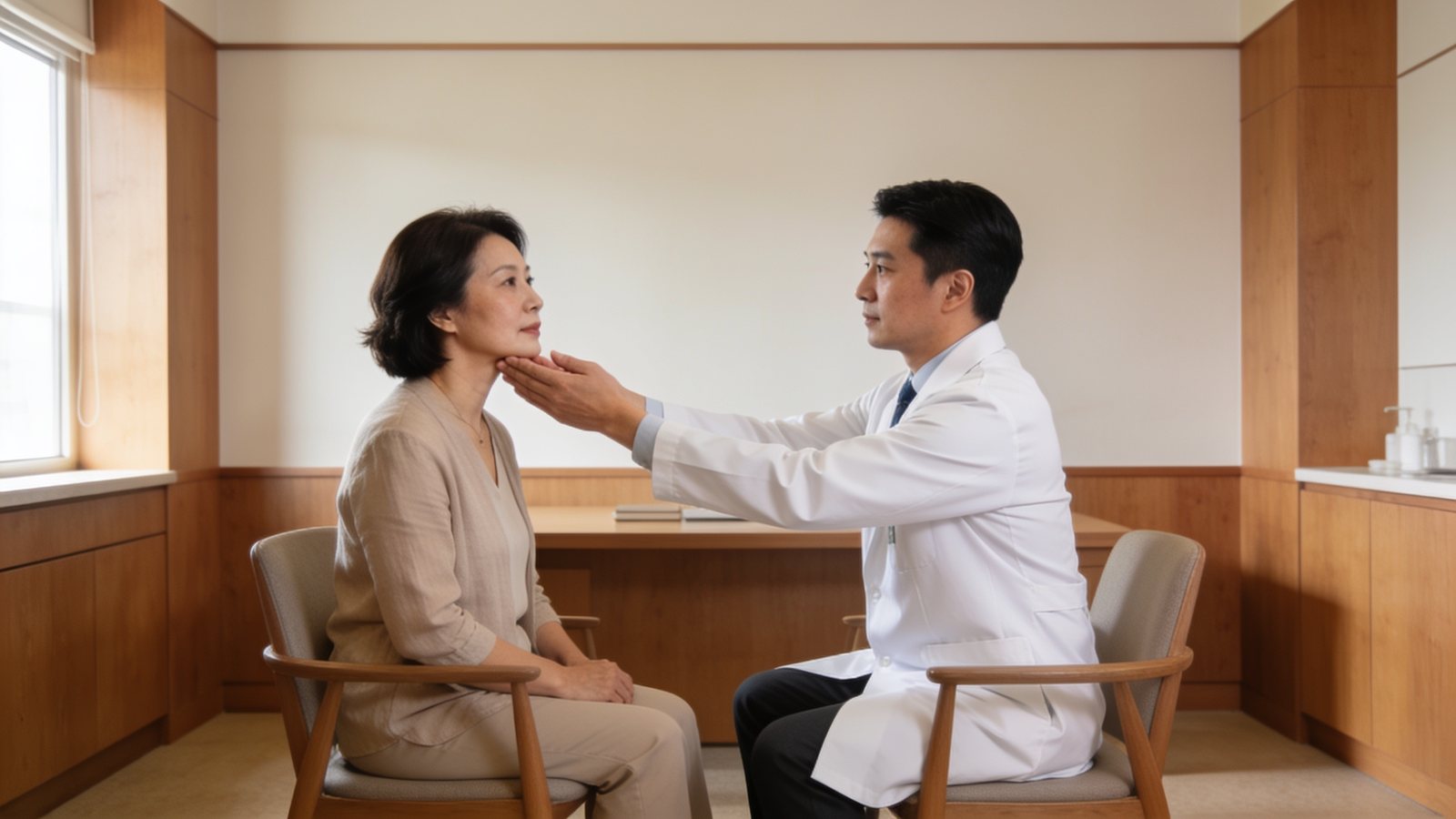
“Skin tightening is not one treatment. It is a decision about which layer has let go, and a lean face and a full face rarely need the same answer.”

How long does skin tightening last, and how is it maintained?
New collagen made after treatment becomes part of your tissue, but the processes that loosened the skin carry on: collagen keeps thinning, sun keeps breaking it down, and fat and bone keep changing. The effect of tightening therefore fades gradually rather than stopping on a date. How quickly varies with age, sun exposure, weight change and the treatment used.
Maintenance is planned individually: focused ultrasound and Thermage are often reviewed yearly or longer, the VF Lift – Vertical Facelift has periodic maintenance sessions after its initial course, and threads are reassessed once they have dissolved. Daily sunscreen and a stable weight do more to protect the result than any device.
Your skin tightening treatment day, step by step
Whichever option is chosen, the visit follows the same order.
- Consultation and assessment. Dr Sin Yong examines which layer has loosened, the shape of your face and your skin quality, then explains which option suits and what it cannot do.
- Preparation. The skin is cleansed and photographs are taken. Numbing cream is applied for focused ultrasound or radiofrequency if you prefer it, and lines or zones are marked; threads are placed under local anaesthetic.
- The treatment. Energy treatments for the face often take around an hour; threads can take longer. You can ask for a pause or lower settings at any time.
- Straight after. Mild redness and warmth are usual after energy treatment; swelling and tightness after threads. Most people return to normal activities the same day or within a day or two.
- The next days. Tenderness over the jaw, small bruises or faint welts can appear and settle. Use sunscreen daily and avoid saunas and facial massage for a few days.
- Review. Threads are checked at one to two weeks; energy treatments at around three months, when collagen has had time to form.
Does skin tightening really work? What the studies show
Yes, within limits. Studies of focused ultrasound and radiofrequency show measurable, moderate tightening in mild to moderate laxity, developing over about three months. They do not match a surgical facelift, results vary between people, and evidence for threads is weaker. Choosing the treatment that fits the cause matters most.
| Treatment | Study | What it found |
|---|---|---|
| Focused ultrasound (HIFU and Ultherapy) | 2020 meta-analysis of 17 studies, 477 people (Ayatollahi et al.) | Moderate improvement, averaging about 2.7 out of 5 for both rated improvement and satisfaction; most studies lacked long follow-up |
| Focused ultrasound, brow | 2010 rater-blinded study, 35 people (Alam et al.) | 30 of 35 had a clinically significant brow lift at 90 days; the average rise was 1.7 mm |
| Radiofrequency vs focused ultrasound | 2019 randomised split-face trial, 20 people (Alhaddad et al.) | Both sides improved from day 30 to day 180, with no significant difference between them |
| Thread lifts | 2018 systematic review (Gülbitti et al.) | Little substantial evidence added over a decade; most studies showed very limited durability |
Two practical points follow. Energy treatments tighten tissue that still has some elasticity, so they suit early jowls, a softening jawline and loosening under the chin better than heavy folds. And because the change is gradual and moderate, photographs taken before treatment and at review are the fairest way to judge it.
At IN Eternity Clinic, Dr Sin Yong first works out whether the problem is skin, fat or support, then explains which option fits and what it cannot do. The options are described on HIFU Singapore, Thermage and VF Lift – Vertical Facelift.
How much does skin tightening cost in Singapore?
Cost depends on the treatment or protocol, the areas treated, the number of lines, pulses or threads, how many sessions the plan needs and whether treatments are combined. Because these differ from face to face, a figure given before assessment would mean little. At IN Eternity Clinic the plan and its cost are set out after assessment, and the consultation fee is waived with any medical treatment. The factors are explained in HIFU price factors and Thermage cost.
How consultation and treatment fees are handled is explained on our fees page. At IN Eternity Clinic a consultation fee applies, and it is waived if you go ahead with any medical treatment; the fee is S$120.
Skin tightening side effects and risks
Most effects of skin tightening are mild and short-lived, but each option has its own uncommon risks, and they are explained before treatment.
- Common and expected: redness, warmth and mild swelling for hours to a few days; tenderness when pressing on the jaw or neck; small bruises or faint raised lines after focused ultrasound.
- Uncommon: a blister or small burn; temporary numbness; nerve irritation that can briefly affect the smile and usually recovers; slight hollowing in a very lean face (Friedmann 2018). In a study of focused ultrasound in Asian skin, bruising was common and post-inflammatory hyperpigmentation occurred in a small number of sessions (Chan 2011).
- When to call the clinic: WhatsApp or call +65 8815 3008 for a blister, numbness that is spreading, a raised line that does not fade within a few days, or any change in your smile.
Which device suits which layer is compared in Thermage vs Ultherapy vs HIFU.
Who should wait before skin tightening?
Treatment is usually postponed during pregnancy, over active skin infection or inflammation, and soon after recent filler or threads in the same area until they have settled. Radiofrequency needs care around metal implants and implanted electronic devices, which are reviewed beforehand. Recent sun tanning, a history of keloid scarring and certain medicines are also discussed, and anyone expecting a surgical-level change is told so honestly at the start.
Body skin tightening: arms, abdomen, thighs and knees
Skin on the body is thicker, heals more slowly and is often loose over stubborn fat, so the plan differs from the face. Non-surgical body tightening gives a more modest change than surgery, and the plan is set after examining the skin at rest and gently pinched.
| Area | What is usually seen | Often considered | Limits |
|---|---|---|---|
| Upper arms | Crepey or loose skin, sometimes over fat | Thermage FLX body tip; 4K Body Lift where fat sits under the skin | A hanging fold of skin needs a surgical opinion |
| Abdomen | Loose skin after pregnancy or weight loss, with or without fat | 4K Body Lift or Onda Pro for skin over fat; radiofrequency for looseness alone | Separated abdominal muscles and large skin excess are surgical problems |
| Thighs and inner knees | Softness and crepiness above the knee | Radiofrequency, or a contouring plan where fat is the larger part | Change is gradual and modest |
Dr Sin Yong’s 4K Body Lift is a body contouring protocol that delivers radiofrequency to mapped zones, so that fat and the skin over it are treated in the same plan. After major weight loss, the skin may have been stretched beyond what heat-based tightening can recover; surgical body contouring is then the realistic route, and you will be told so.
Hubs: aftercare · complications · treatments explained
Suitability is decided at an in-person assessment with Dr Sin Yong. Treatment is usually deferred or an alternative is suggested in these situations:
- Pregnancy or breastfeeding
- Active infection in the area
- Implanted electronic devices near the field
- Skin excess that needs surgery rather than tightening
How skin laxity is assessed, sessions, recovery and how long it lasts
How many skin tightening sessions are needed?
It depends on the technology and the degree of laxity. Focused ultrasound and monopolar radiofrequency are often single sessions repeated yearly, while RF microneedling and other radiofrequency treatments are usually a course of two to four sessions spaced about a month apart.
What is the downtime after skin tightening?
Most energy-based tightening has little downtime: some redness, mild swelling or tenderness for a day or two. RF microneedling leaves pinpoint marks and redness for two to three days. Normal activities can usually be resumed the same day.
How long does skin tightening last?
Collagen remodelling continues for three to six months after treatment, and results typically last around a year or more before maintenance is needed, since natural ageing continues. Heavier sagging may need a surgical opinion. Results vary.
Frequently asked questions about skin tightening Singapore
How can I tighten my skin naturally?
Daily sunscreen comes first, because UV light breaks down collagen. A retinoid at night, not smoking, enough sleep and protein, and keeping your weight stable all help skin stay firmer. Facial exercises and creams have little proven effect on sagging. For visible laxity, medical treatments that stimulate collagen do more than home measures.
Can you really tighten saggy skin?
Yes, to a point. Non-surgical treatments such as HIFU, Ultherapy, Thermage and other radiofrequency devices heat the deeper layers so collagen contracts and rebuilds, which can tighten mild to moderate laxity over two to three months. They do not remove excess skin. Heavy sagging, such as marked jowls or a loose neck, may need surgery for a larger change.
What causes skin to become loose or saggy?
Three changes usually happen together: the collagen and elastic fibres in the dermis thin out, the deeper support layer and its ligaments slacken, and fat and bone underneath recede. Sun exposure, smoking, large weight loss and genetics speed this up. Non-surgical tightening works on the first two; lost volume needs a different approach, such as a collagen stimulator or filler.
How does radio frequency skin tightening work, and who is it for?
Radiofrequency skin tightening heats the deeper layers of the skin to a controlled temperature, which tightens existing collagen and prompts new collagen over the following months. It suits mild to moderate laxity of the face, neck or body in people who want gradual change without surgery. Results vary.
Does skin tightening actually work?
Energy-based tightening works by heating the dermis or the deeper support layer so collagen contracts and remodels over two to three months. Clinical studies of HIFU, monopolar radiofrequency and micro-focused ultrasound show measurable but moderate change, strongest in early to moderate laxity. It does not remove loose, excess skin, which is where a surgical opinion is more honest.
How much does skin tightening usually cost?
It varies with the device, the area and the number of sessions, and whether a doctor performs it. Clinic prices are confirmed after assessment rather than listed here. For how Singapore clinics price the main options, see the HIFU cost guide and the Thermage cost guide. For how Singapore clinics price it, see the cost guide.
Which skin tightening treatment is right for me?
It depends on which layer has loosened and the shape of your face. Focused ultrasound suits laxity along the jaw and brow, radiofrequency suits crepey skin and leaner faces, threads suit visible descent, and FSX suits texture and fine lines. Dr Sin Yong decides after an in-person assessment.
How long does skin tightening last?
Results from HIFU or radiofrequency tightening usually last about one to two years, because ageing continues. New collagen builds over two to three months after treatment, and many people maintain results with a session every 12 to 18 months. Sun protection and not smoking help it last.
How does radiofrequency skin tightening work?
Radiofrequency heats a broad volume of the dermis and the fibrous septa beneath it. The heat contracts existing collagen and prompts new collagen to form over the following months, which firms crepey or thinning skin. Thermage FLX and Volnewmer are both monopolar radiofrequency platforms at 6.78 MHz; Thermage cools the surface with each pulse, while Volnewmer delivers continuous energy through a water-cooled tip.
What is the difference between HIFU and Thermage?
HIFU focuses ultrasound into small points at fixed depths, reaching the SMAS for lift. Thermage FLX uses monopolar radiofrequency to warm a broader volume of deep dermis for firmness. They act on different layers and are sometimes combined in separate sessions.
Can skin tightening replace a facelift?
Not for everyone. Non-surgical tightening suits mild to moderate laxity and gives gradual, natural-looking change. Advanced descent or a fold of excess skin may be better served by a surgical opinion, and Dr Sin Yong will say so if that applies.
Does skin tightening hurt?
Most people feel deep warmth or brief pricking. Focused ultrasound can ache over bone, radiofrequency builds as heat that the cooling tip controls, and threads are placed under local anaesthetic. Numbing cream and adjusted settings keep sessions manageable.
What is the downtime after skin tightening?
Usually little. After focused ultrasound or radiofrequency most people go back to work the same day, with some redness and tenderness for a day or two. FSX laser can leave redness for hours and light scabbing for a few days after stronger passes. Threads bring swelling and tightness for about one to two weeks, with most people taking a day or two off.
At what age should I start skin tightening?
There is no set age. Early laxity often shows in the mid-thirties, at the jawline or under the chin, and tightening at that stage is about holding firmness rather than lifting a lot. In younger faces without laxity it adds little. Skin thickness, facial fat and sun exposure matter more than age, and these are judged at assessment.
How many skin tightening sessions are needed?
It depends on the treatment. Focused ultrasound and Thermage FLX are usually given as one session and reviewed, with maintenance often discussed yearly. The VF Lift – Vertical Facelift is usually a course of two to four sessions, and FSX laser often three to five sessions spaced four to six weeks apart. Your plan, and how the result is maintained, is set after assessment.
What is the price of a Thermage skin tightening treatment in Singapore?
Thermage FLX fees depend on the areas treated and the number of pulses planned, so they are quoted after assessment rather than as a fixed package. The S$120 consultation fee is waived when you go ahead with treatment. How fees are worked out, and how Thermage compares with the VF Lift and focused ultrasound, is explained in the Thermage cost guide on this site.
Which is better, RF or HIFU?
They heat different depths. Radiofrequency warms the skin more broadly, so it suits crepey texture and mild laxity across the face and body. HIFU focuses ultrasound deeper, at the tissue that supports the face, so it suits early jowling and brow heaviness. Many plans use both, weeks apart. The right one depends on which layer is loose, decided at assessment.
How can loose skin on the body be tightened?
Mild to moderate laxity on the abdomen, arms, thighs and knees can be improved with radiofrequency, focused ultrasound or RF microneedling, usually over several sessions, with gradual results over three to six months. Collagen stimulators can help crepey areas. Large amounts of loose skin after major weight loss usually need surgery, which a surgeon assesses. Results vary between people.
Which skin tightening treatment works best for me?
It depends on the depth of the laxity. Focused ultrasound (HIFU) reaches the deeper SMAS layer, radiofrequency heats the dermis, and RF microneedling works closer to the surface while improving texture. Heavier sagging may not respond enough to any device. An assessment matches the treatment to where the looseness is, and results vary.
Book an assessment
IN Eternity Clinic, 9 Scotts Road, #12-01 Pacific Plaza, Singapore 228210. By appointment with Medical Director Dr Sin Yong. Monday to Saturday, 11am to 8pm. WhatsApp or call +65 8815 3008. The consultation fee is waived with any medical treatment.
International KOL — CLASSYS · HIRONIC · DEKA · ALMA · FOTONA · LUTRONIC
References
- Fabi SG. Noninvasive skin tightening: focus on new ultrasound techniques. Clin Cosmet Investig Dermatol 2015;8:47-52. doi:10.2147/CCID.S69118
- Alam M, White LE, Martin N, et al. Ultrasound tightening of facial and neck skin: a rater-blinded prospective cohort study. J Am Acad Dermatol 2010;62(2):262-269. doi:10.1016/j.jaad.2009.06.039
- Sukal SA, Geronemus RG. Thermage: the nonablative radiofrequency for rejuvenation. Clin Dermatol 2008;26(6):602-607. doi:10.1016/j.clindermatol.2007.09.007
- Alhaddad M, Wu DC, Bolton J, et al. A randomized, split-face, evaluator-blind clinical trial comparing monopolar radiofrequency versus microfocused ultrasound with visualization for lifting and tightening of the face and upper neck. Dermatol Surg 2019;45(1):131-139. doi:10.1097/DSS.0000000000001653
- Gülbitti HA, Colebunders B, Pirayesh A, Bertossi D, van der Lei B. Thread-lift sutures: still in the lift? A systematic review of the literature. Plast Reconstr Surg 2018;141(3):341e-347e. doi:10.1097/PRS.0000000000004101
- Ayatollahi A, Gholami J, Saberi M, et al. Systematic review and meta-analysis of safety and efficacy of high-intensity focused ultrasound (HIFU) for face and neck rejuvenation. Lasers Med Sci 2020;35(5):1007-1024. doi:10.1007/s10103-020-02957-9
- Singapore Medical Council. Guidelines on Aesthetic Practices for Doctors (2016 edition). healthprofessionals.gov.sg/smc
- Chan NP, Shek SY, Yu CS, Ho SG, Yeung CK, Chan HH. Safety study of transcutaneous focused ultrasound for non-invasive skin tightening in Asians. Lasers Surg Med 2011;43(5):366-375. doi:10.1002/lsm.21070
- Friedmann DP, Bourgeois GP, Chan HHL, Zedlitz AC, Butterwick KJ. Complications from microfocused transcutaneous ultrasound: case series and review of the literature. Lasers Surg Med 2018;50(1):13-19 (online 2017). doi:10.1002/lsm.22768
These sources describe mechanisms and general evidence. They are not a promise of any individual result; suitability is decided at an in-person assessment.