
Plinest Injection Treatment Singapore
Plinest is a polynucleotide injectable aimed at the repair and resilience of thin, tired skin. This guide explains how it works. IN Eternity Clinic on Orchard Road offers Plinest, and Dr Sin Yong advises at assessment whether a polynucleotide suits you.
WhatsApp to Enquire →Key facts ↓A Plinest injection treatment is a course of polynucleotide (PN) injections, made in Italy from highly purified fish DNA and placed in the skin to support repair, hydration and thickness. It suits thin, tired or crepey skin, and an eye formulation treats the lower lids. It adds no volume. Most plans are three or four sessions a few weeks apart, after a fish-allergy check.
For how radiofrequency microneedling is planned for scars, pores and laxity, see RF microneedling in Singapore.
The full range of tightening options is compared on skin tightening in Singapore.
Plinest at a glance
| Question | Plinest |
|---|---|
| What it is | A polynucleotide (PN) skin booster made in Italy from highly purified fish DNA fragments; Plinest Eye for the lower lids. |
| Used for | Thin, dull or crepey skin on the face, neck or under the eyes, sensitised or slow-to-recover skin, early fine lines and skin quality after acne. Not volume or lift. |
| How it works | Small amounts placed just beneath the surface at many points form a hydrating gel thought to act as a scaffold and a signal for repair. |
| Typical sessions | Commonly three or four sessions a few weeks apart, then maintenance if it has helped. |
| Downtime | Small bumps that flatten within hours to a day; mild swelling and pinpoint bruises for a few days, especially around the eyes. |
| When results show | Any early glow is mostly hydration; skin quality improves across the course and is judged a few weeks after the last session. |
| Who should avoid or wait | Pregnancy or breastfeeding; active acne, infection or eczema in the area; a fish allergy needs specific assessment. |
| Who performs it | Assessed and planned by Dr Sin Yong. |
Dr Sin Yong, Medical Director of IN Eternity Clinic, explains that polynucleotides are for skin that has worn thin, and if your skin mainly needs volume they will disappoint, which he says plainly.
On this page
Plinest is a polynucleotide (PN) skin booster made in Italy from highly purified fish DNA fragments. Injected into the skin, it is used to support repair, hydration and thickness in thin, tired or crepey skin, and a dedicated version is used around the eyes. It does not add volume. Anyone with fish allergy needs specific assessment first.
Plinest treatment step by step
What a Plinest course at IN Eternity Clinic usually involves.
- Assessment. Skin thickness, texture and the under-eye area are examined, and any fish allergy is discussed before anything else.
- Numbing. Numbing cream for 30 to 45 minutes, because polynucleotide injections tend to sting.
- Injections. Small amounts are placed just beneath the surface at many points; Plinest Eye is used for the lower eyelid.
- The first days. Small bumps flatten within hours to a day; mild swelling and pinpoint bruises may last a few days, especially around the eyes.
- The course. Commonly three or four sessions a few weeks apart.
- Review and maintenance. Skin quality is compared with baseline photographs a few weeks after the last session; maintenance is suggested only if it has helped.
- Technology: Plinest is a polynucleotide skin booster using PN-HPT (polynucleotides highly purified technology); a consensus of 8 Italian experts set out its techniques, volumes, sessions and intervals (Cavallini et al., J Cosmet Dermatol 2021).
- Acne scars: in a randomised study of 20 women with moderate to severe atrophic acne scars, only the 10 treated with PN-HPT improved at 1 and 3 months; the 10 given saline did not (Araco and Araco, Aesthet Surg J 2021).
- Skin quality: in a split-face study of 20 women (40 nasolabial folds), the PN-HPT side showed better wrinkles, texture and hydration at 6 weeks, and no side effects were reported over 6 months (Araco et al., J Cosmet Dermatol 2022).
- Class evidence: in a 2026 split-face trial of 25 women, a polynucleotide lowered water loss through the skin at 6 weeks, without a significant change in dermal thickness or elasticity; that trial used Rejuran, not Plinest (Kim, Plast Reconstr Surg Glob Open 2026).
- Limits: a 2024 review of polynucleotides in aesthetic medicine found varying results between studies, with some reporting limited or no benefit (Lee et al., Int J Mol Sci 2024).
- In a randomised, placebo-controlled study of 20 women with atrophic acne scars, only the polynucleotide group improved significantly at one and three months (Aesthet Surg J 2021)
- In a split-face study, polynucleotide injection after fractional RF microneedling improved pore score (+4.79 vs +0.95) and roughly doubled skin hydration, with no change in dermal thickness (Plast Reconstr Surg Glob Open 2026)
- An expert consensus on polynucleotides set doses, volumes, session numbers and intervals for each area of the face and body (J Cosmet Dermatol 2021)
What are polynucleotides, and what do they do?
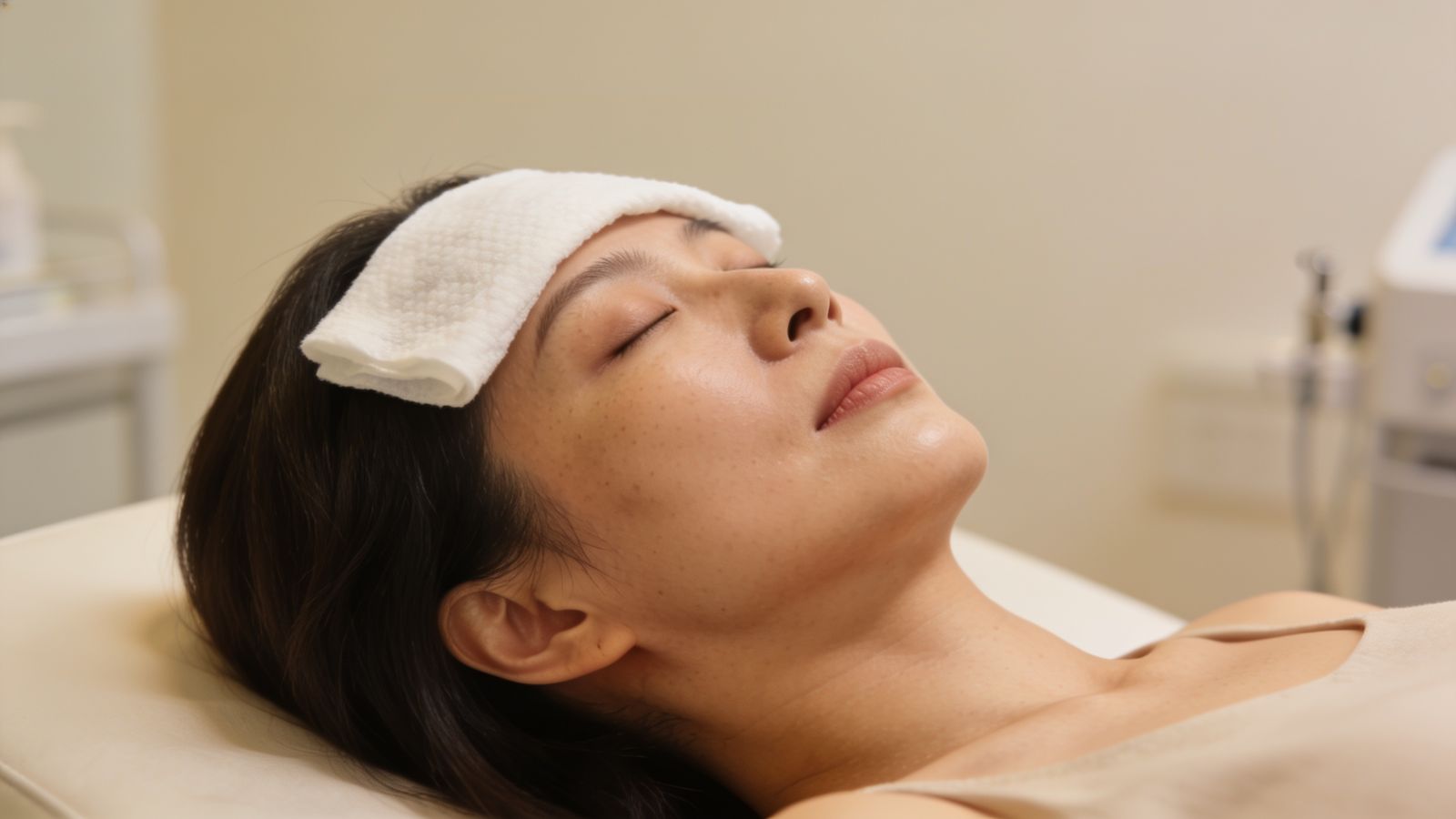
Polynucleotides are chains of nucleotides, the building blocks of DNA, purified from fish sources so that proteins and other contaminants are removed. In the skin they form a hydrating gel and are thought to act as a scaffold and a signal for fibroblasts, supporting the tissue’s own repair processes and collagen production.

The evidence base includes laboratory work, consensus statements from experienced injectors and a growing number of clinical studies, including a small randomised study in acne scarring. It is promising but not yet extensive, and results vary between people. The PDRN explainer covers the related, shorter-chain molecule.
Plinest, Rejuran or another booster?
Plinest and Rejuran are both polynucleotide boosters and are often compared; the Plinest vs Rejuran article sets out the differences. Polynucleotides tend to be considered for skin that is thin, sensitised or slow to recover, rather than skin that mainly needs hydration, where a hyaluronic acid booster may suit better. Recovery after polynucleotide injections is short; Rejuran downtime, day by day, shows what the bumps and bruises usually do.
Around the eyes, thin crepey skin and fine lines are a common reason people ask about PN. Where the problem is a hollow tear trough or puffiness, the cause is different and is covered on tear trough filler.
“Polynucleotides are for skin that has worn thin. If your skin mainly needs volume, they will disappoint you, and I would say so.”
Does it hurt? Comfort and numbing
Polynucleotide injections are known for stinging more than many other boosters, because the gel is viscous and placed superficially in multiple points. Numbing cream is applied for 30 to 45 minutes beforehand, and treatment is paced with pauses. Around the eyes, very fine injections or a cannula are used.
Most people describe it as uncomfortable but manageable, and the sensation stops when the injections do.
What to expect: day by day
Day 0. Small raised bumps at each injection point and some redness. These usually flatten within a few hours to a day.
Days 1–3. Mild swelling and possible pinpoint bruises, especially around the eyes. Makeup after the first day if the skin is intact; avoid saunas and strenuous exercise.
Week 1. Marks fade. Any early glow is mostly hydration.
Weeks 2–4. Polynucleotides are given as a course, so the next session is commonly due within this period.
Review. Skin quality is assessed after the course, typically a few weeks after the last session, before any maintenance is planned.
What are the side effects of a Plinest injection, and who should not have it?
Common effects are redness, swelling, bumps and bruising at the injection points. Less common are prolonged lumps, infection and allergic reactions. Because the product is derived from fish, people with fish allergy need careful assessment and may be advised against it.
Any injectable used in Singapore should be registered with HSA; the HSA registration guide explains how to check. Treatment is not given during pregnancy or breastfeeding, or over active acne, infection or eczema in the area.
Most of these effects settle within a few days. Contact the clinic promptly about pain that increases after the first two days, spreading redness, heat or pus, or a lump that persists beyond two weeks. A white, dusky or mottled patch of skin with pain needs same-day review by the treating clinic, and any change in vision needs the nearest emergency department straight away. Expected effects and downtime for each booster type are compared in skin booster side effects.
What does the evidence say about Plinest injections?
The evidence for Plinest’s polynucleotide (PN-HPT) is encouraging but small: a few short, single-centre studies, an expert consensus, and reviews that call for larger trials.
| Study | Who and what | What it found |
|---|---|---|
| Araco and Araco, 2021 (randomised) | 20 women with moderate to severe atrophic acne scars; PN-HPT or saline | Improvement at 1 and 3 months in the PN-HPT group only |
| Araco et al., 2022 (split-face) | 20 women, 40 nasolabial folds; PN-HPT on one side and saline on the other, then hyaluronic acid filler on both | Better wrinkles, texture and hydration on the PN-HPT side; no side effects reported over 6 months |
| Cavallini et al., 2021 (consensus) | 8 experienced Italian injectors | Suggested indications, techniques, sessions and intervals |
| Lee et al., 2024 (review) | Published polynucleotide studies in aesthetics | Varying results; some studies reported limited or no benefit |
In practice, Plinest is a reasonable option for thin, sensitised or post-acne skin when expectations are modest and the change is judged over a course rather than after one session. It does not replace subcision or resurfacing for deeper scars, and the evidence is not strong enough to promise any particular degree of change.
Which Plinest products are there, and which are used at IN Eternity Clinic?
IN Eternity Clinic uses Plinest for the face and neck and Plinest Eye for the lower lids; the Italian maker also makes related polynucleotide lines.
| Product | What it is | Typical use |
|---|---|---|
| Plinest | Highly purified polynucleotide gel (PN-HPT) | Thin, tired or crepey skin on the face and neck; post-acne skin quality |
| Plinest Eye | Polynucleotide formulated for the periorbital area | Crepey lower lids and fine lines around the eyes |
| Newest and other lines | Related products from the same maker, for example polynucleotides combined with hyaluronic acid, and scalp products | Not part of a Plinest plan at IN Eternity Clinic unless discussed and registered for use |
Whatever name is on the box, two questions matter more than the brand: what the active ingredient is, and whether the product is registered for injection in Singapore. A hyaluronic acid booster for hydration, if you need one, is planned as a separate step.
What Plinest results look like over time
Polynucleotides work gradually, so one session rarely shows much on its own.
| When | What you may notice |
|---|---|
| Day 0 | Small raised bumps and redness, usually flat within hours to a day. |
| Days 1–3 | Mild swelling and possible pinpoint bruises, especially around the eyes. |
| Week 1 | Marks fade; any early glow is mostly hydration. |
| A few weeks after the course | Skin quality compared with baseline photographs; maintenance only if it has helped. |
| Months | The effect fades gradually as the skin keeps ageing. |
Common myths, answered
- Myth: Polynucleotides are the same as “salmon DNA facials”.
Fact: Injected polynucleotides are purified, sterile medical products. Topical serums with DNA-derived ingredients act only on the skin surface. - Myth: Plinest fills lines like a filler.
Fact: It does not add volume. It aims to support skin quality over a course of sessions. - Myth: One session is enough.
Fact: Polynucleotides are given as a course; a single session rarely shows much on its own. - Myth: Fish allergy does not matter for an injection.
Fact: It does. The product is fish-derived, so allergy history is checked before any decision.
Plinest vs Rejuran: how the two polynucleotides compare
Plinest and Rejuran are the two polynucleotide boosters people most often ask about. Both are long-chain DNA fragments purified from fish, both form a hydrating gel in the skin, and both are given as a course rather than a single session. The differences are in origin, formulation and range rather than in how they work. For how polynucleotide courses are usually quoted, see Rejuran price in Singapore.
| Plinest | Rejuran | |
|---|---|---|
| Maker and origin | Mastelli, Italy | PharmaResearch, Korea |
| Source of polynucleotides | Trout (marketed as PN-HPT) | Salmon |
| Versions used at IN | Plinest for face and neck; Plinest Eye for the under-eye area | Rejuran Healer, HB, S and Eye |
| Typical aims | Thin, tired or crepey skin; skin quality around the eyes | Skin repair and texture; Rejuran S for atrophic scars; Rejuran Eye for the under-eye |
| What neither does | Add volume or change facial shape | Add volume or change facial shape |
| Course | Commonly 3–4 sessions a few weeks apart, then maintenance | Commonly a short course, then maintenance |
In practice the choice is made for your skin, the area and how you have responded before, not by brand. The longer comparison is in Plinest vs Rejuran, and the Rejuran range is set out on Rejuran Singapore.
Plinest Eye: for thin skin around the eyes
Plinest Eye is the version formulated for the delicate skin of the lower eyelid. It is placed in small amounts just beneath the surface, where thin, crepey skin lets vessels show through and fine lines form. Over a course, some people see smoother, slightly more robust-looking skin there.
It is not a filler. A hollow tear trough, a fat bulge or brown pigment under the eyes each has a different cause and a different treatment; these are explained on dark eye circle treatment and under-eye filler. Bruising is more likely around the eyes because of the many small vessels there, so sessions are planned away from important events.
How many Plinest sessions, and how far apart?
Polynucleotides work gradually, so a single session rarely shows much on its own. A typical plan has three phases.
| Phase | Typical timing | Purpose |
|---|---|---|
| Initial course | Commonly 3–4 sessions, a few weeks apart | Build skin quality step by step |
| Review | A few weeks after the last session | Compare with baseline photographs taken in the same light |
| Maintenance | Every few to several months, if it has helped | Hold the improvement as the skin keeps ageing |
Plinest can be combined with other treatments in the same plan, such as laser or a hyaluronic acid booster, usually on separate days so that each can be judged and the skin is not injected while still inflamed from a laser session.
Who Plinest treatment suits, and who it does not
- Suits: thin, dull or crepey skin on the face, neck or under the eyes; skin that is sensitised or slow to recover; early fine lines; skin quality after acne, as part of a wider plan.
- Less suited: faces that mainly need volume or lift, which respond better to filler, collagen stimulators or tightening; deep acne scars, which need resurfacing.
- Not given: during pregnancy or breastfeeding, over active infection, acne or eczema in the area, and only after careful discussion in people with fish allergy.
If another booster suits your skin better, for example a hyaluronic acid booster for hydration or a PDLLA booster for firmness, that is what will be suggested. The families are compared on skin booster Singapore.
What affects the cost of Plinest treatment in Singapore
Plinest is planned as a course, so the useful figure is the whole plan rather than a single syringe. Background on how these injectables work is in our polynucleotide skin booster guide.
| What affects it | Why it changes the cost |
|---|---|
| Areas | Face, neck and the under-eye area are planned separately; Plinest Eye is used for the lower lids. |
| Sessions in the course | Polynucleotides are given as a course a few weeks apart; the number is set at assessment and reviewed as you go. |
| Product amount and version | How many syringes each session needs, and whether Plinest, Plinest Eye or both are used. |
| Combination | Laser, a hyaluronic acid booster or Profhilo may be planned alongside, usually on separate days. |
| Assessment findings | Skin thickness, scarring or a fish allergy can point to a different booster altogether. |
If another booster suits your skin better, the plan changes before any cost is set. How consultation and treatment fees are set out is explained on our fees page. At IN Eternity Clinic a consultation fee applies, and it is waived if you go ahead with any medical treatment; the fee is S$120.
Aftercare, pregnancy and the hands
What should I avoid after a Plinest injection?
Small bumps settle within a day. Avoid make-up for 12 to 24 hours, and skip saunas, heavy exercise, massage and facials for a day or two. Keep skincare gentle with sunscreen. Contact the clinic if you notice increasing redness, pain or swelling after the first day.
Can I have Plinest during pregnancy or breastfeeding?
Plinest is postponed during pregnancy and breastfeeding because there is not enough safety data. Gentle skincare and sunscreen are safer choices in this period. Treatment can be planned after breastfeeding has finished.
Can Plinest be used on the hands?
Yes. Polynucleotides can be injected into the back of the hands to improve thin, dry and crepey skin over a course of sessions. Visible veins and tendons may need filler or a collagen stimulator for volume. Results vary.
Frequently asked questions
Where can Plinest be injected?
Plinest polynucleotides are injected across the face for skin quality, and Plinest Eye is used for thin under-eye skin. The neck, decolletage and backs of the hands can also be treated. The areas are chosen at assessment based on skin thickness and what you want to change.
Who makes Plinest, and what is it made from?
Plinest is made in Italy by Mastelli from highly purified polynucleotides derived from trout DNA, marketed as PN-HPT. Rejuran, another polynucleotide booster, is purified from salmon DNA. Because both come from fish, a fish allergy is checked before treatment. The Plinest range differs between markets, so the product used is confirmed at consultation and checked against HSA registration.
What is PN-HPT in Plinest?
PN-HPT stands for polynucleotides highly purified technology, the name for the purified polynucleotide gel in Plinest. A consensus of eight Italian experts has set out techniques, volumes, sessions and intervals for its use in aesthetic medicine. The evidence is encouraging but small: a few short, single-centre studies, that consensus, and reviews that call for larger trials.
Can Plinest help nasolabial folds?
Plinest adds no volume, so it does not fill a deep fold. In a split-face study of 20 women, the side given PN-HPT before hyaluronic acid filler showed better wrinkles, texture and hydration at six weeks than the side given saline. It may support skin quality around folds, but a fold caused by volume loss or descent usually needs support or lifting.
How is a Plinest injection given?
Numbing cream is applied for 30 to 45 minutes, then the gel is placed superficially as many small deposits with a fine needle; around the eyes, very fine injections or a cannula are used. Polynucleotides tend to sting more than many boosters, so treatment is paced with pauses. The injections usually take 20 to 40 minutes, depending on the areas treated.
What is Plinest?
Plinest is a polynucleotide skin booster made from highly purified fish DNA fragments. It is injected into the skin to support repair, hydration and thickness in skin that looks thin, tired or crepey. There are variants for the face, the eye area and other uses.
What is the difference between Plinest and Rejuran?
Both are polynucleotide injectables, made by different manufacturers, with differences in formulation, concentration and the range of versions available. In practice both aim to support skin quality and repair rather than add volume. Which, if either, suits you depends on your skin, the area and your history, and is decided at assessment.
How many sessions of Plinest are usually needed?
Polynucleotides are given as a course, commonly three or four sessions spaced a few weeks apart, followed by maintenance if it proves helpful. The exact plan depends on your skin, the area treated and how you respond after the first sessions. A single session on its own rarely shows much.
Can Plinest be used under the eyes?
A version designed for the eye area is used for thin, crepey skin and fine lines around the eyes. It does not fill hollows or remove eye bags, which have different causes such as volume loss or fat. Those are assessed separately and may need a different treatment altogether.
Is Plinest safe if I have a fish allergy?
Fish allergy needs specific discussion because the product is derived from fish DNA. Although it is highly purified, the risk of a reaction cannot be ruled out. Depending on the nature and severity of the allergy, you may be advised not to have it. Tell the doctor about all allergies before treatment.
How much does Plinest cost in Singapore?
Fees depend on the area treated, the amount of product, the version used and the number of sessions in the course. Whether a polynucleotide is the right choice for your skin is decided first, as another booster or treatment may suit better. Fees are then explained at consultation.
How long does Plinest last?
The effect builds over the course and then fades gradually over months as the skin keeps ageing, so maintenance sessions are usually suggested if it has helped. How long it holds varies with age, skin condition, sun exposure and the area treated.
Is Plinest the same as PDRN?
Not quite. Both come from fish DNA. Polynucleotides such as Plinest are longer chains that form a viscous gel in the skin; PDRN is made of shorter fragments. They are related but behave differently as injectables.
Can Plinest be combined with laser or other boosters?
Yes, as part of a planned course, usually on separate days. Laser addresses tone or texture and Plinest supports skin quality; a hyaluronic acid booster adds hydration. Spacing avoids injecting skin that is still inflamed from a laser session.
When will I see results from Plinest?
Change is gradual. Any early glow after the first session is mostly hydration. Skin quality usually improves across the course and is judged a few weeks after the last session, against photographs taken before treatment.
Does Plinest hurt?
Polynucleotide injections tend to sting more than many other boosters, because the gel is viscous and placed superficially at many points. Numbing cream is applied for 30 to 45 minutes first, treatment is paced, and the sensation stops when the injections do.
Who should not have Plinest?
It is not given during pregnancy or breastfeeding, or over active acne, infection or eczema in the area. Because it is derived from fish, a fish allergy needs specific assessment, and treatment may not be advised.
Is Plinest safe for darker skin?
Plinest is an injection, not a heat or light treatment, so it does not carry the pigment risk that some lasers carry in skin types III to V. Small bruises are the main colour concern, and in darker skin they can leave a brown mark for a few weeks, so daily sunscreen matters in Singapore’s sun. Polynucleotides are also considered for sensitised skin that reacts easily to stronger treatments.
Can I wear make-up after Plinest?
Leave make-up off for the rest of the treatment day, while the small bumps and injection points settle. From the next day light make-up is usually fine if the skin is intact. Around the eyes after Plinest Eye, wait until any swelling has eased and apply concealer gently. Clean brushes help in Singapore’s humidity.
Plinest or Profhilo: which suits thin, tired skin?
They work differently. Plinest is a polynucleotide aimed at repair and resilience of thin, sensitised or crepey skin. Profhilo is a concentrated hyaluronic acid that spreads through the skin to improve hydration and firmness. Skin that is mainly dry and lax may suit Profhilo; skin that is thin and slow to recover may suit Plinest. Some plans use both in sequence.
Can Plinest help acne scars?
It may help the skin around shallow scars look smoother as part of a wider plan, and a small randomised study in acne scarring supports the class. It does not lift tethered or deep scars, which need subcision or resurfacing, so Plinest is usually added to those treatments rather than used alone; see acne scars for the full approach.
Can Plinest be used on the neck?
Yes. Crepey neck skin and fine horizontal lines are a common reason people ask about polynucleotides, and the neck is treated with small, shallow deposits across the area. Deeper neck bands or loose skin need a different approach. The neck usually has its own plan within the course; see neck and hands.
What is the difference between Plinest and Plinest Eye?
Both are highly purified polynucleotide gels from the same Italian maker. Plinest is used across the face and neck for thin, tired or crepey skin. Plinest Eye is formulated for the thin skin of the lower eyelid, where it is placed in small, shallow amounts. Neither fills hollows, and many plans use both in the same course.
Is there downtime after a Plinest injection?
Usually little. Small raised bumps at each point flatten within hours to a day, and mild swelling or pinpoint bruises can last a few days, more often around the eyes. Most people return to work the next day. It is sensible to plan sessions at least a week away from important events in case of bruising.
How long does a Plinest treatment session take?
Allow about an hour. Numbing cream takes 30 to 45 minutes, and the injections themselves usually take 20 to 40 minutes, depending on the areas treated. Photographs are taken at the first visit in standard light, so that change can be judged fairly across the course.
What is Newest, and is it the same as Plinest?
Newest is a related product from the same Italian maker that combines polynucleotides with hyaluronic acid. It is not the same as Plinest, which is polynucleotide on its own. At IN Eternity Clinic the Plinest plan uses Plinest and Plinest Eye; if a hyaluronic acid booster would also help your skin, it is planned as a separate step.
Is Plinest a filler?
No. Plinest adds very little volume and does not lift or reshape the face. It is a skin-quality treatment that supports repair, hydration and thickness of thin skin over a course of sessions. Hollows and lost structure need filler or a collagen stimulator, and sagging needs lifting; these are assessed separately.
Who gives Plinest injections in Singapore?
In Singapore, Plinest is injected by doctors in medical clinics. At IN Eternity Clinic on Scotts Road, Orchard, Dr Sin Yong first checks skin thickness, the under-eye area and any fish allergy, then plans the injection technique and how many sessions are needed. Suitability and the product used are confirmed at the consultation.
How should I prepare for a Plinest injection?
Tell the doctor about any fish allergy, cold sores, skin infection or blood thinners at the consultation. For a few days before, avoid retinoids, exfoliating acids and facials on the area; fish oil supplements and alcohol are best avoided for a day or two to reduce bruising. Arrive with clean skin, and book at least a week before an important event in case of bruising.
Book an assessment
IN Eternity Clinic, 9 Scotts Road, #12-01 Pacific Plaza, Singapore 228210. By appointment with Medical Director Dr Sin Yong. Monday to Saturday, 11am to 8pm. WhatsApp or call +65 8815 3008.
International KOL — CLASSYS · HIRONIC · DEKA · ALMA · FOTONA · LUTRONIC
References
- Cavallini M, Bartoletti E, Maioli L, et al. Consensus report on the use of PN-HPT (polynucleotides highly purified technology) in aesthetic medicine. J Cosmet Dermatol 2021;20(3):922-928. doi:10.1111/jocd.13679
- Araco A, Araco F. Preliminary Prospective and Randomized Study of Highly Purified Polynucleotide vs Placebo in Treatment of Moderate to Severe Acne Scars. Aesthet Surg J 2021;41(7):NP866-NP874. doi:10.1093/asj/sjab125
- Health Sciences Authority, Singapore. Infosearch — registered medical devices and health products. hsa.gov.sg
- Singapore Medical Council. Guidelines on Aesthetic Practices for Doctors (2016 edition). healthprofessionals.gov.sg/smc
- Lee KWA, Chan KWL, Lee A, et al. Polynucleotides in aesthetic medicine: a review of current practices and perceived effectiveness. Int J Mol Sci 2024;25(15):8224. doi:10.3390/ijms25158224
- Kim et al. A prospective split-face trial evaluating skin recovery and enhancement with polynucleotide (Rejuran) […]. Plast Reconstr Surg Glob Open 2026. doi:10.1097/GOX.0000000000008109
- Araco A, Araco F, Raichi M. Clinical efficacy and safety of polynucleotides highly purified technology (PN-HPT) and cross-linked hyaluronic acid for moderate to severe nasolabial folds: a prospective, randomized, exploratory study. J Cosmet Dermatol 2023;22(1):146-155 (online 2022). doi:10.1111/jocd.15064
These sources describe mechanisms and general evidence. They are not a promise of any individual result; suitability is decided at an in-person assessment.