
Plinest vs Rejuran: Comparing Two Polynucleotide Boosters
Plinest and Rejuran both use purified fish DNA fragments to support skin quality. Dr Sin Yong at IN Eternity Clinic on Orchard Road explains what is genuinely different and what is mostly branding.
Treatment page: skin boosters in Singapore.
WhatsApp to Enquire →Key facts ↓Plinest vs Rejuran is a choice between two polynucleotide (PN) boosters that work in broadly the same way. Plinest is made in Italy by Mastelli from trout-derived PN; Rejuran is made in Korea by PharmaResearch from salmon-derived PN. Both support repair and hydration of thin skin, neither adds volume, and both run as a course. The area and formulation decide, not the fish.
On this page
- Plinest technology: Plinest uses PN-HPT, the subject of a consensus of 8 Italian experts on technique, volumes, sessions and intervals (Cavallini et al., J Cosmet Dermatol 2021).
- PN-HPT and acne scars: in a randomised study of 20 women with atrophic acne scars, the 10 treated with PN-HPT improved at 1 and 3 months and the 10 given saline did not (Araco and Araco, Aesthet Surg J 2021).
- PN-HPT and skin quality: in a split-face study of 20 women (40 nasolabial folds), the PN-HPT side showed better wrinkles, texture and hydration at 6 weeks, with no side effects reported over 6 months (Araco et al., J Cosmet Dermatol 2022).
- Rejuran: in a 2026 split-face trial of 25 women, Rejuran after fractional needling lowered water loss through the skin at 6 weeks, with no significant change in dermal thickness or elasticity (Kim, Plast Reconstr Surg Glob Open 2026).
- Mechanism: the shorter-chain relative, PDRN, acts mainly on adenosine A2A receptors involved in tissue repair (Squadrito et al., Front Pharmacol 2017).
- An expert consensus on highly purified polynucleotides set out technique, dose, volume, number of sessions and intervals for each area of the face and body (J Cosmet Dermatol 2021)
What are polynucleotides, and what are they not?
Polynucleotides are long chains of nucleotides, the units that make up DNA. For aesthetic use they are extracted from fish sperm cells, purified to remove proteins that could trigger reactions, and formulated into a sterile gel. The shorter fragments are often called PDRN (polydeoxyribonucleotide); the longer chains are called PN. In practice, both terms are used loosely in marketing.
Laboratory and clinical studies suggest that PDRN acts on adenosine A2A receptors involved in tissue repair, and that PN gels can support fibroblast activity, hydration and the skin’s repair environment. Clinical evidence in aesthetics is growing but still modest in size, so expectations should be realistic: these are skin-quality treatments, not lifting or volumising ones.
What is Plinest?
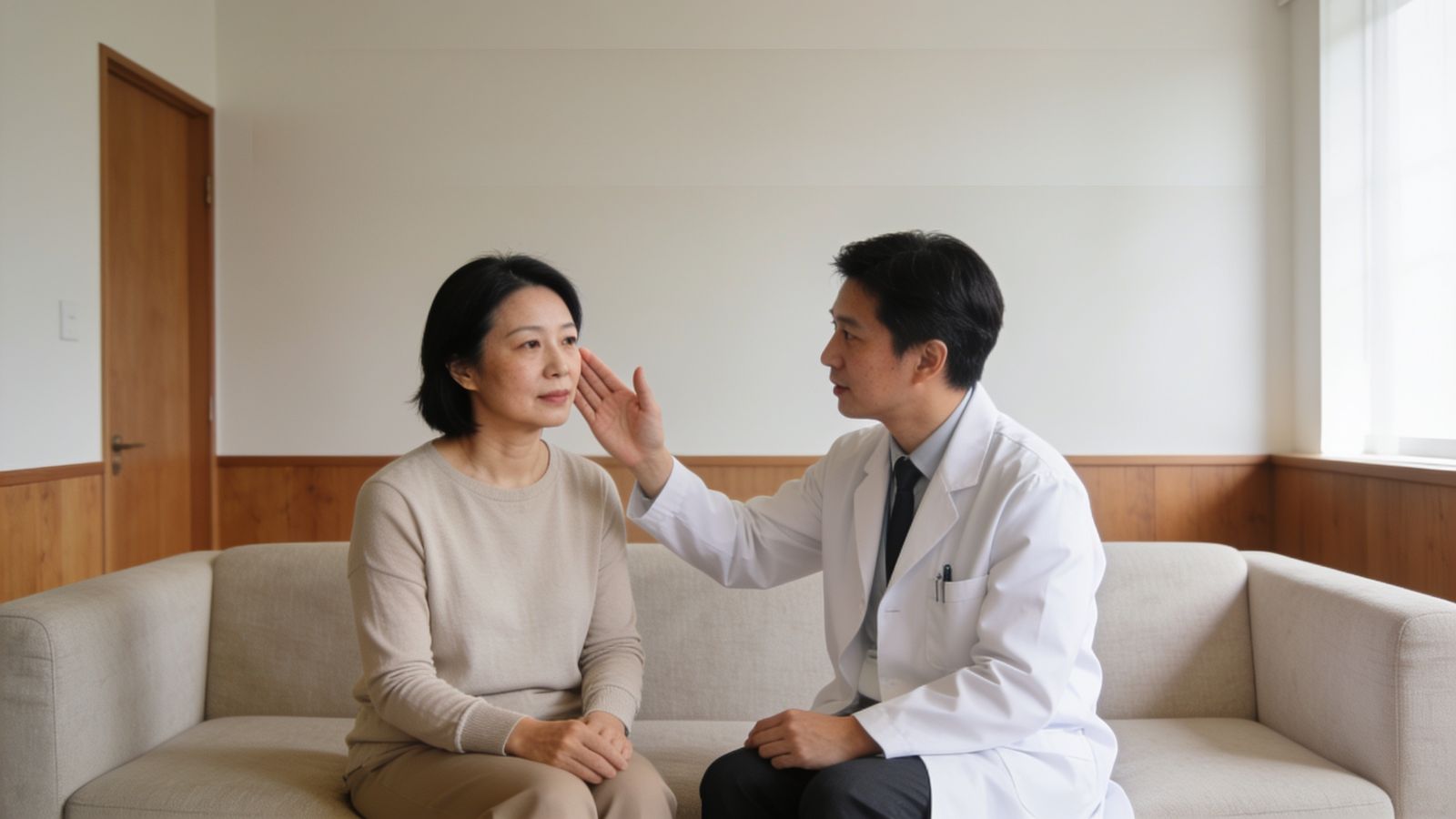
Plinest is made by Mastelli, an Italian company that has worked with polynucleotides for decades. It is derived from trout and marketed under the name PN-HPT (polynucleotides highly purified technology). The range includes a face product, a version formulated for the eye area, a scalp product, and a line that combines polynucleotides with hyaluronic acid.
Clinicians often describe Plinest as a relatively fluid gel that spreads evenly. A published consensus from Italian practitioners sets out suggested indications and techniques for these products across the face, neck, eye area and scalp.
“Patients ask whether trout or salmon is better. The more useful question is which area, at what depth, and in what kind of skin.”
What is Rejuran?
Rejuran is made by PharmaResearch in Korea from salmon-derived polynucleotides. The range has expanded beyond the original Rejuran Healer to include Rejuran I for the eye area, Rejuran S for atrophic scars, and versions combined with other ingredients. It is widely used across Asia, where it is often discussed by its original name, salmon DNA injection.
Clinicians often find Rejuran Healer a slightly thicker gel that raises small bumps along the injection lines for a few hours to a day. At IN Eternity Clinic, Rejuran is given by the doctor as a series of fine, superficial injections after numbing cream.
Plinest vs Rejuran at a glance
| Plinest | Rejuran | |
|---|---|---|
| Maker and origin | Mastelli, Italy | PharmaResearch, Korea |
| Source | Trout | Salmon |
| Active | Polynucleotides (PN-HPT) | Polynucleotides |
| Range examples | Face, eye, scalp, PN plus HA | Healer, eye (Rejuran I), scars (Rejuran S) |
| Typical use | Course, then maintenance | Course, then maintenance |
Formulations, ranges and local registration change over time, so product availability is confirmed at consultation.
Plinest or Rejuran: how do you choose?
For most people, the area and goal matter more than the brand. Thin, crepey under-eye skin calls for a product formulated for the eye area, whichever range it comes from. Post-acne texture and shallow scars may suit a scar-oriented formulation, often alongside resurfacing. General dullness, fine lines and dehydrated skin can be addressed with either face product. Thinning hair is a different indication with its own products and evidence.
Practical factors also count: how a gel spreads in a given area, the number of injection points needed, how much bumpiness you can accept on the day, and which products are registered and available. Dr Sin Yong will tell you at assessment which option he recommends and why, and whether a different booster such as hyaluronic acid or a PDLLA-based product would suit your goal better.
Polynucleotides vs other skin boosters
Polynucleotides are one of several skin-booster families, and they are not always the right one. Hyaluronic acid boosters, including high-concentration products such as Profhilo, mainly hydrate and can improve mild laxity through their water-binding and spreading behaviour. PDLLA-based boosters such as Juvelook stimulate collagen gradually through a controlled tissue response. Polynucleotides are aimed at skin quality and repair: texture, fine crepiness, thin skin and recovering skin after acne or procedures.
Some plans use more than one family over time, for example polynucleotides for texture and thin skin with a hyaluronic acid booster for hydration. Others combine a booster with energy-based treatments. The sequence, spacing and total amount injected are planned together so that the skin is supported rather than overloaded, and every product chosen is registered for use in Singapore.
Polynucleotides alongside lasers and lifting
Polynucleotides are often used around other treatments rather than instead of them. After fractional resurfacing or RF microneedling for acne scars, a polynucleotide course may be scheduled to support the skin as it remodels. Before or after under-eye filler, an eye-area formulation can improve the quality of the skin over the corrected hollow. With lifting treatments such as monopolar RF or HIFU, a booster can address surface texture that lifting does not change.
Timing matters. Injecting into skin that is still inflamed from a laser session is not ideal, so the interval between treatments is set at assessment and adjusted to how your skin responded last time.
Comfort, downtime and course
Numbing cream is applied for twenty to thirty minutes. The injections feel like brief stings across the area. Small bumps settle over hours to a day or two, and bruising is possible, so it is wise to plan treatment away from important events. A course is usually two to four sessions a few weeks apart, followed by maintenance. Change is gradual and varies between people, and is reviewed across the course rather than after one session.
Afterwards, avoid make-up for the rest of the day, and avoid saunas, strenuous exercise and facial massage for a day or two. Sun protection supports any skin treatment. If you are having lasers or RF microneedling in the same period, the order and spacing are planned so the skin is not overloaded.
Who should not have Plinest or Rejuran?
People with fish allergy, active skin infection or inflammation in the area, or who are pregnant or breastfeeding should not have polynucleotide injections. Those with autoimmune conditions or on blood thinners are assessed individually. As with any injectable, the product should be HSA-registered, opened in front of you, and injected by a doctor.
Plinest or Rejuran for under-eyes, acne scars and thin skin?
Both ranges have a face product and an eye formulation, so for most concerns either can be used; Rejuran also has a scar-specific gel, Rejuran S.
| Concern | Plinest range | Rejuran range |
|---|---|---|
| Thin, tired or crepey skin on the face | Plinest | Rejuran Healer, or HB where dryness is also a concern |
| Crepey lower lids and fine lines | Plinest Eye | Rejuran i (Rejuran Eye) |
| Individual depressed acne scars | Plinest across the area, within a wider scar plan | Rejuran S, placed beneath individual scars |
| Neck | Plinest | Rejuran Healer |
| Comfort during injections | Numbing cream | Numbing cream; HB also contains a local anaesthetic |
If you have had one before and responded well, that is usually a good reason to stay with it; if bumps lasted longer than you could accept, the other gel may behave differently in your skin. The Rejuran range is set out on Rejuran Singapore and the Plinest course on Plinest injection treatment.
What does the evidence show for Plinest and Rejuran?
Both have small but growing evidence: PN-HPT, the technology in Plinest, has randomised and split-face studies, and Rejuran has a 2026 split-face trial after needling.
| Study | Product type | What it found |
|---|---|---|
| Araco and Araco, 2021 | PN-HPT (Plinest technology) | 20 women with acne scars: improvement at 1 and 3 months with PN-HPT, not with saline |
| Araco et al., 2022 | PN-HPT | 20 women, 40 nasolabial folds: better wrinkles, texture and hydration on the treated side; no side effects reported over 6 months |
| Kim, 2026 | Rejuran | 25 women: lower water loss and higher hydration at 6 weeks after needling; no significant change in dermal thickness or elasticity |
| Lee et al., 2024 (review) | Polynucleotides generally | Varying results; some studies reported limited or no benefit |
No published trial has compared Plinest with Rejuran directly, so claims that one works better are not supported by evidence. What differs in practice is the range of formulations, how each gel spreads and how your own skin responds.
What are the side effects of Plinest and Rejuran?
Their side effects are similar: small raised bumps for hours to a day or two, redness, mild swelling and pinpoint bruises, with infection and allergy uncommon.
Because both are fish-derived, a fish allergy needs specific assessment and may rule out either. Rejuran HB contains lidocaine, so any reaction to local anaesthetic is checked. Contact the clinic about pain that increases after the first two days, spreading redness or heat, or a lump that persists beyond two weeks. A white, dusky or mottled patch of skin with pain needs same-day review by the treating clinic, and any change in vision needs the nearest emergency department straight away. Booster-by-booster detail is in skin booster side effects, and the wider family on skin booster Singapore.
Common myths, answered
- Myth: Salmon DNA and trout DNA give very different results.
Fact: Both are purified polynucleotides that work in broadly the same way. Formulation and technique matter more than the fish. - Myth: Polynucleotides are fillers.
Fact: They add little volume and do not lift or reshape. They are skin-quality treatments. - Myth: Polynucleotide masks and ampoules equal injections.
Fact: Home skincare stays on the surface. Injected products reach the dermis in a measured dose. - Myth: One session is enough.
Fact: Most protocols use a short course, then maintenance, with gradual change.
Frequently asked questions
Is Plinest better than Rejuran?
Neither is better in general. Both are polynucleotide injectables that work in broadly similar ways. The choice depends on the area, the goal, how the gel behaves in that area and which products are registered and available. Dr Sin Yong recommends a specific product after assessing your skin.
What is the difference between PN and PDRN?
Both come from purified DNA fragments. PDRN usually refers to shorter fragments and PN to longer chains that form a more viscous gel. Marketing uses the terms loosely, so it is more helpful to ask which product is being used and why.
Does IN Eternity Clinic offer Plinest?
Yes. IN Eternity Clinic offers Plinest, including Plinest Eye, and the Rejuran range (Healer, HB, S and Eye). Dr Sin Yong examines your skin first and recommends one, both in sequence, or a different booster if that suits your skin better, and explains why. Which formulations are available at the time is confirmed at consultation.
How many sessions of polynucleotide treatment do I need?
A course is usually two to four sessions a few weeks apart, followed by maintenance at intervals. The exact number depends on the area, your skin and your goals, and progress is reviewed through the course with photographs taken in consistent lighting so that gradual change can be judged fairly.
Can polynucleotides be used under the eyes?
Yes, there are formulations designed for the eye area, including Rejuran I and an eye-area Plinest product. They support thin, crepey skin but do not fill hollows. Where a hollow is the main problem, filler or a combined plan may be advised instead.
How much do Plinest or Rejuran treatments cost?
It depends on the product, the area, the amount used per session and the number of sessions. A written estimate is given after assessment so you can see what a full course, including any maintenance sessions, involves before deciding. Combining products or treatments changes the plan, and this is explained clearly.
Is there downtime?
Small raised bumps along the injection lines are common for a few hours to a day or two, and bruising is possible. Most people return to normal activities the next day, but it is sensible not to schedule treatment just before an important event.
Plinest or Rejuran: which is better for under-eyes?
Neither is better in general. Both ranges have a formulation for thin lower-lid skin, Plinest Eye and Rejuran i, placed in small, shallow amounts. They improve crepey texture and fine lines but do not fill a hollow tear trough. The choice depends on how your skin has responded before and how each gel behaves in that area.
Plinest or Rejuran: which is better for acne scars?
For individual depressed scars, Rejuran S is designed to be placed beneath each scar, while PN-HPT, the technology in Plinest, has randomised evidence in acne scars when spread across the area. Both work on the skin under a scar, not on the fibrous bands that tether it, so deeper scars usually also need subcision or resurfacing.
Do Plinest and Rejuran feel different?
Clinicians often describe Plinest as a slightly more fluid gel that spreads evenly, and Rejuran Healer as a little thicker, raising small bumps along the injection lines for a few hours to a day. Both sting briefly and are given after numbing cream. How your own skin responds is the most useful guide.
Can I switch from Rejuran to Plinest, or the reverse?
Yes. Both are polynucleotides that work in broadly the same way, so switching is a practical choice rather than a medical risk. Common reasons are how long the bumps lasted, how the skin responded, or the area being treated. The next course is planned from a review of your skin and your earlier photographs.
Are Plinest and Rejuran registered in Singapore?
Every injectable used at IN Eternity Clinic is registered with the Health Sciences Authority and bought from its local registrant or an authorised distributor, and the batch is recorded in your notes. Which formulations of each range are registered and available changes over time, so this is confirmed at consultation.
How does Nucleofill compare with Rejuran and Plinest?
All three are injectable polynucleotides aimed at skin quality. They differ in manufacturer, concentration and the areas each version is designed for, and there are few direct comparisons. See Nucleofill vs Rejuran.
Book an assessment
IN Eternity Clinic, 9 Scotts Road, #12-01 Pacific Plaza, Singapore 228210. By appointment with Medical Director Dr Sin Yong. Monday to Saturday, 11am to 8pm. WhatsApp or call +65 8815 3008.
International KOL — CLASSYS · HIRONIC · DEKA · ALMA · FOTONA · LUTRONIC
References
- Cavallini M, Bartoletti E, Maioli L, et al. Consensus report on the use of PN-HPT (polynucleotides highly purified technology) in aesthetic medicine. J Cosmet Dermatol 2021;20(3):922-928. doi:10.1111/jocd.13679
- Squadrito F, Bitto A, Irrera N, et al. Pharmacological activity and clinical use of PDRN. Front Pharmacol 2017;8:224. doi:10.3389/fphar.2017.00224
- Lee KWA, Chan KWL, Lee A, et al. Polynucleotides in aesthetic medicine: a review of current practices and perceived effectiveness. Int J Mol Sci 2024;25(15):8224. doi:10.3390/ijms25158224
- Singapore Medical Council. Guidelines on Aesthetic Practices for Doctors (2016 edition). healthprofessionals.gov.sg/smc
- Health Sciences Authority, Singapore. Infosearch — registered medical devices and health products. hsa.gov.sg
- Araco A, Araco F. Preliminary prospective and randomized study of highly purified polynucleotide vs placebo in treatment of moderate to severe acne scars. Aesthet Surg J 2021;41(7):NP866-NP874. doi:10.1093/asj/sjab125
- Araco A, Araco F, Raichi M. Clinical efficacy and safety of polynucleotides highly purified technology (PN-HPT) and cross-linked hyaluronic acid for moderate to severe nasolabial folds: a prospective, randomized, exploratory study. J Cosmet Dermatol 2023;22(1):146-155 (online 2022). doi:10.1111/jocd.15064
- Kim J. A prospective split-face trial evaluating skin recovery and enhancement with polynucleotide (Rejuran) following fractional needle radiofrequency treatment. Plast Reconstr Surg Glob Open 2026;14(9):e8109. doi:10.1097/GOX.0000000000008109
These sources describe mechanisms and general evidence. They are not a promise of any individual result; suitability is decided at an in-person assessment.