
Microneedling vs RF Microneedling vs CO2 Laser
All three remodel skin by causing a controlled injury that heals with new collagen. Dr Sin Yong at IN Eternity Clinic on Orchard Road explains how the injury differs, and why that decides who each one suits.
For the clinic treatment, see microneedling Singapore.
WhatsApp to Enquire →Key facts ↓Microneedling makes tiny punctures that prompt mild collagen repair. RF microneedling adds radiofrequency heat at the needle tips, remodelling deeper with less surface damage. Fractional CO2 laser vaporises microscopic columns of skin for the strongest resurfacing, with the most downtime. The choice depends on scar type, skin type and downtime.
- Plain microneedling: fine needles create micro-channels in the skin; the wound-healing response lays down new collagen with no added heat.
- RF microneedling: insulated or non-insulated needles deliver radiofrequency energy at a set depth, heating the dermis to tighten and remodel it.
- Fractional CO2 laser: a 10,600 nm laser vaporises thousands of microscopic columns of skin, with healing skin left between them.
- Depth and intensity: plain microneedling is the mildest; RF microneedling heats deeper; fractional CO2 removes tissue and gives the strongest single-session change.
- Downtime: broadly increases from microneedling to RF microneedling to CO2, but settings change this a great deal.
- Pigment risk in Asian skin: post-inflammatory darkening can follow any of them; heat at the surface raises the risk, which is why insulated needles and conservative laser settings matter.
- At IN Eternity Clinic: RF microneedling is performed on Secret Duo and fractional CO2 on the DEKA SmartXide Tetra PRO.
- Combination: acne scars often need more than one method, for example subcision for tethered scars plus resurfacing.
- A 2018 review found microneedling improves scars, stretch marks and wrinkles with quick recovery and limited side effects (Dermatol Surg 2018)
- In a study of fractional radiofrequency microneedling, acne scar grade and large pores improved in more than 70% of patients, with measured gains in skin roughness and dermal density (Dermatol Surg 2012)
- A review of RF microneedling found it allows more effective treatment with minimal downtime, with several studies supporting low risk even in dark skin types (Facial Plast Surg Clin North Am 2019)
Controlled injury, then repair
Each of these treatments works on the same principle. A carefully measured injury is made in the skin, and the body repairs it by producing new collagen and elastin and reorganising old, disordered fibres. Over the following months, scars can soften, pores can look tighter and texture can become more even.
What separates them is the kind of injury. Plain microneedling is mechanical. RF microneedling is mechanical plus heat at a chosen depth. Fractional CO2 laser is thermal and ablative: it removes tiny columns of tissue. The deeper and more intense the injury, the more remodelling is possible, and the more healing time and risk come with it. Choosing well means matching the injury to the problem rather than reaching for the strongest option.
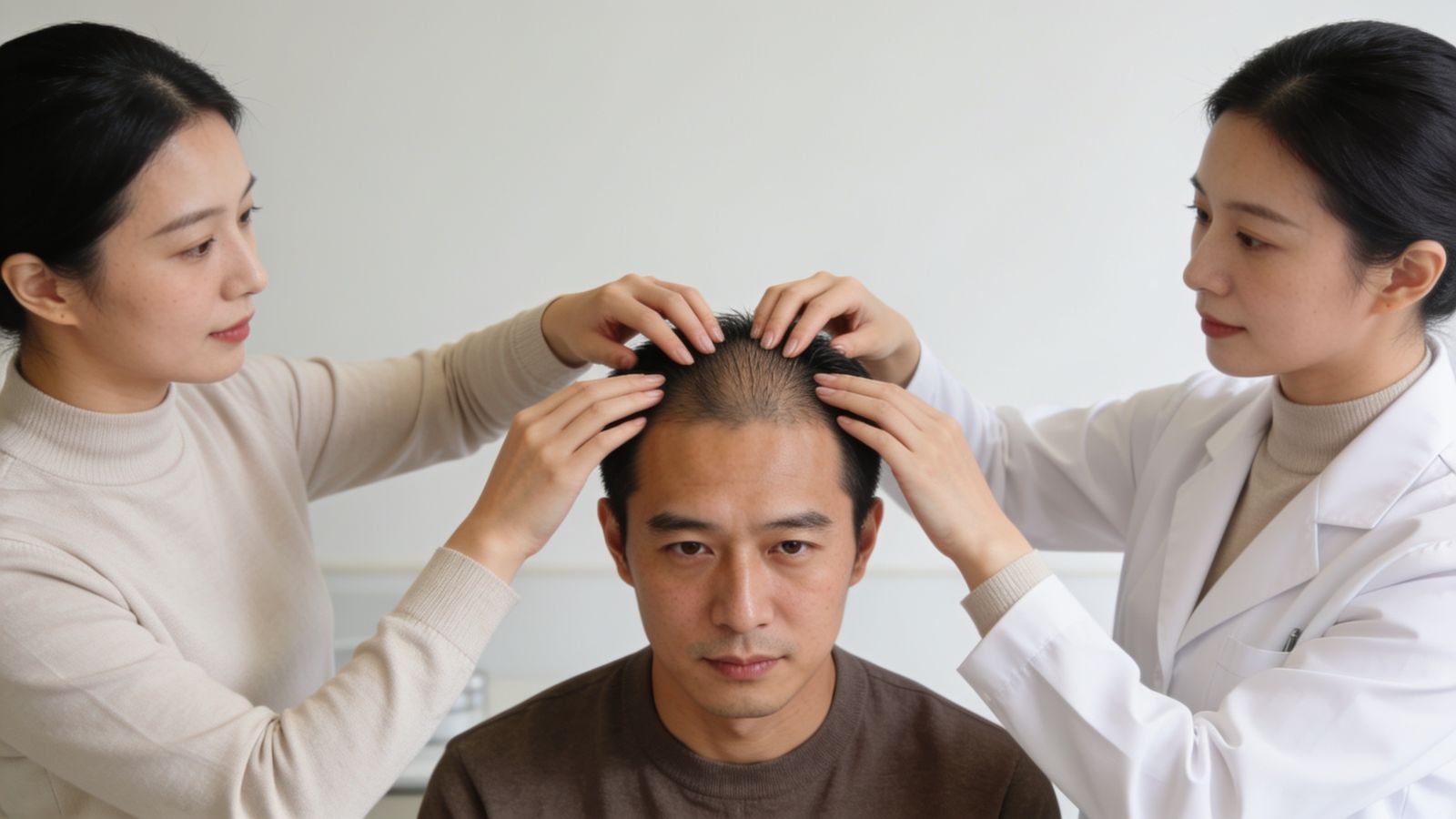
Plain microneedling
A pen or roller with fine needles makes many tiny channels in the skin. There is no heat. The skin responds with a short inflammatory phase, then a repair phase that lays down collagen. Because the surface is broken only briefly, the skin usually looks pink for one to two days.
It suits mild textural concerns, early fine lines and shallow, rolling acne scars in people who want modest downtime. It also lets topical products reach a little deeper, though what is applied during microneedling should be sterile and intended for that use. It is the least likely of the three to cause pigment problems, but it is also the gentlest, so results are subtle and usually need a course of sessions. How RF microneedling downtime runs, day by day, is explained separately.
“The strongest injury is not the right injury. I match the depth of the treatment to the depth of the problem.”
RF microneedling
RF microneedling places needles into the dermis and releases radiofrequency energy at or near the tips. The heat contracts and remodels collagen at a depth chosen for the problem, while the surface between the needles is largely spared. Insulated needles keep heat at the tip and protect the epidermis, which is useful in darker or pigment-prone skin. Non-insulated needles spread heat along the shaft for a broader effect.
It suits rolling and boxcar acne scars, enlarged pores, and early laxity or crepiness, and is often chosen for Asian skin because it delivers deeper heat with less surface damage than an ablative laser. Expect redness and grid marks for a few days, sometimes swelling. At IN Eternity Clinic it is performed on Secret Duo, which also carries a 1540 nm non-ablative fractional laser, so the scar and the skin around it can be addressed in one visit.
Fractional CO2 laser
A fractional CO2 laser at 10,600 nm is absorbed by water in the skin. It vaporises thousands of microscopic columns of tissue and heats the surrounding dermis, while the untreated skin between columns speeds healing. This is fractional photothermolysis: a strong resurfacing effect without stripping the whole surface.
It gives the most change per session for deeper boxcar scars, marked texture and some types of photo-ageing. The trade-off is downtime: redness, swelling and fine crusting for around a week, with pinkness that can persist for weeks. Post-inflammatory pigmentation is a real risk in Asian skin, so pre-treatment, settings and aftercare are planned in advance. At IN Eternity Clinic, a designated DEKA Centre of Excellence, it is performed on the DEKA SmartXide Tetra PRO.
Microneedling vs RF microneedling vs CO2 at a glance
| Microneedling | RF microneedling | Fractional CO2 | |
|---|---|---|---|
| Injury | Mechanical channels | Channels plus heat at depth | Microscopic ablation plus heat |
| Typical downtime | 1–2 days pink | Several days red, grid marks | About a week of crusting, longer pinkness |
| Suits | Mild texture, shallow scars | Rolling and boxcar scars, pores, early laxity | Deeper scars, marked texture |
| Pigment risk | Lower | Moderate, reduced with insulated needles | Higher, needs careful planning |
| Sessions | Course | Course | Fewer, spaced further apart |
These are general patterns. Your own downtime, number of sessions and response depend on skin type, the problem and the settings used, and are discussed at consultation.
Matching the method to the skin
Mild texture or the first signs of scarring, little downtime available: plain microneedling, or very gentle RF settings. Rolling or boxcar scars and enlarged pores in pigment-prone skin: RF microneedling with insulated needles is often the core tool. Deep boxcar scars or marked texture where a week of recovery is possible: fractional CO2, sometimes in a staged plan. Ice-pick scars: usually need a focal method such as targeted CO2 or chemical reconstruction rather than a whole-face pass. Tethered scars: subcision first, because no resurfacing frees a scar that is pulled down from below.
Active acne, recent isotretinoin use, a tendency to keloid scarring, active cold sores and pregnancy all change the plan and are reviewed first.
What healing looks like, day by day
Day 0. After plain microneedling the face looks flushed, like a mild sunburn. After RF microneedling there may be redness, a faint grid of needle marks and some swelling, especially under the eyes. After fractional CO2 the skin feels hot and tight, and pinpoint oozing is normal for the first day.
Days 1–3. Microneedling redness usually fades. RF microneedling marks start to settle, and light make-up is often possible once the surface has closed. CO2-treated skin forms fine brown crusts; these should be left to shed on their own rather than picked.
Week 1 onwards. CO2 crusts usually shed within about a week, leaving pink new skin that needs strict sun protection and a gentle, fragrance-free routine. Across all three, collagen remodelling continues for months, so progress is judged at review rather than in the first fortnight. Any darkening that appears in the weeks after treatment is easier to manage when it is reported early.
Why one method is rarely the whole answer
Acne scarring is usually a mix of scar types, depths and colours. A typical plan might release tethered scars, use RF microneedling for rolling scars and pores, and add CO2 for a few deeper scars, with pigment and redness managed alongside. The sequence and spacing are as important as the choice of tools, and the plan is reviewed after each stage rather than fixed in advance.
When comparing offers, ask what the treatment actually is (needle depth, whether radiofrequency is used, insulated or non-insulated needles, which laser and wavelength), who performs it, and how pigment risk will be managed in your skin. Those answers tell you more than a treatment name.
Common myths, answered
- Myth: CO2 laser is always the strongest choice for scars.
Fact: It gives the most resurfacing per session, but rolling and tethered scars often respond better to RF microneedling or subcision, and pigment risk is higher. - Myth: RF microneedling is just microneedling with a different name.
Fact: The radiofrequency heat delivered at depth makes it a different procedure with different results and risks. - Myth: More passes mean better results.
Fact: Over-treatment increases redness, pigment change and scarring risk. Settings are matched to skin type and healing. - Myth: One session should be enough.
Fact: Most scar plans involve a course, with collagen remodelling continuing for months after each session.
Frequently asked questions
Is RF microneedling better than microneedling?
It is deeper and adds heat, so it can remodel more for scars, pores and early laxity, with more downtime. Plain microneedling is gentler and suits mild texture. The useful question is which matches your skin and goals, which is decided at assessment.
Is CO2 laser or RF microneedling better for acne scars?
It depends on the scar types. Deep boxcar scars and marked texture often benefit from fractional CO2. Rolling scars and enlarged pores in pigment-prone skin often respond well to RF microneedling. Many people need a combination, sometimes with subcision for tethered scars.
How much downtime should I plan for?
As a rough guide, plain microneedling one to two days of pinkness, RF microneedling several days of redness and grid marks, and fractional CO2 about a week of crusting with pinkness that can last weeks. Settings change this, so your downtime is estimated at consultation.
Are these treatments safe for Asian skin?
Yes, with care. Post-inflammatory pigmentation is the main concern. Insulated needles, conservative laser settings, sun protection and sometimes pre-treatment skincare reduce the risk. Your skin type, any history of melasma or darkening after injury, and recent sun exposure are reviewed first so the plan is set for your skin.
Do they hurt?
Numbing cream is applied before all three. Microneedling feels like light scratching. RF microneedling adds brief deep warmth with each pulse. Fractional CO2 feels hot and prickly, and cooling air is used throughout. Most people tolerate all three well with numbing, and settings can be adjusted during the session if an area feels too intense.
How much does it cost?
It depends on the method, the area, the number of sessions, and whether treatments are combined. A plan for acne scars is priced after assessment because the mix of scar types decides what is needed. A written estimate is given before you commit.
When will I see results?
Some smoothing may be seen within weeks, but collagen remodelling continues for several months after each session, so the full effect of a course takes time. Results are reviewed at planned intervals with standardised photographs, and they vary between people depending on scar type, skin type and healing.
Book an assessment
IN Eternity Clinic, 9 Scotts Road, #12-01 Pacific Plaza, Singapore 228210. By appointment with Medical Director Dr Sin Yong. Monday to Saturday, 11am to 8pm. WhatsApp or call +65 8815 3008.
International KOL — CLASSYS · HIRONIC · DEKA · ALMA · FOTONA · LUTRONIC
References
- Alster TS, Graham PM. Microneedling: a review and practical guide. Dermatol Surg 2018;44(3):397-404. doi:10.1097/DSS.0000000000001248
- Weiner SF. Radiofrequency microneedling: overview of technology, advantages, differences in devices, studies, and indications. Facial Plast Surg Clin North Am 2019;27(3):291-303. doi:10.1016/j.fsc.2019.03.002
- Manstein D, Herron GS, Sink RK, Tanner H, Anderson RR. Fractional photothermolysis: a new concept for cutaneous remodeling using microscopic patterns of thermal injury. Lasers Surg Med 2004;34(5):426-438. doi:10.1002/lsm.20048
- Jacob CI, Dover JS, Kaminer MS. Acne scarring: a classification system and review of treatment options. J Am Acad Dermatol 2001;45(1):109-117. doi:10.1067/mjd.2001.113451
- Cho SI, Chung BY, Choi MG, et al. Evaluation of the clinical efficacy of fractional radiofrequency microneedle treatment in acne scars and large facial pores. Dermatol Surg 2012;38(7):1017-1024. doi:10.1111/j.1524-4725.2012.02402.x
These sources describe mechanisms and general evidence. They are not a promise of any individual result; suitability is decided at an in-person assessment.