
Closed Comedones Treatment Singapore
Closed comedones are the gritty, skin-coloured bumps on the forehead and chin. At IN Eternity Clinic, Dr Sin Yong confirms what they are, then plans retinoids, peels or doctor extraction around your skin.
WhatsApp to Enquire →Key facts ↓Closed comedones are whiteheads: pores plugged with sebum and skin cells whose openings have sealed. They are treated by changing how the follicle sheds, mainly with a topical retinoid or salicylic acid used consistently for eight to twelve weeks, helped by superficial peels and, for stubborn ones, sterile doctor extraction. Squeezing at home often turns them into marks. At IN Eternity Clinic, Dr Sin Yong confirms the diagnosis first.
Closed comedones treatment at a glance
| Closed comedones treatment at IN Eternity Clinic | |
|---|---|
| What it is | Treatment of closed comedones (whiteheads): pores plugged with sebum and skin cells whose openings have sealed. |
| Used for | Gritty, skin-coloured bumps on the forehead, chin and jawline, common in Singapore’s heat and humidity. |
| How it works | A topical retinoid or salicylic acid changes how the follicle lining sheds, so plugs loosen and new ones stop forming; superficial peels and sterile doctor extraction help stubborn ones. |
| Typical sessions | A home routine used consistently for eight to twelve weeks, with a course of peels spaced two to four weeks apart where helpful. |
| Downtime | Little: dryness in the first weeks of a retinoid; mild tightness after a peel; pinpoint marks after extraction. |
| When results show | A retinoid can bring some comedones to the surface in weeks two to six; by weeks eight to twelve there should be clearly fewer new ones. |
| Who should avoid or wait | Prescription retinoids are not used in pregnancy; peels are paused if the skin is irritated, sunburnt or has active eczema; milia and fungal acne need different treatment. |
| Who performs it | Diagnosed and planned by Medical Director Dr Sin Yong. |
Dr Sin Yong, Medical Director of IN Eternity Clinic, explains that a closed comedone is a blocked pore with the lid still on: squeezing usually tears the lid and leaves a mark, while a retinoid lifts it from below.
On this page
- What they are: closed comedones (whiteheads) are follicles plugged with sebum and skin cells under a sealed opening; blackheads are the open version.
- Why Singapore skin gets them: heat, humidity and sweat, plus heavy or layered skincare, hair products, masks and hormones.
- First-line treatment: a topical retinoid or salicylic acid used consistently; prescription retinoids for persistent comedones.
- In clinic: superficial chemical peels, R2 Glow laser and sterile doctor extraction, combined with home care.
- Look-alikes: milia, fungal acne and sebaceous hyperplasia look similar but need different treatment.
- Where: IN Eternity Clinic, 9 Scotts Road, #12-01 Pacific Plaza, Singapore.
- First-line treatment: the 2024 American Academy of Dermatology acne guideline makes 18 evidence-based recommendations, and topical retinoids and benzoyl peroxide are among those with strong recommendations. (Source: Reynolds 2024) [2]
- How common acne is: acne affects an estimated 9.4 in 100 people worldwide, the eighth most prevalent disease. (Source: Tan 2015) [4]
- In Singapore: 88 in 100 adolescents aged 13 to 19 reported acne in a community study; about half of those examined had mild acne, the group in which comedones dominate. (Source: Tan 2007) [8]
- Why squeezing matters: among 324 Asian acne patients, 188 had post-inflammatory hyperpigmentation, and in 22 in 100 it lasted five years or longer. (Source: Abad-Casintahan 2016) [9]
What are closed comedones?
Closed comedones are small, skin-coloured or slightly white bumps, usually one to three millimetres across, that make the skin feel gritty rather than look inflamed. They are most obvious on the forehead, chin and jawline when light falls across the face from the side. Many people call them whiteheads; dermatologists call them closed comedones because the opening of the pore has sealed over.

Every comedone starts the same way. The lining of the hair follicle sheds skin cells faster than they can leave, and those cells stick together with sebum into a soft plug. If the opening stays wide, the plug meets the air, oxidises and turns dark: that is an open comedone, or blackhead. If the opening is narrow or blocked by a thin layer of skin, the plug stays trapped and pale beneath the surface: that is a closed comedone. Blackheads, whiteheads and sebaceous filaments are compared in clogged pores.
That difference matters for treatment. A blackhead has an exit; a closed comedone does not. This is why closed comedones last longer, respond more slowly to cleansing, and are the type of comedone most likely to turn into an inflamed pimple when the trapped contents leak into the surrounding skin. They are the earliest visible stage of acne.
Why do closed comedones form, and why are they so common in Singapore?
Three things drive a closed comedone: more sebum, stickier skin cells lining the follicle, and anything that narrows the pore opening. Hormones set how much oil the skin makes, genetics how the follicle lining behaves, and climate and skincare much of the rest.
Singapore adds its own pressures. Year-round heat and humidity above 80 per cent keep skin slick with sweat and sebum, and sweat that sits on the skin can swell the outer layer and narrow pore openings. Air-conditioned offices leave many people feeling tight indoors, so they reach for richer creams made for cooler climates. Face masks, helmet straps, phones held against the jaw and hair products along the hairline add friction and occlusion in exactly the places closed comedones collect.
- Heavy or layered skincare. Thick creams, facial oils, some silicone-heavy primers and several layered serums can block pores in comedone-prone skin, especially on the forehead.
- Hair and sun products. Pomades, oils and conditioners that run onto the forehead, and water-resistant sunscreens that are not fully removed at night.
- Over-scrubbing. Irritated follicle openings can make more comedones, not fewer.
- Hormonal shifts. Comedones along the lower face that worsen before a period, after stopping hormonal contraception or with irregular cycles may be part of hormonal acne.
More on how heat, humidity and haze change what skin needs is in skin care for Singapore weather.
Closed comedones, milia or fungal acne: how to tell them apart
Several small white bumps look alike and are treated very differently, which is why a home remedy that works for one person makes another worse. The table is a guide; the diagnosis is made by looking closely at the skin, sometimes under magnification.
| Bump | What it is | Typical look and feel | What usually helps |
|---|---|---|---|
| Closed comedone | Sebum and skin cells trapped in a follicle with a sealed opening | Skin-coloured, soft, gritty to touch, varies in size, comes and goes | Retinoids, salicylic acid, gentle peels, doctor extraction |
| Milia | A tiny keratin cyst just under the surface, not a blocked pore | Pearly white, hard, very uniform, often near the eyes; stays for months | Precise removal; creams rarely shift them. See milia removal |
| Fungal acne (Malassezia folliculitis) | Yeast overgrowth in the follicle | Itchy, uniform small pimples on the forehead, chest or back; worse with sweat | Antifungal treatment; acne creams alone often fail. See fungal acne |
| Sebaceous hyperplasia | An enlarged oil gland | Yellowish bump with a central dip, usually after 35 | Targeted removal. See sebaceous hyperplasia |
| Syringoma | A benign sweat-duct growth | Firm, flesh-coloured bumps on the lower eyelids | Targeted removal. See syringoma removal |
Itch is a useful clue: comedones rarely itch, while fungal folliculitis often does, especially after sweating.
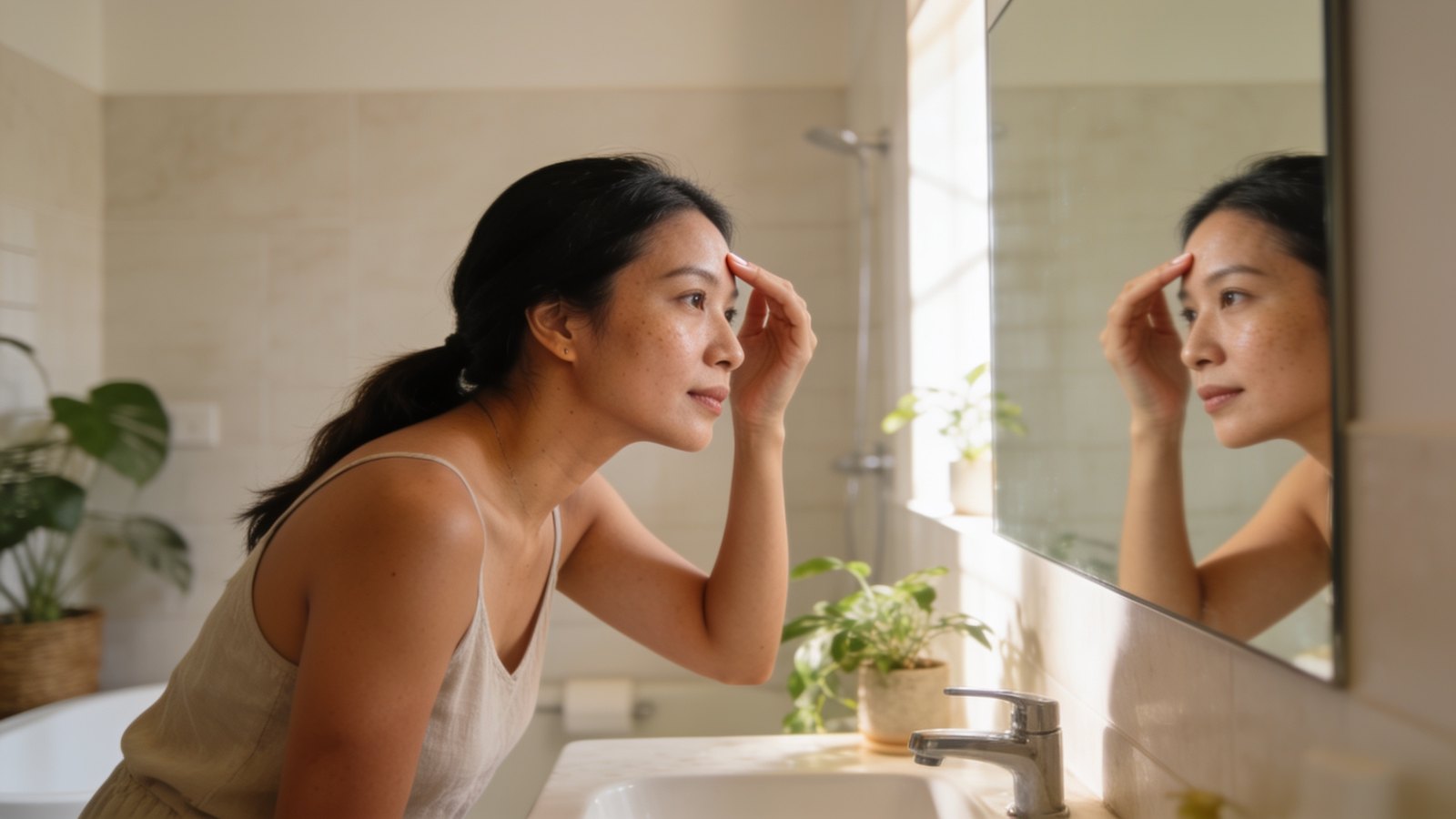
How to get rid of closed comedones: over-the-counter actives vs prescription retinoids
Because a closed comedone has no exit, the aim is to change how the follicle lining sheds so that new plugs stop forming and existing ones loosen and work their way out. That takes ingredients that act inside the pore, used consistently for weeks. Acne guidelines put topical retinoids at the centre of treating comedones for this reason.
| Ingredient | How it works on comedones | Where it fits | Common pitfalls |
|---|---|---|---|
| Salicylic acid (BHA), 0.5–2% | Oil-soluble, so it gets into the pore and loosens the plug | Good first step for mild comedones and oily skin | Dryness if combined with several other actives |
| Retinol or retinaldehyde (cosmetic) | Converted in the skin to retinoic acid; normalises shedding slowly | Mild comedones, maintenance | Weaker and slower than prescription retinoids |
| Prescription topical retinoids (e.g. adapalene, tretinoin) | Act directly on retinoid receptors to normalise follicle shedding and prevent new plugs | Persistent or widespread comedones; the core of medical treatment | Dryness and irritation in the first weeks; not for pregnancy; used under medical advice |
| Azelaic acid | Mild comedolytic and anti-inflammatory; also fades post-acne marks | Sensitive or pigment-prone skin | Slow; tingling at first |
| Benzoyl peroxide | Antibacterial; modest effect on comedones | When red pimples are mixed in | Bleaches fabric; can irritate |
A light routine works better than many products: a gentle cleanser, one comedone-active treatment, a non-comedogenic moisturiser and a fluid sunscreen. Adding a new active every week raises the risk of irritation, which itself blocks pores.
Do retinoids make closed comedones worse first? Purging explained
Often, a little. In the first two to six weeks of a retinoid, plugs that were already forming deep in the follicle are pushed to the surface faster, so some people see more small bumps before they see fewer. This is usually called purging. It happens in the same areas where comedones already form and settles as the skin adapts. A stinging, itchy rash points instead to irritation.
Starting gently reduces both. A pea-sized amount for the whole face, two or three nights a week at first, on dry skin, with moisturiser before or after, is a common way to begin, increasing as tolerated. Most people need around eight to twelve weeks of steady use to judge the effect on comedones, and continued use afterwards to keep new ones from forming.
Should closed comedones be extracted?
Squeezing a closed comedone at home is the step most likely to turn a non-inflamed bump into a red pimple, a dark mark or a small scar. With the opening sealed, pressure tends to rupture the follicle wall sideways rather than push the plug out, spilling its contents into the dermis. In skin types III to V, common in Singapore, that inflammation readily leaves post-inflammatory hyperpigmentation that lasts longer than the comedone would have.
Medical extraction is different. The skin is prepared and softened, the thin roof over a selected comedone is opened with a sterile fine needle or lancet, and the plug is released with controlled pressure from a sterile instrument. It suits a few stubborn, larger comedones, alongside a retinoid; on its own it does not prevent new ones. Extraction is often paired with a medical facial or peel; see acne facial vs medical acne treatment.
“A closed comedone is a blocked pore with the lid still on. Squeezing usually tears the lid and leaves a mark; a retinoid lifts it from below.”
Chemical peels and other in-clinic treatments for closed comedones
Superficial chemical peels speed up shedding at the surface and inside the pore opening. Salicylic acid peels are the usual choice for comedones because they are oil-soluble; mandelic and lactic acid are gentler options for sensitive or pigment-prone skin; glycolic acid works on the surface. A course of peels spaced two to four weeks apart, together with home care, tends to do more than either alone. Peels are kept superficial in Asian skin, because deeper peeling raises the risk of darkening.
- R2 Glow. Gentle 1064 nm and 755 nm passes on the Lutronic Clarity II can refine surface texture and the look of congested pores over a course. It is a support for oily, congested skin, not a replacement for a retinoid.
- Hydrafacial and medical facials. These help surface congestion and open comedones; closed ones usually need a retinoid too.
- When red pimples are mixed in. If inflamed papules or pustules are present, the plan follows the broader acne treatment approach, which may include prescription creams or tablets.
Peel strength and frequency are set at assessment, and peels are paused if the skin is irritated, sunburnt or has active eczema.
| Step | Usual plan | Why |
|---|---|---|
| Home routine | Every night or as built up, for eight to twelve weeks before judging | Changes how the follicle sheds, so new plugs stop forming |
| Superficial peels | A course spaced two to four weeks apart | Speeds shedding at the pore opening, alongside home care |
| Doctor extraction | For stubborn comedones, as needed | Clears selected plugs without tearing the follicle |
| Maintenance | A lighter routine once clear | Stopping as soon as the skin clears is the commonest reason they return |
Closed comedones on the forehead, chin and jawline: what the location suggests
Where comedones cluster is a clue to the cause, not a rule.
- Forehead and hairline. Hair products, fringes, caps, helmets and heavier skincare.
- Chin and jawline. More often hormonal in adult women; masks and phones add friction.
- Chest and back. Sweat, tight sports clothing and body creams; uniform itchy bumps here are often fungal rather than comedonal. See back acne treatment.
When should you see a doctor about closed comedones?
Closed comedones are not dangerous, but there are good reasons not to keep trying products alone:
- They have not improved after about three months of a consistent routine with a comedone-active ingredient.
- They are turning into red pimples, painful lumps or leaving dark marks or pitted scars.
- You are not sure whether the bumps are comedones, milia or fungal acne.
- They appeared suddenly in adulthood with irregular periods, excess hair growth or weight change, which can point to a hormonal cause worth checking.
At IN Eternity Clinic, Dr Sin Yong confirms what the bumps are, reviews your products and plans a routine, with prescription treatment, extraction or peels where they help. If marks or early scars are already present, they are planned separately; see acne scar treatment.

How long does it take to clear closed comedones?
Comedones form over weeks, so they clear over weeks; the pace varies between people, and hormonal or mixed acne may take longer.
In the first two weeks the skin adjusts and may feel a little dry. Between weeks two and six a retinoid can bring some comedones to the surface. By weeks eight to twelve there should be clearly fewer new comedones, and that is the point to judge whether the plan is working.
Stopping as soon as the skin clears is the most common reason comedones return. A lighter maintenance routine is usually continued.
Your closed comedone treatment visit, step by step
Most of the work happens at home, but the first visit sets it up. This is how it usually runs.
- Consultation and diagnosis. Dr Sin Yong examines the bumps, sometimes under magnification, to separate comedones from milia, fungal acne and sebaceous hyperplasia, and reviews every product you use.
- A written routine. One comedone-active treatment, a retinoid or salicylic acid, introduced gradually, with a prescription retinoid where comedones are persistent.
- Preparation. Make-up is removed, the skin is cleansed and photographs are taken in the same light.
- The in-clinic step. A superficial salicylic acid chemical peel, applied for a few minutes and then removed, and sterile extraction of selected larger comedones. Inflamed spots are left alone.
- Straight after. Mild redness and tingling that usually settle within hours. Sunscreen goes on; make-up waits until the next day.
- The next days. Light flaking for a few days after a peel. As the retinoid starts, some comedones may surface faster before they reduce.
- Review. Peels are usually repeated two to four weeks apart, and the plan is judged at eight to twelve weeks.
For how a medical visit compares with a salon facial, see acne facial vs medical acne treatment.
What affects the cost of closed comedones treatment in Singapore
Closed comedones are usually treated with a home routine plus a short course of in-clinic sessions. These factors decide the total; how fees work is on fees and consultation.
| What affects the cost | Why it matters |
|---|---|
| Areas treated | Forehead or chin only, the full face, or the chest and back as well. |
| Number of sessions | Peels are planned as a course, and some people need only one or two. |
| Method | Peel, doctor extraction, R2 Glow laser or Hydrafacial, alone or combined. |
| Prescription treatment | A prescription retinoid and the reviews that go with it. |
| Combination with other care | Treatment of red spots, marks or early scars is planned separately. |
| Assessment findings | Milia or fungal acne mistaken for comedones change the plan entirely. |
At IN Eternity Clinic a consultation fee applies, and it is waived if you go ahead with any medical treatment; the fee is S$120.
Who is closed comedones treatment not suitable for, or when should it wait?
Most people with closed comedones can be treated, but some steps are changed or paused.
- Pregnancy, or planning one: prescription retinoids are not used, so other actives are chosen.
- Irritated, sunburnt skin or active eczema: peels are paused until the skin settles.
- Bumps that are milia or fungal acne: they look similar but need a different treatment; see milia removal.
- Inflamed acne alongside the comedones: it is treated as acne, not only with comedone care.
Side effects of comedone treatment, and when to call
Retinoids, peels and extraction are well established for comedones, and their side effects are well described (Zaenglein et al., 2016; Fischer et al., 2010). Most are mild and settle as the skin adapts.
Common and expected
- Dryness, peeling and stinging from a retinoid in the first weeks.
- A short purge, often between weeks two and six.
- Light flaking for a few days after a peel.
- Pinpoint marks for a day after extraction.
Uncommon
- Irritant dermatitis from layering several actives.
- Brown marks after extraction or a peel in skin that darkens easily; see post-inflammatory pigmentation.
- A small scab or mark at an extraction site.
- A peel reaction when scrubs or strong acids are also used at home.
When to contact the clinic
- Burning, swelling or blistering after a peel or a new product.
- A spot that becomes painful, hot and spreading.
- Dark patches appearing in the following weeks.
WhatsApp the clinic on +65 8815 3008, ideally with a photograph, or call during opening hours; if you are unwell or the problem is severe out of hours, go to a GP or an emergency department.
Closed comedones vs blackheads: what is the difference?
Both are clogged pores; a blackhead’s opening is wide and its plug darkens in air, while a closed comedone is sealed under skin, so it shows as a skin-coloured bump.
| Feature | Closed comedone (whitehead) | Blackhead (open comedone) |
|---|---|---|
| Pore opening | Sealed or very narrow | Open |
| Appearance | Small skin-coloured or white bump, easier to feel than see | Flat dark dot in the pore |
| Why the colour | The plug is covered by skin | Oxidised sebum and pigment at the surface |
| Extraction | Harder; needs a sterile opening, so squeezing tends to inflame it | Easier, but squeezing still stretches pores |
| Chance of turning into a pimple | Higher, because the plug is trapped | Lower |
| Usual first step | A retinoid or salicylic acid used consistently | The same, plus gentle exfoliation |
Blackheads are covered on blackhead removal in Singapore, and the wider plan for acne on acne treatment in Singapore.
How do you start a retinoid for closed comedones without irritation?
Start slowly: a pea-sized amount on dry skin two or three nights a week, building towards nightly over about four weeks, with moisturiser and daily sunscreen.
| Weeks | What to do | What is normal |
|---|---|---|
| 1 to 2 | Two or three nights a week, pea-sized for the whole face, on dry skin; moisturiser after | Mild dryness or tightness |
| 3 to 4 | Every other night, then most nights if comfortable | Light flaking; some purging |
| 5 to 8 | Nightly if tolerated; keep other actives simple | Purging settling; fewer new bumps |
| 9 to 12 | Continue; review whether peels or extraction would help | Visibly smoother texture for many people |
| After 12 | Maintenance, often a few nights a week | Occasional new comedones with triggers |
Stinging that lasts, a spreading rash or swelling is a reaction, not purging; stop and contact the clinic. In Singapore’s sun, retinoids are used at night with sunscreen every morning, and they are paused before some laser and peel treatments.
Do closed comedones go away on their own, and how do you stop them coming back?
Individual closed comedones can clear on their own as the plug sheds or opens, but new ones keep forming while the causes remain. Because comedonal acne tends to recur, the routine that cleared the skin is usually tapered to a lighter maintenance plan rather than stopped as soon as the bumps go.
- Keep one comedone-active step, such as a retinoid a few nights a week or salicylic acid, as agreed with your doctor.
- Remove water-resistant sunscreen and make-up fully at night with a gentle cleanser, without scrubbing.
- Choose light, non-comedogenic moisturisers and sunscreens, and avoid layering several rich products.
- Keep hair oils, pomades and conditioners off the forehead and hairline.
- Cleanse after heavy sweating, exercise or long mask wear rather than leaving sweat on the skin.
- Wipe phone screens and change pillowcases regularly if comedones cluster on the cheeks.
- Leave them unsqueezed; picking pushes material deeper and can leave marks.
Maintenance has trial evidence behind it. A 2006 randomised trial of 253 people whose severe acne had improved (Thiboutot 2006) found that 75% of those who continued adapalene gel for 16 weeks kept their improvement, compared with 54% on a plain gel, with fewer non-inflamed lesions such as comedones.
Comedones that return quickly despite a steady routine, or that come with irregular periods, may have a hormonal driver worth checking; see hormonal acne. A peel or doctor extraction can help with a flare, but the daily routine is what keeps the count low. How long maintenance continues, and at what strength, is decided at review.
How comedonal acne is diagnosed, product triggers and peel sessions
How does a doctor diagnose comedonal acne?
Diagnosis is made by looking at the skin under good light, often with magnification. The doctor checks for skin-coloured bumps with a closed opening, separates them from milia, fungal acne and sebaceous hyperplasia, and looks for inflamed spots or early scarring. Your skincare, make-up, hair products, medicines and cycle are reviewed, because these change the plan.
Can make-up, hair products or face masks cause closed comedones?
Yes. Heavy creams, oily primers, some sunscreens, hair pomades and conditioners that touch the forehead can block pores and cause small closed bumps along the hairline and cheeks. Long hours in a mask add heat and friction. Switching to non-comedogenic products and keeping hair products off the face often helps within six to eight weeks.
How many chemical peel sessions do closed comedones need?
Most people need a short course of about three to six peels spaced two to four weeks apart, used alongside a home retinoid or salicylic acid rather than instead of it. The number depends on how many comedones there are, how oily the skin is and how well the home routine is kept up. Results vary.
Frequently asked questions
What can be mistaken for closed comedones?
Several bumps look similar. Milia are hard, white keratin cysts that do not squeeze out. Fungal acne causes itchy, uniform bumps on the forehead, chest and back. Sebaceous hyperplasia shows as soft yellowish bumps with a central dip, usually in older skin. Syringomas are small skin-coloured bumps under the eyes, and flat warts can also look alike. Telling them apart matters, because each is treated differently.
How much does closed comedones treatment cost in Singapore?
It depends on whether the plan is creams alone or adds extraction, peels or laser, and how many sessions. IN Eternity Clinic sets the plan and cost out at the consultation; the consultation fee is S$120 and is waived when a treatment is started.
Why do I keep getting closed comedones?
Oil, dead-cell build-up and comedogenic products in a humid climate; hormones and some make-up and sunscreens add to it. Treatment is paired with a routine that prevents new ones.
How are closed comedones treated?
Treatment aims to clear the plugs and stop new ones forming. A home retinoid is the base of most plans, often with salicylic acid or azelaic acid. In clinic, gentle extraction and a course of superficial peels can speed things up. Because comedones keep forming, a maintenance routine afterwards keeps the skin clear. The plan depends on how widespread they are.
Is there downtime after closed comedone treatment?
Usually very little. Extraction can leave small red marks for a day or two, and superficial peels may cause mild flaking for a few days. A new retinoid often causes dryness and some purging in the first weeks, which settles as the skin adjusts. Most people return to work the same day, avoiding heavy make-up for a day after extraction.
Does Korean skincare help closed comedones?
Gentle cleansing, light non-comedogenic moisturisers and exfoliating acids such as BHA, common in Korean routines, can help. Heavy layering of creams, oils and occlusive sleeping masks can make closed comedones worse in Singapore’s humidity. If they persist after eight to twelve weeks, a doctor can add prescription treatment.
Will a doctor extract closed comedones?
Yes. A doctor can gently extract closed comedones with sterile tools after preparing the skin, which avoids the marks that squeezing at home can leave. Extraction alone does not stop new ones, so it is combined with a retinoid or acid routine, peels or laser to keep pores clear.
What makes closed comedones worse?
Common triggers are thick or oily skincare, some silicone-heavy sunscreens and primers, hair products that touch the forehead, sweat under masks or helmets in humid weather, and picking. Hormonal changes can also increase them. Switching to non-comedogenic products and using a retinoid consistently usually brings them under control.
Can you squeeze out closed comedones?
Squeezing at home usually fails because the pore opening is covered, so pressure pushes contents deeper and can cause inflamed spots or marks. In clinic, a doctor or trained therapist opens the surface with a sterile tool before extraction, which limits damage. Extraction removes what is there now; a retinoid stops new ones forming.
How do you get rid of closed comedones?
Closed comedones are blocked pores under a thin layer of skin. They clear with a retinoid such as adapalene or tretinoin used for eight to twelve weeks, often with a gentle exfoliant such as salicylic acid. In clinic, chemical peels and careful extraction speed this up. Heavy creams, oils and some sunscreens that keep blocking pores need to be changed.
What are comedones?
Comedones are plugs of shed skin cells and sebum inside a hair follicle, the earliest visible stage of acne. If the opening stays wide, the plug oxidises and darkens into an open comedone, or blackhead. If the opening is narrow or sealed, the plug stays pale under the surface as a closed comedone, or whitehead, which lasts longer and more often turns into a pimple.
What causes closed comedones?
Three things drive them: more sebum, stickier skin cells lining the follicle and anything that narrows the pore opening. Hormones set oil production and genetics shape how the lining sheds. In Singapore, heat, humidity and sweat, rich creams made for cooler climates, face masks, helmet straps, phones against the jaw and hair products along the hairline often add to it.
How long does it take to get rid of closed comedones?
Usually weeks to months. A topical retinoid or salicylic acid is typically used consistently for eight to twelve weeks before judging the effect, and continued afterwards to stop new plugs forming. Peels every two to four weeks and doctor extraction can speed up stubborn areas. The pace varies, and hormonal or mixed acne may take longer.
Is it normal for closed comedones to get worse on a retinoid?
Often, for a short time. In the first two to six weeks, a retinoid pushes plugs that were already forming to the surface faster, so some people see more small bumps before fewer, usually called purging. It happens where comedones already form and settles as the skin adapts. A stinging, itchy rash suggests irritation instead and is worth reviewing.
Are closed comedones the same as whiteheads?
Yes. Whitehead is the everyday name for a closed comedone: a follicle plugged with sebum and skin cells whose opening has sealed, so the plug stays pale under the surface. A blackhead is an open comedone whose plug has darkened on contact with air.
Can I pop closed comedones at home?
It is better not to. With the opening sealed, squeezing tends to rupture the follicle sideways, which can turn the bump into an inflamed pimple and leave a dark mark, especially in Asian skin. If a few are stubborn, a doctor can open and release them with sterile instruments.
What is the fastest way to get rid of closed comedones?
Medical extraction clears selected comedones on the day, but they come back unless the follicle is changed. A topical retinoid or salicylic acid used consistently, sometimes with a course of superficial peels, is what reduces them over eight to twelve weeks.
Do closed comedones go away on their own?
Some do, slowly, as the plug works its way out. Many persist for weeks or months, and new ones keep forming while the cause, such as heavy products, sweat or hormones, continues. Treating the follicle shortens the cycle.
Is retinol enough for closed comedones?
For mild comedones, a cosmetic retinol used consistently may be enough. Persistent or widespread comedones usually respond better to a prescription-strength topical retinoid, used under medical advice and introduced gradually to limit irritation.
Why do I get closed comedones on my forehead?
The forehead makes more oil and is where hair products, fringes, caps and helmets add oil and friction. Heavier moisturisers and sunscreen not removed fully at night also play a part. Changing these often helps as much as adding an active.
Can chemical peels remove closed comedones?
A course of superficial peels, usually salicylic acid, can loosen plugs and reduce comedones, especially combined with a home retinoid. One peel on its own rarely clears them. In Asian skin, peels are kept superficial to limit the risk of darkening.
Can sunscreen cause closed comedones?
Sometimes. Thick, water-resistant or very oily sunscreens can block pores in comedone-prone skin, especially if they are not fully removed at night. Light fluid or gel sunscreens labelled non-comedogenic suit most people, and a gentle double cleanse in the evening helps. Stopping sunscreen is not the answer in Singapore’s sun; changing the formula usually is.
Do closed comedones leave scars?
On their own, rarely. The risk comes when they become inflamed or are squeezed, because a ruptured follicle can leave a dark mark or, less often, a small pitted scar. In skin types III to V, brown marks are the commoner problem. Treating comedones early and not picking them is the simplest prevention; scars are covered on acne scar treatment in Singapore.
Is a Hydrafacial good for closed comedones?
It helps surface congestion and open comedones and leaves the skin clean and hydrated, but closed comedones sit under a sealed opening, so suction alone rarely clears them. A Hydrafacial works better alongside a retinoid at home, or with a salicylic acid peel or doctor extraction for larger ones. See Hydrafacial.
How do I know if my whiteheads are actually milia?
Milia are pearly white, hard and very uniform, often around the eyes, and they stay for months. Closed comedones are softer, skin-coloured, vary in size and sit mainly on the forehead and chin. Milia do not respond to acne creams and are removed precisely in clinic; see milia removal.
Can I use a retinoid and salicylic acid together?
Many people can, but usually not at the same time when starting. A common approach is salicylic acid in the morning or on alternate nights and the retinoid at night, introduced slowly, with a plain moisturiser. Using several strong actives together is a frequent cause of irritation, which itself blocks pores. Dr Sin Yong adjusts the combination to how your skin copes.
Does diet cause closed comedones?
Diet is rarely the whole cause. High-glycaemic foods and dairy, including whey protein, have been linked with acne in some people, so a trial of cutting back can be reasonable if you notice a pattern. Closed comedones are driven mainly by how the follicle sheds, oil, hormones and occlusive products, which is why topical treatment comes first.
Can closed comedones turn into pimples?
Yes. A closed comedone traps sebum and skin cells under a sealed opening, and if bacteria multiply and the wall leaks, it becomes a red, inflamed spot. That is one reason they are treated rather than left, and why squeezing, which can rupture the wall deeper in the skin, often makes things worse.
Can niacinamide or vitamin C clear closed comedones?
They can help skin feel calmer and even out marks, but they do not change how the follicle sheds as retinoids and salicylic acid do. Niacinamide can be useful alongside a retinoid to reduce irritation. Used on their own, they rarely clear established closed comedones.
Do closed comedones come back after treatment?
They can, because the tendency to form them is ongoing. Maintenance, often a retinoid a few nights a week with a light, non-comedogenic routine, keeps most people clear. They tend to return when a retinoid is stopped, a new heavy product is added, or hormones and heat change.
Can I use a retinoid in Singapore’s sun?
Yes, with care. Retinoids are applied at night, and a broad-spectrum sunscreen is used every morning and reapplied when outdoors. Shade and a hat help around midday, when UV in Singapore is usually highest. Tell the clinic about your retinoid before any peel or laser, as it may need to be paused.
Is comedonal acne hormonal?
Hormones play a part. Androgens increase oil production and can make closed comedones worse, which is why they often flare around periods or with conditions such as PCOS. Heavy skincare, friction and some hair products also contribute. Treatment usually combines a retinoid or other topical with removing the cause, and hormonal assessment where the pattern suggests it.
Book an assessment
IN Eternity Clinic, 9 Scotts Road, #12-01 Pacific Plaza, Singapore 228210. By appointment with Medical Director Dr Sin Yong. Monday to Saturday, 11am to 8pm. WhatsApp or call +65 8815 3008. The consultation fee is waived with any medical treatment.
International KOL — CLASSYS · HIRONIC · DEKA · ALMA · FOTONA · LUTRONIC
References
- Zaenglein AL, Pathy AL, Schlosser BJ, et al. Guidelines of care for the management of acne vulgaris. J Am Acad Dermatol 2016;74(5):945-973. doi:10.1016/j.jaad.2015.12.037
- Reynolds RV, Yeung H, Cheng CE, et al. Guidelines of care for the management of acne vulgaris. J Am Acad Dermatol 2024;90(5):1006.e1-1006.e30. doi:10.1016/j.jaad.2023.12.017
- Thiboutot D, Gollnick H, Bettoli V, et al. New insights into the management of acne: an update from the Global Alliance to Improve Outcomes in Acne Group. J Am Acad Dermatol 2009;60(5 Suppl):S1-S50. doi:10.1016/j.jaad.2009.01.019
- Tan JKL, Bhate K. A global perspective on the epidemiology of acne. Br J Dermatol 2015;172 Suppl 1:3-12. doi:10.1111/bjd.13462
- Fischer TC, Perosino E, Poli F, Viera MS, Dreno B. Chemical peels in aesthetic dermatology: an update 2009. J Eur Acad Dermatol Venereol 2010;24(3):281-292. doi:10.1111/j.1468-3083.2009.03409.x
- Davis EC, Callender VD. Postinflammatory hyperpigmentation: a review of the epidemiology, clinical features, and treatment options in skin of color. J Clin Aesthet Dermatol 2010;3(7):20-31. PMID 20725554
- Singapore Medical Council. Guidelines on Aesthetic Practices for Doctors (2016 edition). healthprofessionals.gov.sg/smc
- Tan et al. Community-based study of acne vulgaris in adolescents in Singapore. Br J Dermatol 2007;157:547-551. doi:10.1111/j.1365-2133.2007.08087.x
- Abad-Casintahan F, Chow SKW, Goh CL, et al. Frequency and characteristics of acne-related post-inflammatory hyperpigmentation. J Dermatol 2016;43(7):826-828. doi:10.1111/1346-8138.13263
These sources describe mechanisms and general evidence. They are not a promise of any individual result; suitability is decided at an in-person assessment.