
Sculptra vs Juvelook: Which Polylactic Acid Suits You?
Both are polylactic acid collagen stimulators, and both are offered at IN Eternity Clinic on Orchard Road. Dr Sin Yong explains why one is mainly for volume and the other mainly for skin.
WhatsApp to Enquire →Key facts ↓Sculptra vs Juvelook compares two polylactic acid collagen stimulators that do different jobs. Sculptra (poly-L-lactic acid) is placed deep to rebuild lost volume gradually, in areas such as the temples and cheeks. Juvelook (poly-D,L-lactic acid with hyaluronic acid) is placed in the skin for texture, crepiness and shallow scars. Both change over months, and neither can be dissolved.
On this page
- History: PLLA (Sculptra) has been available in Europe since 1999 and was approved by the US FDA in 2004 for facial fat loss in HIV; an injectable PDLLA was approved in Korea in 2014 (Chen et al., Clin Exp Dermatol 2020).
- Sculptra evidence: in a randomised trial of 116 people given PLLA and 117 given a collagen implant for nasolabial folds, PLLA was given in 1 to 4 sessions 3 weeks apart, with improvement lasting up to 25 months (Narins et al., J Am Acad Dermatol 2010).
- Sculptra technique: technical guidance recommends higher dilution, fewer vials per session, placement under the skin with none in the dermis, and sessions at least 6 weeks apart (Lam et al., Plast Reconstr Surg 2006).
- Juvelook (PDLLA) safety: in a 24-month follow-up of PDLLA in the nasolabial fold, 30 of 58 people completed the study, and the 4 injection-site events were mild and resolved by the 2-month visit (No et al., Plast Reconstr Surg 2015).
- Under the eyes: a 2024 report describes PDLLA tracking back along the injection path over the lower eyelids, visible through the skin (Lin and Lin, Skin Health Dis 2024).
- Laboratory work found poly-D,L-lactic acid (PDLLA) stimulated new blood vessels and collagen in aged skin (Int J Mol Sci 2023)
- In a randomised study, injectable poly-L-lactic acid improved nasolabial folds for up to 25 months, with greater improvement than collagen from months 3 to 13 (J Am Acad Dermatol 2010)
How are Sculptra and Juvelook related?
Polylactic acids are biodegradable polymers that have been used in medicine for decades. When small particles are placed in tissue, the body walls them off with a controlled response in which fibroblasts lay down new collagen. The particles then break down slowly to lactic acid and are cleared. Both Sculptra and Juvelook rely on that response.
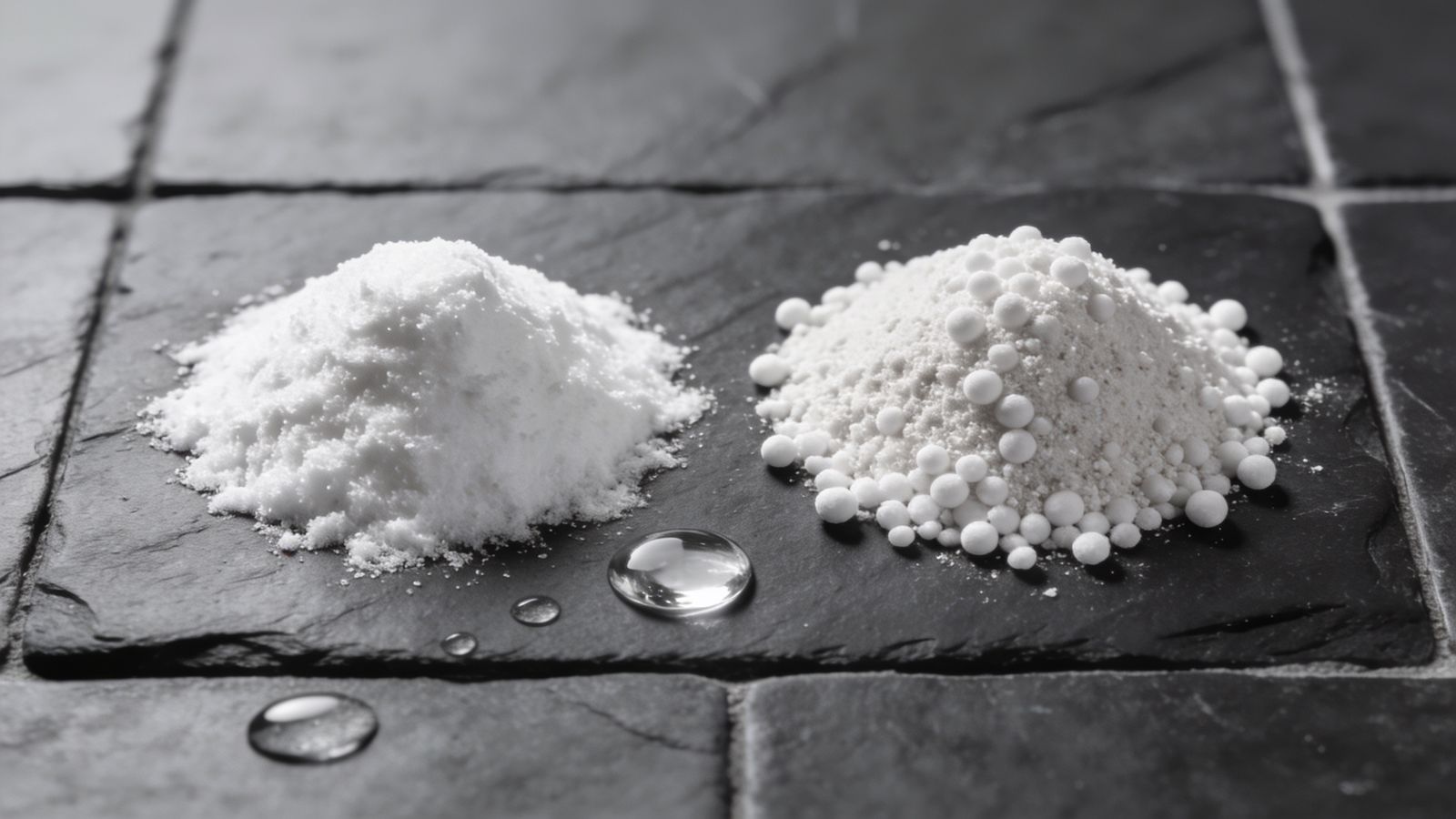
The difference lies in the polymer and the particles. Sculptra uses poly-L-lactic acid (PLLA), a crystalline form whose particles are irregular in shape. Juvelook uses poly-D,L-lactic acid (PDLLA), a mix of two mirror-image forms that is amorphous, made into porous, rounder microspheres. Analyses of the two products confirm they differ in particle shape, size and composition, and those differences shape how each is reconstituted, where it is placed and how it behaves.
Composition differs too. Sculptra contains carboxymethylcellulose and mannitol alongside the PLLA, which help the particles disperse when reconstituted. Juvelook pairs PDLLA with a small amount of non-cross-linked hyaluronic acid, which gives brief hydration and helps the microspheres glide through a cannula. Neither carrier is the active part; the lasting change in both comes from the collagen response to the polymer.

Sculptra vs Juvelook compared
| Sculptra | Juvelook | |
|---|---|---|
| Polymer | Poly-L-lactic acid (PLLA) | Poly-D,L-lactic acid (PDLLA) with HA |
| Main job | Gradual volume | Skin texture and quality |
| Depth | Deep, under skin or near bone | Dermis or just beneath |
| Typical areas | Temples, cheeks, body | Cheeks, pores, fine crepiness, shallow scars |
| Main caution | Nodules if superficial or concentrated | Nodules; extra care under the eyes |
Both develop over months and cannot be dissolved, so both are dosed conservatively and reviewed between sessions.
“Sculptra and Juvelook are cousins, not twins. One rebuilds what has gone from underneath; the other works on the skin you can see.”
How Sculptra is used
Sculptra is reconstituted with sterile water well before treatment, often a day or more, so the particles are fully hydrated and evenly suspended; local anaesthetic is usually added. It is placed deep, beneath the skin or close to bone, in small amounts per session. The early fullness from the water fades within days, and the lasting change develops as collagen forms over the following months. A course is usually two or three sessions spaced weeks apart.
It suits gradual volume loss: hollowing at the temples, a flattening of the mid-cheek, or diffuse loss across the face in someone who prefers a slow change. More diluted, it is also used for skin firmness on the body. Massage after treatment helps spread the particles evenly. The Sculptra side effects guide explains how nodules are avoided.
How Juvelook is used
Juvelook is mixed with sterile water shortly before use, sometimes with a small amount of local anaesthetic, and placed in or just beneath the dermis by cannula or fine injections. The hyaluronic acid gives brief hydration; the PDLLA prompts collagen in the skin itself over the weeks after each session. Animal studies show increased collagen and new small vessels around PDLLA, and a two-year follow-up of PDLLA in the nasolabial fold reported a favourable safety profile.
It suits skin that looks thin, crepey or uneven, enlarged pores on the cheeks and shallow acne scars, where the face shape is broadly right. The lower eyelid needs particular caution: reports describe PDLLA tracking upward along the lower lid and forming firm nodules after tear-trough use, so other options are usually preferred there. A related product with a higher PDLLA load is marketed for volume; this comparison concerns the skin-quality product.
Sculptra or Juvelook: which suits which face?
If the problem is lost volume, such as hollow temples or flatter cheeks, Sculptra is usually the better match of the two. If the problem is skin quality, such as crepiness, texture or pores, Juvelook is the more direct tool. Some faces need both, in which case they are placed at different depths and usually in separate sessions so each can be judged.
Neither suits a face that is heavy in the lower third or one that is sagging; adding collagen stimulators there can make the face wider. Sagging is a lifting question. Leaner or hollow faces are usually matched to VF Lift – Vertical Facelift on CLASSYS Volnewmer, and fuller lower faces to Time Freeze Laser LCLR®. In lean faces, hollowing after some focused ultrasound or radiofrequency treatments is a known side effect worth discussing before any lifting plan. Where earlier filler or collagen stimulator is present, it is mapped with ultrasound first.
What are the side effects of Sculptra and Juvelook, and what if there is too much?
Both commonly cause swelling, tenderness and bruising for a few days, and small bumps at injection points after Juvelook. The main specific risk for both is nodules: small, firm lumps that are more likely when product is too superficial, too concentrated or placed in very mobile or thin areas. Because neither polylactic acid can be dissolved, prevention matters: correct reconstitution, depth, conservative doses and spacing between sessions.
If an area has been overtreated with a collagen stimulator, hyaluronidase will dissolve only the hyaluronic acid in Juvelook, not the PDLLA, and has no effect on Sculptra. In that situation, Time Freeze Laser LCLR® is built to target excess Sculptra and Ellansé and take away the excess after ultrasound mapping; not every laser can do this. Dr Sin Yong discusses this option where it applies. Injectables are deferred in pregnancy, breastfeeding, active infection and in people with a history of keloid or nodules until reviewed.
Most swelling, tenderness and bruising settles within a few days. Contact the clinic about a lump that is growing, painful or red, or one that appears weeks or months later, and about pain that increases after the first two days. A white, dusky or mottled patch of skin with pain needs same-day review by the treating clinic, and any change in vision needs the nearest emergency department straight away. Nodules, their timing and their management across Sculptra, Radiesse, Juvelook and Ellansé are compared in collagen stimulator side effects.
What each feels like, and what follows
Both are given after numbing cream, and both usually contain or are mixed with a small amount of local anaesthetic. Sculptra is felt more as pressure and a dull ache, particularly over bone at the temples; Juvelook, placed more superficially, feels like small pricks and a brief sting, with more points across the treated area. Each session takes around 30 to 60 minutes including numbing.
After Sculptra, expect swelling, tenderness and possible bruising for a few days, and an early fullness that fades within a week. Massage is part of the aftercare. After Juvelook, small bumps along the injection points usually settle within a day or two, with mild redness and occasional pinpoint bruises. In both cases the collagen change develops over the following weeks, and the next session is spaced four to six weeks or more after the last.
The result is judged against photographs taken at the first visit, usually two to three months after the course. Many people notice that others comment on looking rested rather than on any obvious change, which is what a gradual collagen stimulator is meant to do. For cost factors, see Sculptra price in Singapore.
How many sessions do Sculptra and Juvelook need, and when do results show?
Sculptra is usually two or three deep sessions at least four to six weeks apart; Juvelook is usually two or three sessions in the skin. Both change gradually over months.
| Sculptra (PLLA) | Juvelook (PDLLA) | |
|---|---|---|
| Typical course | 2 to 3 sessions | 2 to 3 sessions |
| Spacing | Usually 4 to 6 weeks or more; published technical guidance suggests at least 6 | Usually 4 to 6 weeks or more |
| Straight after | Fullness from the water, fading within days | Small bumps, settling within a day or two |
| When change shows | Gradually, judged 2 to 3 months after the course | Gradually over the weeks after each session |
| How long it can last | Improvement up to 25 months reported in a randomised trial | Followed for 24 months for safety; longevity varies |
| Maintenance | Often reviewed after about a year | Often a maintenance session after a year or so |
Because neither can be dissolved, the plan errs on the side of fewer vials per session and more time between sessions. Results are judged against photographs from the first visit. Each treatment is explained in more detail on Sculptra Singapore and Juvelook Singapore.
What is Juvelook Volume, and how is it different?
Juvelook Volume is a related PDLLA product from the same maker, marketed for deeper volume support rather than the skin-quality work of standard Juvelook.
In purpose it sits closer to Sculptra: a collagen stimulator placed deeper to support areas that have lost volume. The same cautions apply. It cannot be dissolved, nodules are the main specific risk, and the dose and depth are kept conservative. Whether a volume product, Sculptra, a hyaluronic acid filler or no added volume at all suits your face is decided at assessment; this comparison concerns standard Juvelook.
Common myths, answered
- Myth: Juvelook is just a lighter Sculptra.
Fact: They are different polymers with different particles, prepared differently and placed at different depths for different jobs. - Myth: Both give results the next day.
Fact: Early fullness after either is mostly water. The collagen change develops over weeks to months. - Myth: Juvelook can be dissolved because it contains hyaluronic acid.
Fact: Hyaluronidase breaks down the hyaluronic acid only. The PDLLA microspheres remain. - Myth: Collagen stimulators lift sagging faces.
Fact: They add support and improve skin quality. Descended tissue needs a lifting approach.
Frequently asked questions
What is the difference between Sculptra and Juvelook?
Sculptra is poly-L-lactic acid, placed deep to restore volume gradually. Juvelook is poly-D,L-lactic acid with hyaluronic acid, placed in or just beneath the skin to improve texture, crepiness and shallow scars. Both stimulate collagen over months and neither can be dissolved, but they are used for different concerns and at different depths.
Which lasts longer, Sculptra or Juvelook?
Both are judged over months and are often maintained with a top-up session after a year or so, but longevity varies with the person, the area and the dose. Sculptra used for volume tends to be planned as a longer-lasting structural change; Juvelook as a skin-quality course with maintenance. Your plan is discussed at consultation.
Is Juvelook safer than Sculptra?
Both have long safety records when used correctly, and both can cause nodules if placed too superficially or too concentrated. The risks differ by area: PDLLA has particular reports of problems under the eyes, while PLLA needs careful dilution and deep placement. Neither is safer for everyone; the right product in the right plane matters most.
Can I have Sculptra and Juvelook together?
Sometimes, when a face needs both volume and skin quality. They are placed at different depths and are usually given in separate sessions so the effect of each can be judged and the total dose stays conservative. Dr Sin Yong decides the order based on what bothers you most.
Can Sculptra or Juvelook be used under the eyes?
The lower eyelid is a high-risk area for collagen stimulators. Reports describe PDLLA tracking upward and forming nodules after tear-trough use, and Sculptra is generally kept away from the thin eyelid skin. Other options, such as soft hyaluronic acid or polynucleotide, are usually preferred there.
How much do Sculptra and Juvelook cost?
Cost depends on the product, how many vials each session needs, the areas treated and how many sessions the course requires. Volume plans and skin-quality plans differ. Dr Sin Yong gives a written, itemised quote after assessment, and the consultation fee is waived with any medical treatment.
What is a PDLLA skin booster?
It is an injectable of poly-D,L-lactic acid microspheres, such as Juvelook, placed in or just under the dermis to prompt new collagen over weeks to months. It is called a booster because it works on skin quality, texture and pores rather than shape, but it behaves like a collagen stimulator and cannot be dissolved.
Which is better for acne scars, Sculptra or Juvelook?
For shallow acne scars and texture, Juvelook is usually the more direct of the two, because it is placed in the skin where the scars sit. Sculptra is placed deep for volume and is not designed for scars. Tethered or deep scars still need subcision or resurfacing, with a collagen stimulator as one supporting step.
When will I see results from Sculptra or Juvelook?
Not straight away. Early fullness after either is mostly water and fades within days. The collagen change develops over the following weeks and months, and the result is usually judged two to three months after the last session, against photographs from your first visit.
What is Juvelook Volume?
Juvelook Volume is a related PDLLA product from the same maker, marketed for deeper volume support rather than skin quality. In purpose it sits closer to Sculptra. Like all polylactic acids it cannot be dissolved and carries a risk of nodules, so the dose and depth are kept conservative, and suitability is decided at assessment.
Is Sculptra or Juvelook better for temples?
For hollow temples, Sculptra is usually the closer match, because it is placed deep to restore volume gradually. Juvelook is designed for skin quality and adds little volume. Soft hyaluronic acid filler is another option where a quicker, reversible change is preferred. The choice depends on your anatomy and how much change you want.
Book an assessment
IN Eternity Clinic, 9 Scotts Road, #12-01 Pacific Plaza, Singapore 228210. By appointment with Medical Director Dr Sin Yong. Monday to Saturday, 11am to 8pm. WhatsApp or call +65 8815 3008.
International KOL — CLASSYS · HIRONIC · DEKA · ALMA · FOTONA · LUTRONIC
References
- Chen SY, Lin JY, Lin CY. Compositions of injectable poly-D,L-lactic acid and injectable poly-L-lactic acid. Clin Exp Dermatol 2020;45(3):347-348. doi:10.1111/ced.14085
- Oh S, Seo SB, Kim G, et al. Poly-D,L-Lactic Acid Stimulates Angiogenesis and Collagen Synthesis in Aged Animal Skin. Int J Mol Sci 2023;24(9):7986. doi:10.3390/ijms24097986
- Fitzgerald R, Vleggaar D. Facial volume restoration of the aging face with poly-l-lactic acid. Dermatol Ther 2011;24(1):2-27. doi:10.1111/j.1529-8019.2010.01375.x
- Lin CY, Lin JY. Retrograde Flow Phenomenon of Poly-D,L-Lactic Acid Filler Injection over Lower Eyelids. Skin Health Dis 2024;4(3):e377. doi:10.1002/ski2.377
- No YA, Seok J, Hyun MY, et al. Long-Term (24-Month) Safety Evaluation of Poly-DL-Lactic Acid Filler Injection for the Nasolabial Fold. Plast Reconstr Surg 2015;135(6):1074e-1075e. doi:10.1097/PRS.0000000000001247
- Narins RS, Baumann L, Brandt FS, et al. A randomized study of the efficacy and safety of injectable poly-L-lactic acid versus human-based collagen implant in the treatment of nasolabial fold wrinkles. J Am Acad Dermatol 2010;62(3):448-462. doi:10.1016/j.jaad.2009.07.040
- Lam SM, Azizzadeh B, Graivier M. Injectable poly-L-lactic acid (Sculptra): technical considerations in soft-tissue contouring. Plast Reconstr Surg 2006;118(3 Suppl):55S-63S. doi:10.1097/01.prs.0000234612.20611.5a
These sources describe mechanisms and general evidence. They are not a promise of any individual result; suitability is decided at an in-person assessment.