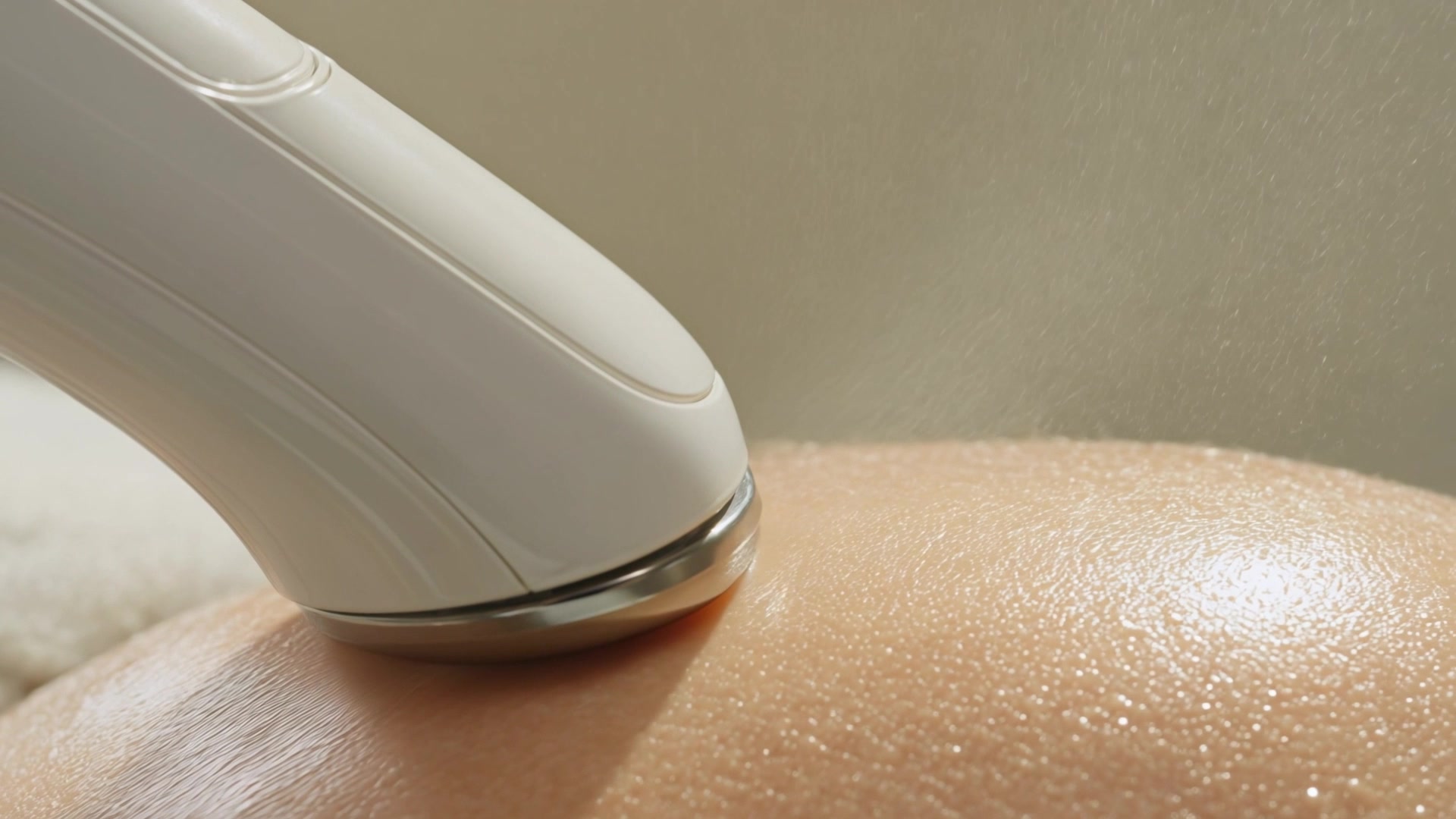
Triple Hydrating LDM Hydrofacial
A three-phase, non-thermal protocol for reactive, flushed and dehydrated skin — decongestion, LDM dual-frequency ultrasound and layered hydration, directed by Medical Director Dr Sin Yong.
Treatment page: rosacea treatment in Singapore.
The Triple Hydrating LDM Hydrofacial is a three-phase facial for skin that flushes easily and is dehydrated at the same time: vortex decongestion without abrasion, non-thermal LDM dual-frequency ultrasound, then layered hydration. It leaves out heat, scrubbing and acids, which trigger reactive skin. It can support medical treatment for rosacea-prone skin, but it does not replace that treatment or cure the condition.
The Triple Hydrating LDM Hydrofacial at a glance
| The Triple Hydrating LDM Hydrofacial at IN Eternity Clinic | |
|---|---|
| What it is | A three-phase facial for skin that flushes easily and is dehydrated at the same time: vortex decongestion, LDM® dual-frequency ultrasound, then layered hydration. |
| Used for | Reactive, flushed and dehydrated skin, sensitised skin, rosacea-prone skin alongside medical care, and recovery after some laser and peel treatments. |
| How it works | Vortex cleansing with suction and fluid (no grit or acid), non-thermal LDM ultrasound, then humectant and barrier-supporting serums while the skin is receptive. |
| Typical sessions | A short initial course, then maintenance, scheduled to your skin rather than a fixed package. |
| Downtime | Typically none: any transient flush usually settles within the hour, and make-up can usually go on the same day. |
| When results show | Most people notice calmer, more hydrated skin on the day; changes in redness and reactivity are judged across the course. |
| Who should avoid or wait | During an acute, inflamed rosacea flare, medical treatment usually comes first; it does not replace rosacea treatment. |
| Who performs it | Assessed and planned by Medical Director Dr Sin Yong, who reviews redness, reactivity and dehydration across the course. |
Dr Sin Yong, Medical Director of IN Eternity Clinic, explains that for skin that is already inflamed, heat, scrubbing and acids are triggers rather than treatments, so this facial is built around leaving them out, and redness is diagnosed before it is treated.
On this page
- Phase 1: Vortex cleansing with suction and fluid lifts debris from pores, with no grit or acid
- Phase 2: LDM® dual-frequency ultrasound, which is non-thermal and does not wound the skin
- Phase 3: Humectant and barrier-supporting serums layered while the skin is most receptive
- Why non-thermal: Heat dilates facial vessels and can set off flushing in reactive skin
- Rosacea: A medical diagnosis managed with medical treatment; this facial plays a supporting role
- Suits: Redness-prone, sensitised, dehydrated or post-procedure skin
- Assessed by: Medical Director Dr Sin Yong at IN Eternity Clinic, 9 Scotts Road
- In a small study of hydradermabrasion, treated skin showed a thicker epidermis and upper dermis with fewer fine lines and smaller pores; serum applied without the treatment did not change skin structure (J Cosmet Dermatol 2008)
Three Phases for Skin That Overreacts
The Triple Hydrating LDM Hydrofacial is built for a specific problem: skin that flushes easily, stays red longer than it should, and is dehydrated at the same time. Reactive skin and dry skin usually travel together, because a compromised barrier loses water and reacts to things it should tolerate.
Most facials aimed at glow work by heating, resurfacing or exfoliating. For skin that is already inflamed, each of those is a trigger. This protocol deliberately does none of them. It is non-thermal and non-ablative throughout, which is what makes it appropriate for a face that reacts badly to almost everything else.
Pricing is confirmed at consultation.
Why Each Phase Is There
Decongestion, Without Abrasion
Gentle vortex cleansing lifts debris and sebum from follicular openings using suction and fluid rather than grit or acid. No mechanical scrubbing, no aggressive exfoliation — both of which disrupt an already fragile barrier.
LDM Dual-Frequency Ultrasound
LDM® (Low Dose Megahertz) delivers two ultrasound frequencies simultaneously, creating a mechanical resonance in the tissue rather than heat. It is the phase that addresses the inflammatory component, and the reason the protocol suits reactive skin where thermal devices do not.
Layered Hydration
Humectant and barrier-supporting serums are introduced in sequence while the skin is most receptive, immediately after the ultrasound phase. Layering rather than a single application is what distinguishes a hydration step from a moisturiser.
Rosacea Is a Diagnosis, Not a Skin Type
Persistent facial redness has several possible causes. Rosacea is one. Seborrhoeic dermatitis, contact or irritant dermatitis, photodamage and simple barrier compromise are others, and they are managed differently. Treating all redness as though it were the same thing is how people end up on the wrong plan for months.
Rosacea is a chronic medical condition. It warrants a proper diagnosis and, frequently, prescription management. This facial sits alongside that care as a gentle, non-thermal option for rosacea-prone skin — it does not replace medical treatment and it does not cure the condition. If your assessment suggests you need something else first, you will be told that.
Built for Reactive Skin
Non-Thermal by Design
Heat is a common flushing trigger. This protocol introduces none, which is the whole reason it suits reactive skin.
Barrier-First
Hydration is layered onto a decongested, undisrupted barrier rather than forced through a stripped one.
All Skin Types
No chromophore targeting and no ablation means a low pigment risk across the full range of Singapore skin tones.
Post-Procedure Recovery
Frequently used after laser or microneedling, where calming and hydration matter more than further stimulation.
Physician-Assessed
Dr Sin Yong establishes what is actually causing the redness before the protocol is used at all.
Transparent Pricing
Pricing is confirmed at consultation. If a different treatment suits your skin better, that is said plainly at consultation.
Where This Sits
If your concern is congestion and texture rather than redness, the Hydrafacial is the more direct route. If it is collagen stimulation and skin quality in non-reactive skin, the standalone LDM ultrasound facial addresses that. This protocol exists specifically for the overlap of redness, reactivity and dehydration, where the other two are either too stimulating or incomplete on their own. The ultrasound step on its own, without decongestion, is explained in LDM facial in Singapore.
“For skin that is already inflamed, heat, scrubbing and acids are triggers, not treatments. This facial is built around leaving them out.”
What affects the cost of the Triple Hydrating LDM Hydrofacial in Singapore
The facial itself follows the same three phases, but the plan around it depends on why your skin is red and dry. If assessment shows that medical treatment for rosacea-prone skin should come first, that is said before anything is booked. These are the factors that change the cost:
| Factor | Why it changes the cost |
|---|---|
| Sessions | Reactive, dehydrated skin is usually treated with a short initial course and then maintenance, rather than a single visit. |
| Areas | The face alone, or the face with the neck. |
| Products | Hydrating and barrier-supporting serums are chosen for your skin and its sensitivities. |
| Combination | Whether it is used alongside prescribed rosacea care, or as recovery after laser or microneedling. |
| Assessment findings | What is actually causing the redness, and whether a different treatment should come first. |
How consultation and treatment fees are handled is explained on our fees page. At IN Eternity Clinic a consultation fee applies, and it is waived if you go ahead with any medical treatment; the fee is S$120.
Frequently Asked Questions
What is the Triple Hydrating LDM Hydrofacial? +
It is a three-phase facial protocol at IN Eternity Clinic combining gentle vortex cleansing and decongestion, non-thermal LDM dual-frequency ultrasound, and a layered hydration infusion. It is directed at skin that is reactive, flushed or dehydrated rather than at resurfacing or ablation. Pricing is confirmed at consultation.
Is this a treatment for rosacea? +
Rosacea is a chronic medical condition that requires a proper diagnosis and, in many cases, prescription management. This facial is a supportive, non-thermal option that may be used alongside that care for rosacea-prone skin — it is not a replacement for medical treatment and it does not cure rosacea. Dr Sin Yong will tell you at assessment whether it is appropriate for your skin, or whether something else is needed first.
Why non-thermal for redness-prone skin? +
Heat is a common trigger for flushing. Many energy-based facials work by warming tissue, which is the opposite of what reactive skin needs. LDM operates at megahertz frequencies through mechanical resonance rather than thermal injury, which is why it is used on sensitive and post-procedural skin.
What does the triple refer to? +
Three sequential phases in one session: decongestion of the follicular openings, LDM dual-frequency ultrasound, and hydration delivered in layers while the barrier is receptive. Each phase does something the other two cannot.
How many sessions are needed? +
This depends on what the assessment finds. Reactive and dehydrated skin is generally addressed over a short initial course with maintenance thereafter, rather than a single session. Dr Sin Yong sets the interval to your skin rather than to a fixed package.
Is there any downtime? +
The protocol is non-ablative and non-thermal, so there is typically no peeling or recovery period. Some people notice a mild transient warmth or flush immediately afterwards, which settles.
How much does it cost? +
Pricing is confirmed at consultation. If your assessment indicates that a different or additional treatment is more appropriate for your skin, that is discussed openly at consultation before anything is booked.
Can it be combined with other treatments? +
Yes. Its non-thermal mechanism makes it well suited as a recovery step after laser or microneedling, or as preparation beforehand. Whether that is sensible for you depends on your skin and is decided at assessment.
Book the Triple Hydrating LDM Hydrofacial
Pricing is confirmed at consultation. 9 Scotts Road, #12-01 Pacific Plaza, Singapore. By appointment.
Does it hurt? Comfort and numbing
This protocol is designed for skin that reacts easily, so comfort is part of the design. The vortex cleansing phase feels cool, wet and gently suctioning, with no grit, scrubbing or acid peel. The LDM dual-frequency ultrasound phase works by mechanical resonance rather than heat; most people feel very little, perhaps a light tingle or vibration as the handpiece glides over the skin. The layered hydration phase is applied and pressed in by hand.
No numbing is needed. Products are chosen for reactive skin and reviewed with you for sensitivities first. If anything stings or feels hot at any stage, say so: in reactive skin, stinging is a signal to adjust, not something to push through. Some people notice a mild transient warmth or flush immediately afterwards, which settles.
What to expect, day by day
This protocol has no recovery period, so the timeline is about looking after a reactive barrier between sessions.
- Day 0. Skin feels calmer and more hydrated. Any transient flush usually settles within the hour. Avoid hot showers, saunas, spicy food and alcohol that evening if they trigger your flushing.
- Days 1–3. Keep skincare simple and barrier-friendly, and continue any prescribed treatment as directed. Sunscreen daily.
- Week 1. Hydration is easier to maintain. Note any flare and what preceded it, as triggers guide the plan.
- Weeks 2–4. The next sessions in the short initial course are scheduled to your skin, not to a fixed package.
- Review. Dr Sin Yong reviews redness, reactivity and dehydration across the course, and adjusts the interval or adds medical management where needed.
How many Triple Hydrating LDM Hydrofacial sessions are needed, and what do results look like over time?
Reactive, dehydrated skin is usually treated with a short initial course and then maintenance, rather than a single visit.
| When | What usually happens |
|---|---|
| Day of a session | Skin feels calmer and more hydrated; any transient flush settles within the hour |
| First days | Keep skincare simple and note any flare and what preceded it |
| Across the short initial course | Sessions are scheduled to your skin; redness and reactivity are judged as the course goes on |
| Review | Dr Sin Yong adjusts the interval or adds medical management where needed |
| Maintenance | Sessions continue at the interval set at review; daily moisturiser and sunscreen keep the barrier intact between visits |
Who is the Triple Hydrating LDM Hydrofacial not suitable for?
This facial is built for one overlap: redness, reactivity and dehydration.
- An acute, inflamed rosacea flare: medical treatment usually comes first.
- Rosacea itself: it is a chronic medical condition that needs a diagnosis and, in many cases, prescription treatment; this facial supports that care but does not replace it.
- Congestion and texture as the main concern: the Hydrafacial is the more direct route.
- Collagen and skin quality in skin that is not reactive: the standalone LDM ultrasound facial addresses that.
Side effects and when to call the clinic
The protocol is non-thermal and non-ablative, so side effects are usually mild. Heat, irritation and sun are common rosacea triggers, and consensus guidance stresses identifying them and treating the skin gently (Schaller 2020; Thiboutot 2020). The vortex cleansing phase is a form of hydradermabrasion, which uses fluid and suction rather than grit (Freedman 2008).
- Common and expected: a mild, transient flush or warmth straight afterwards that settles within the hour; a slight feeling of tightness until the skin rehydrates.
- Uncommon: stinging or a contact reaction to a serum; a short flare of redness in very reactive skin; small breakouts in congestion-prone skin. In skin types III to V, irritation can leave a brown mark, which is why products are reviewed for sensitivities first.
- When to call the clinic: contact the clinic on +65 8815 3008 for swelling, hives, redness that spreads or lasts beyond a day, blistering, or eye irritation.
Persistent redness has several causes; how they are told apart is set out on facial redness.
Common myths, answered
- Myth: Reactive skin needs stronger exfoliation to clear it.
Fact: Over-exfoliation strips the barrier and increases reactivity. Reactive skin usually needs less, not more. Gentle decongestion with fluid and suction avoids that. - Myth: Ultrasound facials heat the skin.
Fact: LDM works through mechanical resonance at megahertz frequencies rather than heat, which is why it suits flushing-prone skin. - Myth: Stinging during a facial means it is working.
Fact: In reactive skin, stinging signals irritation of the barrier. Treatment is adjusted when it happens. Products are reviewed for sensitivities before they are used. - Myth: Well-hydrated skin no longer needs moisturiser or sunscreen.
Fact: A session supports the barrier, but daily moisturiser and sunscreen are what keep it intact between visits, and sun exposure is a common flushing trigger.
More questions answered
Can I wear make-up after the Triple Hydrating LDM Hydrofacial?
Yes, usually the same day once any transient flush has settled. Many people prefer to leave the skin bare for a few hours so the layered hydration can be absorbed. If you wear make-up, choose gentle, fragrance-free products and remove them carefully that evening.
Can I have it during a rosacea flare?
It depends on the flare. During an acute, inflamed flare, medical treatment usually comes first, and the facial may be postponed or adapted. Because the protocol is non-thermal, it is often suitable once the flare is settling. Dr Sin Yong assesses the skin on the day before proceeding.
How is this different from a standard Hydrafacial?
A standard Hydrafacial usually includes an exfoliating acid step and is aimed at congestion and glow. This protocol leaves acids out, keeps decongestion gentle on the barrier, and adds non-thermal LDM ultrasound before hydration, which suits skin that reacts to most facials.
Can it help redness after a laser or peel?
It can be used in the recovery period after some laser and peel treatments to calm and rehydrate the skin, once the surface has healed. The timing is set by the treatment you had and checked by Dr Sin Yong.
Is it only for rosacea?
No. It also suits sensitised skin that stings or reddens with products it used to tolerate, and dehydrated skin with a weakened barrier. Redness is assessed first, because rosacea, irritation and other causes are managed differently.
Does the Triple Hydrating LDM Hydrofacial hurt?
No, it is designed for skin that reacts easily. The vortex cleansing feels cool, wet and gently suctioning, the LDM ultrasound phase feels like a light tingle or vibration, and the hydration is pressed in by hand. No numbing is needed. If anything stings or feels hot, say so, because in reactive skin that is a signal to adjust.
Is it safe for darker skin and melasma-prone skin?
Generally, yes. There is no laser light and no heat, so the protocol does not target pigment. Irritation itself can trigger post-inflammatory hyperpigmentation in skin types III to V, so products are reviewed for sensitivities and nothing is pushed through stinging. Melasma is assessed and managed separately, because hydration alone does not treat it.
How long does a session take?
A session often takes around an hour, including a brief skin check and the three phases. The first visit takes longer because Dr Sin Yong assesses the cause of your redness and reviews your current skincare and any prescribed treatment. Later sessions in the course are usually shorter. The planned time is confirmed when you book.
Triple Hydrating LDM Hydrofacial or skin boosters for dehydrated skin?
They work at different depths. This facial calms and hydrates the surface and supports the barrier without needles. Skin boosters place hyaluronic acid into the dermis by injection and are aimed at longer-lasting hydration and skin quality. Reactive skin is often settled first with gentle care; the comparison is in Hydrafacial vs skin booster.
How soon will I see a difference?
Most people notice calmer, more hydrated skin on the day. Changes in redness and reactivity are judged across the course, especially where medical treatment for rosacea runs alongside, because flushing varies with weather, heat and triggers. Dr Sin Yong reviews the pattern over several weeks and adjusts the interval rather than judging a single session.
How long do the results of the Triple Hydrating LDM Hydrofacial last?
It varies between people. The calmer, more hydrated feel after a session is short-term, and longer-term change in redness and reactivity builds across a short course with maintenance. Daily moisturiser and sunscreen are what keep the barrier intact between visits, because sun and heat are common triggers.
References
- Schaller M, Almeida LMC, Bewley A, et al. Recommendations for rosacea diagnosis, classification and management: update from the global ROSacea COnsensus 2019 panel. Br J Dermatol 2020;182(5):1269-1276 (online 2019). doi:10.1111/bjd.18420
- Thiboutot D, Anderson R, Cook-Bolden F, et al. Standard management options for rosacea: the 2019 update by the National Rosacea Society Expert Committee. J Am Acad Dermatol 2020;82(6):1501-1510. doi:10.1016/j.jaad.2020.01.077
- Freedman BM. Hydradermabrasion: an innovative modality for nonablative facial rejuvenation. J Cosmet Dermatol 2008;7(4):275-280. doi:10.1111/j.1473-2165.2008.00406.x
These sources describe mechanisms and general evidence. They are not a promise of any individual result; suitability is decided at an in-person assessment.
International KOL — CLASSYS · HIRONIC · DEKA · ALMA · FOTONA · LUTRONIC
Considering treatment for facial redness in Singapore? At IN Eternity Clinic on Orchard Road, every consultation begins with listening — never a treatment menu. Whether your concern is persistent redness, rosacea-prone skin or dehydration, Medical Director Dr Sin Yong shapes a plan to your face, your skin and your life, for restoration that looks natural and timeless. Founded by AYA, IN Eternity Clinic pairs the care of a doctor-led aesthetic clinic in Singapore with genuine, unhurried care.