
Sofwave in Singapore Explained: vs Thermage, Ultherapy and HIFU
Each of these technologies heats a different layer in a different way. Dr Sin Yong explains how they compare, and how lifting plans are chosen at IN Eternity Clinic on Orchard Road.
Treatment page: HIFU in Singapore.
WhatsApp to Enquire →Key facts ↓Thermage and Ultherapy both tighten without surgery but heat different layers. Thermage FLX uses monopolar radiofrequency to heat the deep dermis and fibrous septa broadly, while Ultherapy focuses ultrasound into small points at 1.5, 3.0 and 4.5 mm, the deepest reaching the SMAS. In a randomised split-face trial both improved face and neck laxity to a similar degree. Which suits you depends on which layer has changed; see Thermage FLX.
A laser protocol compared with HIFU and Thermage: Time Freeze vs HIFU vs Thermage.
On this page
Considering Ultherapy? How it is planned at IN Eternity Clinic
Ultherapy is offered at IN Eternity Clinic, where Dr Sin Yong assesses your face and plans and places the lines himself. It uses micro-focused ultrasound with live imaging to place small heated points at set depths, including the SMAS, and suits mild to moderate laxity of the brow, jawline, under-chin and neck; change builds over two to three months, usually after one session.
After assessment, Dr Sin Yong may also suggest an alternative such as VF Lift – Vertical Facelift, his own protocol on the CLASSYS Volnewmer, which uses continuous monopolar radiofrequency along planned vertical vectors to heat the treated layers broadly rather than at focused points. Which suits you depends on your degree of laxity, skin thickness and facial volume, so the choice is made at assessment, and neither replaces surgery where there is heavy skin excess.
- Sofwave: seven transducers emit high-intensity, high-frequency, non-focused parallel ultrasound beams that heat a band of mid-dermis at about 1.5 mm, with built-in surface cooling.
- Thermage FLX: monopolar radiofrequency that heats the deep dermis and fibrous septa while cryogen spray cools the surface.
- Ultherapy: micro-focused ultrasound with real-time imaging, placing small thermal coagulation points at 1.5, 3.0 and 4.5 mm.
- HIFU: the general term for focused ultrasound lifting; at IN Eternity Clinic it is delivered on the CLASSYS Ultraformer MPT.
- The SMAS: the fibromuscular support layer at around 4.5 mm that surgical facelifts reposition; focused ultrasound reaches it, Sofwave and Thermage do not aim to.
- Head to head: a randomised split-face trial found monopolar RF and micro-focused ultrasound improved face and neck laxity to a similar degree.
- Shared limits: all four rely on collagen remodelling over two to six months, and none replaces lost volume or surgery for marked laxity.
- At IN Eternity Clinic: Thermage FLX, Ultherapy, Ultraformer MPT and Volnewmer for VF Lift – Vertical Facelift.
- Micro-focused ultrasound heats tissue above 60°C in tiny points under 1 mm³, up to 5 mm deep in the dermis and below, leaving the surface intact (Clin Cosmet Investig Dermatol 2015)
- In a rater-blinded study of focused ultrasound, 86% of people had a clinically significant brow lift at 90 days, averaging 1.7 mm (J Am Acad Dermatol 2010)
- In a randomised split-face trial, monopolar radiofrequency and micro-focused ultrasound both improved face and neck laxity from day 30 to day 180, with no significant difference between them (Dermatol Surg 2019)
Why does depth decide which lifting technology suits you?
Facial sagging is not one problem. The skin itself thins and loses elastic recoil. The deep dermis and the fibrous septa that tether skin to the structures beneath loosen. Deeper still, the SMAS, a fibromuscular sheet that surgical facelifts lift and tighten, stretches and descends. Fat compartments shrink in some places and slide in others, and bone recedes slowly with age. Most faces show a mixture.
Every non-surgical lifting technology works by heating tissue to a temperature that contracts collagen and starts a repair process. What differs is which layer receives the heat, and how. Choosing between them is therefore less about which device is stronger and more about which layer is responsible for what you see in the mirror.
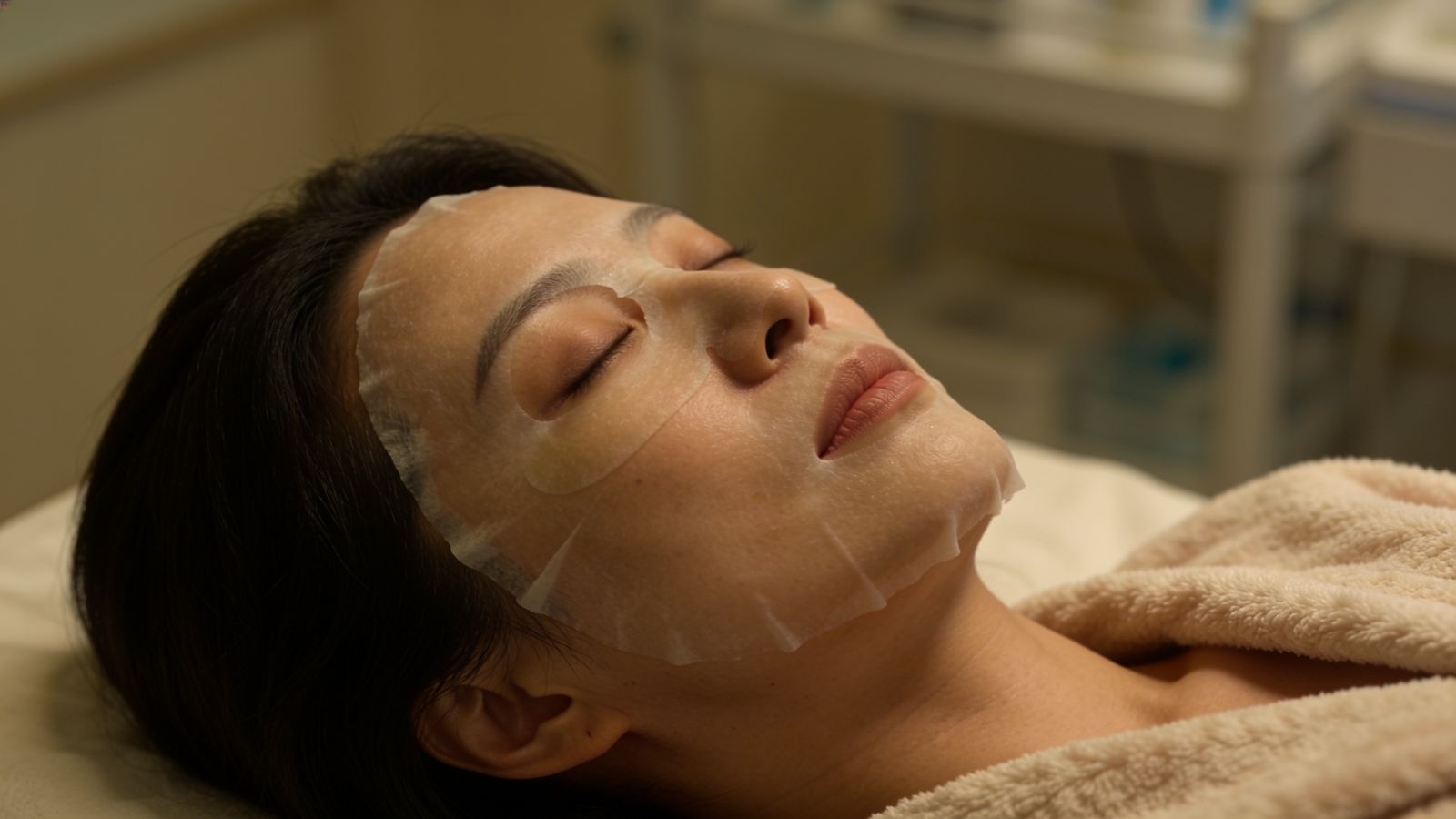
How does each one work?
Sofwave uses what its maker calls synchronous ultrasound parallel beam technology. Seven small transducers emit high-intensity, high-frequency ultrasound that is not focused to a point but travels in parallel beams, heating a band of tissue in the mid-dermis at around 1.5 mm. Integrated cooling protects the surface. Its regulatory clearances in the United States include lifting of the brow, lax skin under the chin and on the neck, and facial fine lines. Because its target is the dermis, it is closer in effect to a skin-tightening treatment than to a deep structural lift. Non-focused here means the energy is spread across a band of tissue rather than concentrated into tiny points, which changes how the heat is distributed and how the treatment feels.
Thermage FLX uses monopolar radiofrequency. Current flows from the tip into the tissue and back to a pad on the body, heating the deep dermis and fibrous septa in a broad volume while cryogen spray cools the surface. It has more than two decades of published use and treats the face, eyelids, neck and body.
Ultherapy uses micro-focused ultrasound with visualisation. The transducer focuses energy into tiny points of thermal coagulation at fixed depths of 1.5, 3.0 and 4.5 mm, the deepest reaching the SMAS. A built-in ultrasound image lets the operator see the layers before each line is placed. Which generation of the system is used for your session is confirmed at consultation; see Ultherapy in Singapore.
HIFU is the generic name for high-intensity focused ultrasound. Several platforms exist; at IN Eternity Clinic it is delivered on the CLASSYS Ultraformer MPT, which offers cartridges at a range of depths for the face and body. The principle is the same as Ultherapy: focused points of heat at chosen depths, including the SMAS.
What is Sofwave, and how is it used in Singapore?
Sofwave is the brand name of a device that uses what its maker calls synchronous ultrasound parallel beam technology. Its handpiece has seven small transducers that emit high-intensity, high-frequency ultrasound in parallel beams rather than focusing it to a point. The beams heat a band of tissue in the mid-dermis at around 1.5 mm, while an integrated cooling system protects the surface. The heated band contracts and remodels over the following months, much as with other energy-based tightening.
Because it works at a single dermal depth, Sofwave is closer to a skin-tightening treatment: it is aimed at fine lines, crepiness and mild laxity of the brow, under the chin and on the neck, rather than at the deeper support layer that focused ultrasound reaches. Published data are still limited in size. A prospective study of 15 people treated in two sessions on the brow, under the chin and on the neck reported improvement at three and six months. A randomised split-body trial on the upper inner arms found it comparable to micro-focused ultrasound with visualisation for laxity and crepiness, with similar discomfort and a shorter treatment time. Studies on acne scars have also begun to appear.
| Feature | Sofwave (as described by published studies and the maker) |
|---|---|
| Energy | High-intensity, high-frequency, non-focused parallel ultrasound beams |
| Target | Mid-dermis, about 1.5 mm |
| Surface | Actively cooled |
| Typical areas | Brow, face, under the chin, neck |
| Sessions in studies | One or two, with follow-up at three and six months |
| Recovery | Redness and mild swelling for hours; most return to normal activities the same day |
Sofwave is marketed by some clinics in Singapore. If you are considering it, the same checks apply as for any energy device: that the device is registered with the Health Sciences Authority, that a doctor assesses whether skin laxity is your main problem, and that you know who will review you afterwards. How to check a clinic and its doctor is set out in how to check an aesthetic clinic licence in Singapore.
“I do not choose between Thermage, Ultherapy or HIFU by reputation. I choose by which layer of your face has changed.”
Sofwave vs Thermage vs Ultherapy vs HIFU
| Technology | Energy and pattern | Main layer |
|---|---|---|
| Sofwave | Parallel, non-focused ultrasound beams | Mid-dermis, about 1.5 mm |
| Thermage FLX | Monopolar radiofrequency, volumetric heating | Deep dermis and septa |
| Ultherapy | Micro-focused ultrasound with imaging | 1.5, 3.0 and 4.5 mm, including SMAS |
| HIFU (Ultraformer MPT) | Focused ultrasound points | Selectable depths, including SMAS |
The table describes where energy is aimed, not which is better. In real plans these technologies are often combined, for example focused ultrasound for the deeper support layer and radiofrequency for the skin above it.

What does the research say?
Micro-focused ultrasound has a substantial evidence base, including prospective studies showing measurable tightening of facial and neck skin. Monopolar radiofrequency has been studied since the early 2000s for periorbital and facial laxity. When the two were compared directly in a randomised, evaluator-blind split-face trial, both improved face and upper neck laxity over six months, with no statistically significant difference between sides in standardised laxity scores, patient satisfaction or adverse events.
Sofwave is newer and its published data are smaller. A prospective study of 15 people treated on the brow, under the chin and on the neck reported improvement in all treated areas at three and six months. A randomised split-body trial on the upper inner arms found parallel-beam ultrasound comparable to micro-focused ultrasound for laxity and crepiness, with similar pain and a shorter treatment time. These are encouraging, but the studies are small, and longer-term comparative data on the face are still limited.
The broad message from the evidence is that these technologies produce modest, gradual improvement in mild to moderate laxity. Differences between them are smaller than the differences between well-chosen and poorly chosen candidates.
Which suits which face?
Crepey, thinning skin with early laxity tends to respond to treatments that heat the dermis, such as radiofrequency or dermal-depth ultrasound. Early jowling and a softening jawline where the deeper support layer has started to descend may need focused ultrasound reaching the SMAS, often combined with RF for the skin. Heavy lower-face fullness may need fat or contour work rather than tightening alone. Hollowing of the temples, cheeks or under-eyes is volume loss, which no tightening device replaces.
Comfort and recovery can also guide the choice. All four are generally done without numbing injections and most people return to normal activities the same day, but the sensation differs: focused ultrasound is felt as brief deep prickles over bone, radiofrequency as building heat, and parallel-beam ultrasound as short bursts of heat with cooling. Pain relief options are discussed beforehand.
The neck and brow deserve separate thought. Neck skin is thinner and more prone to crepiness, and much of what people dislike there is skin quality rather than descent, which favours dermal heating. A heavy brow may reflect descent of deeper tissue, which favours deeper energy, or a strong frowning habit, which calls for a different solution entirely. Assessing each zone separately avoids treating the whole face as one problem.
How are lifting plans chosen at IN Eternity Clinic?
The clinic offers Thermage FLX, Ultherapy and HIFU on the Ultraformer MPT, together with Dr Sin Yong’s VF Lift – Vertical Facelift on CLASSYS Volnewmer monopolar radiofrequency, which plans passes along vertical vectors against the direction each face has descended.
At assessment, Dr Sin Yong looks at the face at rest and in movement, from the front and in profile, and decides which layers are responsible for the change you have noticed. The recommendation may be one device, a combination in sequence, or something other than an energy device altogether, such as volume restoration or a skin booster. He will explain which option he recommends and why.
If you were looking for Sofwave: options at IN Eternity Clinic by concern
People who ask about Sofwave are usually looking for one of a few results, and each has an equivalent at the clinic that targets the same layer or problem.
| What people want from Sofwave | Layer involved | Option at IN Eternity Clinic |
|---|---|---|
| Tighter, less crepey skin on the face and neck | Dermis | Thermage FLX or VF Lift – Vertical Facelift (radiofrequency) |
| A firmer jawline and under-chin | Dermis and SMAS | Ultherapy or HIFU (focused ultrasound) |
| A slightly lifted brow | SMAS and dermis | Ultherapy or HIFU; habit-driven heaviness is assessed separately |
| Fine lines and texture | Epidermis and upper dermis | Fractional laser or skin boosters, chosen at assessment |
| Crepey eyelid skin | Thin eyelid dermis | Thermage FLX with the eye tip |
| A treatment with little downtime | Any | Most of the above allow a return to normal activities the same day |
The comparison is about the layer, not the label. Parallel-beam ultrasound at 1.5 mm and radiofrequency both act on the dermis; focused ultrasound reaches deeper. Which matters more in your face decides the plan. The trade-offs between Thermage, Ultherapy and HIFU are set out in Thermage vs HIFU vs Ultherapy, and what comfort to expect with focused ultrasound in is HIFU painful?.
What Dr Sin Yong looks for
- Which layer has changed. Crepey skin, descent of the support layer, fat and volume loss each need a different tool.
- Each zone separately. Brow, cheeks, jawline, under-chin, neck and eyelids are assessed one by one.
- Skin thickness. Thin skin and thin faces change the choice of device, depth and energy.
- What you have had before. Previous energy treatments, fillers or threads change timing and choice.
- Your recovery window. Events and travel are planned around, even with short downtime.
General clinical observations used at consultation; they describe what is checked, not any individual result.
When facial laxity needs a medical check first
Most gradual laxity is ageing. These changes are assessed medically before any tightening treatment.
- Sudden one-sided facial drooping, especially with speech or limb weakness: call 995.
- A growing lump in the neck or in front of the ear.
- Rapid, unexplained weight loss.
- A drooping eyelid that covers the pupil or worsens through the day.
These are investigated first; cosmetic treatment can follow once the cause is clear.
What happens after treatment?
Mild redness, swelling and tenderness are common for hours to a few days. Focused ultrasound can leave the jawline tender to touch for a little longer, and temporary numbness or small bruises are uncommon. A slight firmness may be felt early, but the main change builds over two to six months as collagen remodels. Photographs in standard positions are taken at assessment and compared at review, which is the fairest way to judge the result. Many people consider maintenance about once a year, depending on age and skin quality.
If fillers or anti-wrinkle injections are also planned, the order is agreed in advance. Energy treatments are often done first, with injectables placed afterwards or at a separate visit, so that heat does not act on fresh product and so that each change can be judged on its own.
Side effects of skin-tightening treatments, including Sofwave
Thermage, Ultherapy, HIFU and Sofwave all work by heating tissue, so they share a family of side effects. Most are mild and short-lived; the less common ones usually relate to energy that was too high or placed at the wrong depth.
Common and expected
- Redness and mild swelling for hours to a day
- Tenderness to touch, especially along the jaw after focused ultrasound, for days to a couple of weeks
- A tight, tingling or warm feeling in treated areas
Uncommon or rare
- Bruising, or raised lines or welts after focused ultrasound
- Blisters or small superficial burns, usually from too much energy in one spot
- Temporary numbness or weakness of a small nerve branch, usually recovering over weeks
- A slightly hollow look in lean faces when fat-rich layers are heated
When to contact the clinic the same day
- A blister, or a mark that is getting worse rather than fading
- Weakness of the smile or lip movement
- Increasing pain or swelling after the first days
Pregnancy, a pacemaker or other implanted electronic device near the area, and active skin infection are reasons to defer energy treatment. How the clinic chooses between these tools is set out under skin tightening in Singapore, the evidence for radiofrequency against a newer device in Oligio vs Thermage, and the deeper-depth option under HIFU in Singapore. Loose skin and its causes are explained on skin laxity.
Common myths, answered
- Myth: The deepest device is always the strongest.
Fact: Depth decides which layer is treated, not how good the result is. Crepey skin needs dermal heating; a descended support layer needs deeper energy. - Myth: Newer technology makes older devices obsolete.
Fact: Newer devices add options. Older platforms with long published records remain widely used, and head-to-head data often show similar outcomes. - Myth: One session lifts like surgery.
Fact: Energy-based lifting gives modest, gradual improvement in mild to moderate laxity. Marked laxity may need a surgical opinion. - Myth: These devices also restore volume.
Fact: None replaces lost volume. Hollowing is a separate problem with separate solutions.
Frequently asked questions
Is Ultherapy stronger than HIFU?
Not as a rule. Ultherapy and HIFU work on the same principle: focused points of heat at chosen depths, including the SMAS. Ultherapy adds real-time imaging so the layers can be seen before each line, while the Ultraformer MPT used for HIFU here offers cartridges at a range of depths. Results depend more on choosing the right candidate and depths than on which device is used.
HIFU vs Thermage: which suits me?
It depends on which layer has changed. HIFU focuses ultrasound into points down to the SMAS, which suits early jowling and a softening jawline. Thermage FLX heats the deep dermis broadly with radiofrequency, which suits crepey, thinning skin with early laxity. Many faces show both, so the two are often combined, and the choice is made at assessment.
Which suits the neck: Thermage, Ultherapy or HIFU?
Neck skin is thinner and more prone to crepiness, and much of what people dislike there is skin quality rather than descent, which favours treatments that heat the dermis, such as radiofrequency. Where the jawline and under-chin have also loosened, focused ultrasound may be added. Each zone is assessed separately rather than treating the face and neck as one problem.
What is the difference between Sofwave and Ultherapy?
Sofwave sends non-focused, parallel ultrasound beams into the mid-dermis at about 1.5 mm. Ultherapy focuses ultrasound into tiny points at set depths, including 4.5 mm where the SMAS support layer lies, and uses imaging to guide placement. They overlap in the dermis but differ in depth and pattern.
Is Thermage or Ultherapy better?
A randomised split-face trial found both improved face and neck laxity similarly, with no significant difference in standardised scores. Thermage heats the deep dermis broadly; Ultherapy reaches deeper focused points. Which suits you depends on which layers have changed, and many plans combine them.
Is HIFU the same as Ultherapy?
Ultherapy is one brand of micro-focused ultrasound, distinguished by real-time imaging. HIFU is the general term, covering several platforms such as the Ultraformer MPT. All place focused points of heat at chosen depths; the platforms differ in cartridges, imaging and settings.
Which lifting treatment hurts least?
Sensation differs between them, and none is entirely free of discomfort. Focused ultrasound is felt as deep prickles over bone, radiofrequency as building heat, and parallel beams as short hot bursts with cooling. Energy is adjusted to tolerance, and pain relief options are discussed before treatment.
How long do lifting results last?
It varies with age, skin quality, sun exposure, weight changes and lifestyle. Collagen builds over two to six months, and the face continues to age afterwards. Many people consider maintenance about once a year, with timing reviewed at follow-up against your baseline photographs.
How much do Thermage, Ultherapy or HIFU cost in Singapore?
Cost depends on the technology, the areas treated, the number of lines or pulses, single-use tips or cartridges, and whether treatments are combined. At IN Eternity Clinic, Dr Sin Yong gives a written quote after assessment rather than a fixed figure in advance.
Is Sofwave available in Singapore?
Sofwave is marketed by some clinics in Singapore. If you are considering it, check that the device is registered with the Health Sciences Authority, that a doctor assesses you first, and who will review you afterwards.
How many Sofwave sessions are needed?
Published studies have used one or two sessions, with results assessed at three and six months. As with other energy-based tightening, change builds gradually as collagen remodels, and maintenance is usually discussed.
What can I have at IN Eternity Clinic instead of Sofwave?
For crepey, loose skin, Thermage FLX or VF Lift – Vertical Facelift on Volnewmer radiofrequency; for a firmer jawline, under-chin or brow, Ultherapy or HIFU on the Ultraformer MPT. The choice depends on which layer has changed, decided at assessment.
Is Sofwave safe for Asian skin?
Sofwave delivers ultrasound to the mid-dermis while cooling the surface, so the pigment risk is lower than with surface lasers, and studies report mostly mild, temporary redness and swelling. As with Thermage and Ultherapy, energy and technique still matter in skin types III to V.
Which skin-tightening treatment has the least downtime?
All of these usually allow a return to normal activities the same day. Thermage and Sofwave tend to leave redness for hours; focused ultrasound can leave the jawline tender for a few days to a couple of weeks. Downtime differs more with energy, depth and the areas treated than with the brand.
Can Thermage and Ultherapy be done together?
Yes, when both the skin and the deeper support layer have changed. Ultherapy or HIFU reaches the SMAS, while Thermage heats the dermis to tighten crepey skin. They can be done in one plan or at separate visits. The order and spacing, and any injectables, are agreed in advance.
Can I wear make-up after skin-tightening treatment?
Usually yes, the same day, because none of these treatments breaks the skin surface. Once any redness has settled, make-up can be applied gently. If a blister, raised line or tender spot appears, keep make-up off it and contact the clinic so it can be checked.
Book an assessment
IN Eternity Clinic, 9 Scotts Road, #12-01 Pacific Plaza, Singapore 228210. By appointment with Medical Director Dr Sin Yong. Monday to Saturday, 11am to 8pm. WhatsApp or call +65 8815 3008.
International KOL — CLASSYS · HIRONIC · DEKA · ALMA · FOTONA · LUTRONIC
References
- Gold MH, Biron J. Efficacy and safety of high-intensity, high-frequency, non-focused ultrasound parallel beams for facial skin laxity. J Cosmet Dermatol 2024;23(1):117-123. doi:10.1111/jocd.16098
- Alam M, White LE, Martin N, et al. Ultrasound tightening of facial and neck skin: a rater-blinded prospective cohort study. J Am Acad Dermatol 2010;62(2):262-269. doi:10.1016/j.jaad.2009.06.039
- Alhaddad M, Wu DC, Bolton J, et al. A Randomized, Split-Face, Evaluator-Blind Clinical Trial Comparing Monopolar Radiofrequency Versus Microfocused Ultrasound With Visualization for Lifting and Tightening of the Face and Upper Neck. Dermatol Surg 2019;45(1):131-139. doi:10.1097/DSS.0000000000001653
- Loyal J, Hartman N, Goldman MP. A Single-Center, Blinded, Split-Body, Randomized Clinical Trial of High-Intensity, Parallel Ultrasound Beams Versus Microfocused Ultrasound With Visualization for the Treatment of Upper Inner Arm Skin Laxity. Dermatol Surg 2026;52(4):349-354. doi:10.1097/DSS.0000000000004881
- Singapore Medical Council. Guidelines on Aesthetic Practices for Doctors (2016 edition). healthprofessionals.gov.sg/smc
- Fabi SG. Noninvasive skin tightening: focus on new ultrasound techniques. Clin Cosmet Investig Dermatol 2015;8:47-52. doi:10.2147/CCID.S69118
- Ayatollahi A, Gholami J, Saberi M, et al. Systematic review and meta-analysis of safety and efficacy of high-intensity focused ultrasound (HIFU) for face and neck rejuvenation. Lasers Med Sci 2020;35(5):1007-1024. doi:10.1007/s10103-020-02957-9
These sources describe mechanisms and general evidence. They are not a promise of any individual result; suitability is decided at an in-person assessment.