
Oily Scalp and Hair Loss: The Link and What Helps
In Singapore’s heat, an oily scalp and thinning hair often appear together. Dr Sin Yong at IN Eternity Clinic on Orchard Road explains which part is cause, which is coincidence, and what to treat first.
WhatsApp to Enquire →Key facts ↓An oily scalp does not on its own cause hair loss, but the two are linked. The same androgens that drive pattern hair loss also enlarge oil glands, and excess sebum feeds Malassezia yeast, which can trigger seborrhoeic dermatitis and more shedding. Treat the scalp first, then check for pattern thinning. See hair loss treatment in Singapore.
On this page
- Sebum: the oily film made by sebaceous glands attached to each hair follicle; the scalp has one of the highest densities of these glands on the body.
- Androgens: hormones such as dihydrotestosterone (DHT) enlarge sebaceous glands and drive follicle shrinkage in pattern hair loss, so oiliness and thinning can share a cause.
- Malassezia: a yeast that lives on normal skin and feeds on sebum; in susceptible people its breakdown products irritate the scalp.
- Seborrhoeic dermatitis: greasy yellowish scale, redness and itch on the scalp, hairline, eyebrows and beside the nose; dandruff is its mildest form.
- Effect on hair: inflammation and scratching can increase shedding and break hairs, but seborrhoeic dermatitis does not scar the scalp.
- Climate: heat, humidity, sweat and caps or helmets make a scalp feel greasier sooner in Singapore, without necessarily changing how much sebum is made.
- Washing: hairs that fall out in the shower were already in the resting phase; regular washing does not cause hair loss.
- Order of treatment: calm the scalp first, then judge the hair, because inflammation can hide or exaggerate the true pattern of thinning.
- In a small comparative study in men with androgenetic hair loss, long-term ketoconazole shampoo improved hair density and the proportion of growing follicles almost as much as a minoxidil regimen and lowered scalp sebum; the authors called for larger controlled trials (Dermatology 1998)
Can an oily scalp cause hair loss?
Many people notice that their scalp is oily by the afternoon and that their hair is thinning, and reasonably assume one causes the other. The relationship is less direct. Sebum on a healthy scalp does not damage follicles or block them so that hair cannot grow. What the two share is a common background, and in some people a scalp condition that connects them.
The background is hormonal. Androgens such as dihydrotestosterone act on sebaceous glands, making them larger and more active, and they act on genetically sensitive follicles, shrinking them a little with each growth cycle. That is why men with pattern hair loss often also have oily skin, and why oiliness and thinning can begin around the same age. In this situation the oil is a marker of the same hormone sensitivity, not the reason for the hair loss.
The link that is more than coincidence is inflammation. When sebum is plentiful, Malassezia yeast thrives. In susceptible people, the fatty acids it releases from sebum irritate the scalp and cause seborrhoeic dermatitis. An inflamed, itchy scalp sheds more, and scratching breaks hairs, so the hair can look thinner than the follicles alone would explain.
Is it seborrhoeic dermatitis, dandruff or just oil?
An oily scalp on its own makes hair look flat or greasy within a day of washing, without redness, itch or flakes. It is a nuisance rather than a disease. Dandruff gives fine white or greyish flakes with mild itch and little redness. Seborrhoeic dermatitis goes further: greasy yellowish scale, red patches and itch, sometimes along the hairline, behind the ears, in the eyebrows and beside the nose, often worse with stress, poor sleep and hot weather.
Other conditions can look similar and need different treatment. Scalp psoriasis has thicker, silvery, sharply outlined plaques. Folliculitis causes tender pustules around hairs. Contact dermatitis from hair dye or a new product causes itch and redness after the change. Scarring alopecias, such as lichen planopilaris, can begin with redness and scale around follicles and lead to shiny patches where hair does not regrow; these are referred promptly for dermatology care.
| What you see | Most likely | What it needs |
|---|---|---|
| Greasy within a day, no itch | Oily scalp | Suitable shampoo and routine |
| Fine flakes, mild itch | Dandruff | Anti-dandruff shampoo |
| Yellow greasy scale, redness | Seborrhoeic dermatitis | Antifungal shampoo, anti-inflammatory care |
| Thick silvery plaques | Psoriasis | Medical treatment for psoriasis |
| Shiny patches, no hair openings | Possible scarring alopecia | Prompt dermatology assessment |
“An oily scalp and thinning hair often share a cause but need separate answers. I settle the scalp first, then I can see the follicles honestly.”
How do you tell scalp-related shedding from pattern hair loss?
This is the question that matters most, because the treatments differ. Shedding from an inflamed scalp is diffuse and improves once the scalp settles. Pattern hair loss is gradual and follows a pattern: in men, recession at the temples and thinning at the crown; in women, a widening central parting with the front hairline kept. It continues whether or not the scalp is oily.
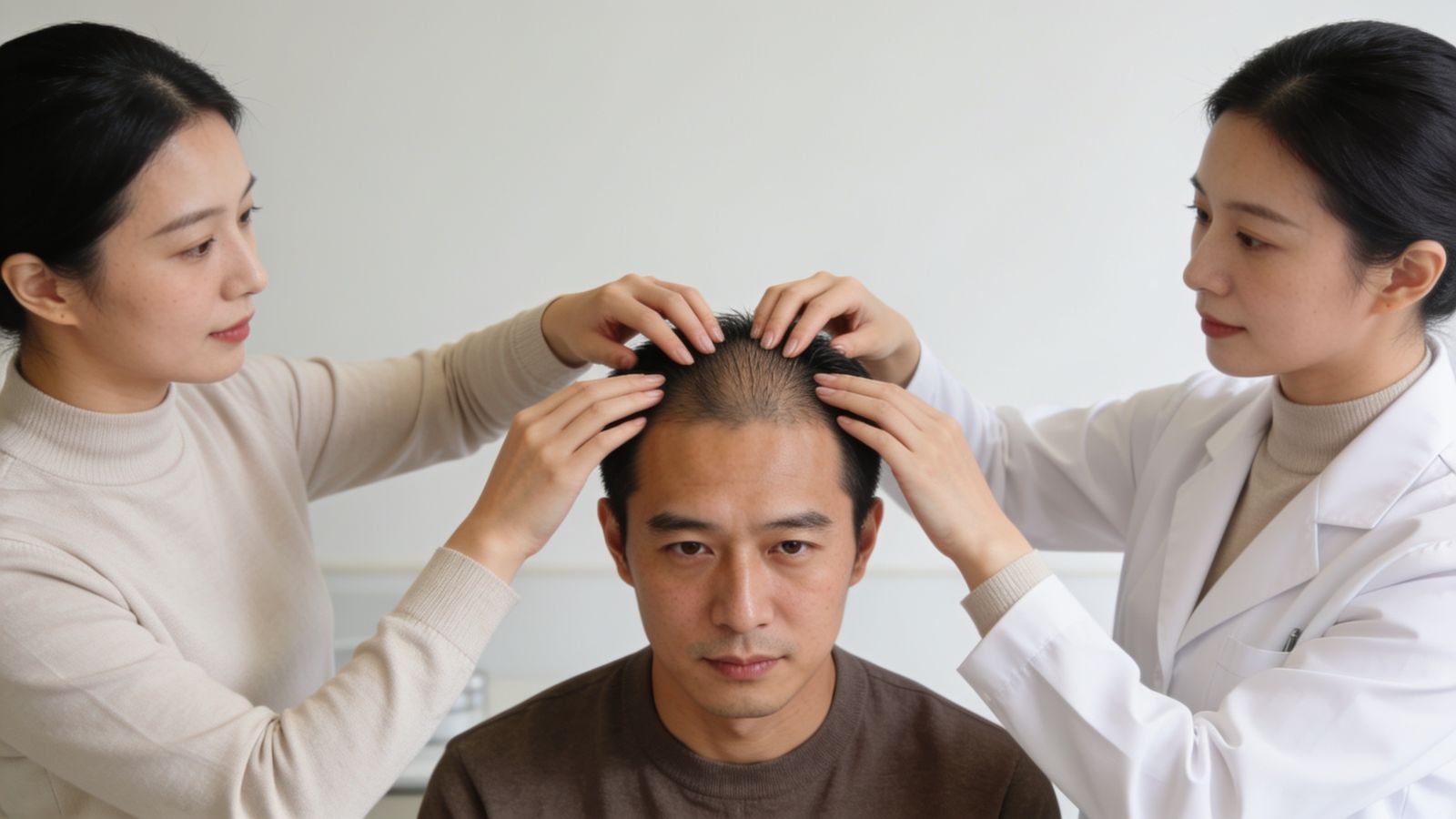
Trichoscopy, a magnified examination of the scalp, separates them. In pattern loss the hairs vary in thickness, with many fine, miniaturised hairs among normal ones, especially at the front and top compared with the back. In seborrhoeic dermatitis the scalp shows greasy scale and redness, while the hair shafts are of more even thickness. Many people have both. Both are treated, but in an order that makes it possible to see what each treatment is doing.
Other causes of diffuse shedding, such as low iron, thyroid problems, recent illness, crash dieting or childbirth, are checked through the history and, where relevant, blood tests. See when to see a hair loss doctor for the warning signs and postpartum hair loss for shedding after pregnancy.
What actually helps an oily scalp with hair loss?
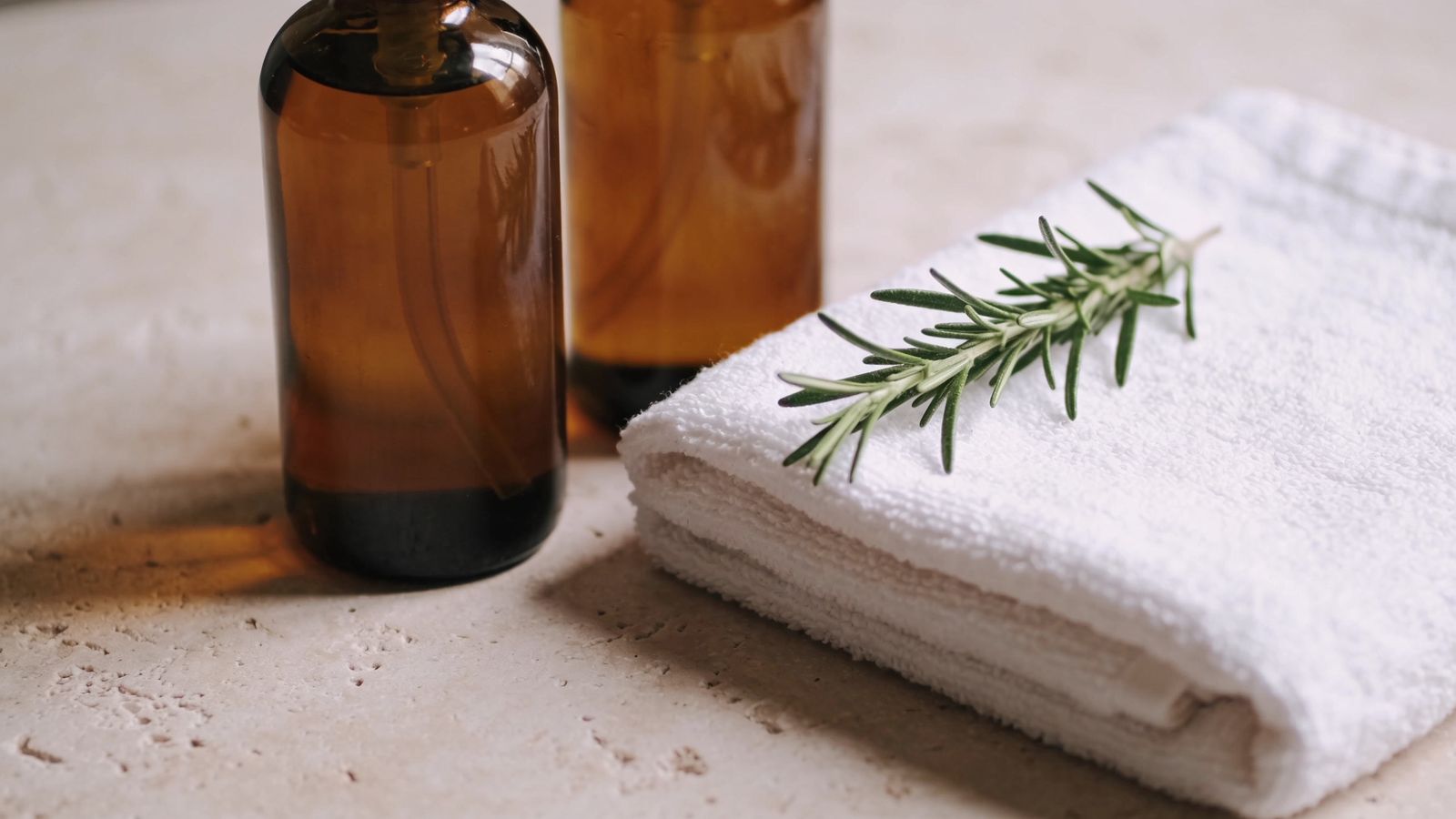
Wash as often as your scalp needs. In Singapore that is daily for many people, and again after exercise. Frequent washing removes sebum and sweat before yeast and odour build up, and it does not increase hair loss. Massage the shampoo into the scalp itself, rinse well, and keep conditioner on the lengths.
Use an active shampoo for scale and itch. Shampoos containing ketoconazole, zinc pyrithione, selenium sulfide or ciclopirox reduce Malassezia. They work well when left on the scalp for a few minutes before rinsing, two or three times a week, alternating with a gentle shampoo. A small study found that long-term ketoconazole shampoo was associated with improved hair density in men with pattern loss, but the evidence is limited, and it is an addition to proper treatment rather than a replacement for it.
Settle the inflammation. Where seborrhoeic dermatitis is active, a short course of a prescription anti-inflammatory scalp lotion may be used to bring it under control, followed by maintenance with an antifungal shampoo. Heavy oils, thick pomades and leave-in products on the scalp tend to make it worse.
Rethink products and habits. Dry shampoo, heavy styling waxes and sweat trapped under a cap or helmet all add to the load on the scalp. Rinse after exercise rather than leaving sweat to dry, let hair dry fully rather than tying it up wet, and wash caps and pillowcases regularly. None of this treats hair loss, but together these steps make flares less frequent and an antifungal shampoo more effective.
Look at the wider picture. Poor sleep, stress and a diet high in sugar and fat are often reported to worsen oiliness and flares. The evidence is mixed, but they are reasonable to address. In a woman, an oily scalp with acne, irregular periods or excess body hair prompts a check for hormonal causes such as polycystic ovary syndrome.
Once the scalp is calm: treating the thinning
If pattern hair loss is confirmed, it is treated on its own terms. The evidence-based guideline for androgenetic alopecia places prescription medicines at the centre: an oral medicine that lowers DHT for suitable men, and topical or low-dose oral medicines that lengthen the growth phase in men and women. These are prescription medicines with side effects and suitability questions to discuss, and the anti-hair-loss medications page explains the options.
Some topical hair solutions contain alcohol or propylene glycol and can sting an already reactive scalp. A foam or a different base may suit better, which is one more reason the scalp is settled first. At IN Eternity Clinic, the H2LT laser is added for follicles that are thinning but still present, with daily scalp care at home. An itchy, flaky scalp can feel more reactive during laser sessions, so it is calmed before a course begins. The full programme is on the hair restoration page.
Progress is judged at intervals of three months or more with standard photographs, because the scalp improves within weeks but hair density changes slowly. A calmer scalp with less itch and scale is usually the first sign the plan is working; reduced shedding and, later, thicker hair follow.
How the assessment works
Dr Sin Yong examines the scalp and hair with trichoscopy, asks about your washing routine, products, flares and family history, and looks for the features of pattern loss and of other scalp conditions. Where the history suggests it, blood tests are arranged. You leave with a clear answer to two questions: what is happening on the scalp, and what is happening in the follicles.
Many people need only a better routine and an antifungal shampoo. Others need treatment for both the scalp and pattern thinning, planned in sequence. If anything suggests a scarring alopecia, you are referred promptly for dermatology care, because time matters there. More on hair loss treatment in Singapore.
Side effects of treatments for an oily scalp and hair loss
Most scalp and hair treatments are low-risk, but each has side effects worth knowing before you start, so that an expected reaction is not mistaken for failure, and a real problem is not ignored.
Common and expected
- Dryness, tightness or mild stinging from medicated antifungal shampoos, especially if left on too long or used daily
- A temporary increase in shedding in the first weeks of some hair growth treatments, as resting hairs are pushed out by new growth
- Warmth or mild redness of the scalp for a short time after H2LT laser sessions
Uncommon or rare
- Contact dermatitis, an itchy red rash, from a shampoo ingredient, a hair solution or its alcohol or propylene glycol base
- Unwanted fine hair on the forehead or cheeks with some topical growth treatments
- Side effects of oral prescription medicines, which differ by medicine and are discussed before anything is prescribed, together with what to monitor
- Tenderness, small scabs or, rarely, infection after scalp procedures such as Regenera Activa
When to contact the clinic the same day
- A spreading, weeping or blistering rash, or swelling of the face
- Painful pustules, or a hot, tender area of scalp
- Sudden patchy hair loss, or shiny bald patches appearing
- Dizziness, palpitations, ankle swelling or low mood while taking an oral hair medicine
Because scalp problems and pattern thinning are treated in sequence, a reaction to one treatment is easier to identify. The full range of options is under hair loss treatment in Singapore, and the common patterns of thinning are set out in thinning hair by pattern.
Common myths, answered
- Myth: Washing your hair every day makes it fall out.
Fact: Hairs shed during washing were already resting. Daily washing suits many oily scalps in Singapore. - Myth: Oil clogs follicles and stops hair growing.
Fact: Sebum flows out along the hair shaft. On a healthy scalp it does not block growth. - Myth: Flakes mean a dry scalp.
Fact: Most flaking on an oily scalp is dandruff or seborrhoeic dermatitis, which is linked to yeast and oil, not dryness. - Myth: Scalp detox treatments reverse pattern hair loss.
Fact: Cleansing helps scalp comfort. Pattern loss is driven by hormone-sensitive follicles and needs its own treatment.
Frequently asked questions
Does an oily scalp cause hair loss?
Not directly. Sebum on a healthy scalp does not damage follicles. But oiliness and pattern hair loss share a hormonal driver, and excess oil can feed the yeast linked to seborrhoeic dermatitis, which increases shedding through inflammation and scratching. The useful step is to find out whether you have a scalp problem, pattern thinning, or both.
What is the treatment for oily scalp hair loss?
Treatment starts with the cause: seborrhoeic dermatitis, pattern hair loss or both. A medicated shampoo and anti-inflammatory care control the oil and flaking, while pattern hair loss is treated in its own right, with options such as topical medicine, scalp laser and microneedling planned after a doctor examines the scalp.
How often should I wash an oily scalp?
As often as needed to keep it comfortable, which for many people in Singapore is daily, and after exercise. Regular washing removes sebum and sweat and does not cause hair loss. Use a gentle shampoo most days and an antifungal shampoo two or three times a week if you have flakes or itch.
Will hair grow back after seborrhoeic dermatitis is treated?
Usually, if the shedding was caused by the inflammation. Seborrhoeic dermatitis does not scar the scalp, so the follicles remain and shedding settles once it is controlled. If thinning continues after the scalp is calm, pattern hair loss or another cause is likely and is assessed separately.
Which shampoo suits an oily scalp with hair loss?
For flakes and itch, shampoos with ketoconazole, zinc pyrithione, selenium sulfide or ciclopirox reduce the yeast involved; leave them on for a few minutes before rinsing. For oil alone, a gentle daily or clarifying shampoo is enough. No shampoo treats pattern hair loss on its own; it supports the scalp while the hair loss is treated medically.
Can stress make my scalp oilier and my hair fall?
Stress is commonly linked with seborrhoeic dermatitis flares, and severe physical or emotional stress can trigger a shedding phase called telogen effluvium a few months later. Both usually improve once the trigger passes and the scalp is treated. Persistent thinning still needs assessment, because stress may coincide with pattern loss rather than cause it.
How much does treatment for oily scalp and hair loss cost?
It depends on what is found. Some people need only a scalp assessment and a change of shampoo; others need treatment for seborrhoeic dermatitis, blood tests and a longer plan for pattern hair loss that may include laser sessions. You receive a written plan after assessment. The consultation fee is waived with any medical treatment.
Is oily scalp hair loss more common in men?
Men tend to produce more sebum and have pattern hair loss more often, so the combination is common in men. Women are affected too, particularly with hormonal conditions such as polycystic ovary syndrome, where oily skin, acne and thinning can occur together. Both are assessed in the same way, with trichoscopy and blood tests where indicated.
Does washing my hair every day make hair loss worse?
No. Hairs that come out in the shower were already in their shedding phase and would have fallen anyway. For an oily scalp in Singapore, daily washing removes sebum and sweat before yeast multiplies, and it does not damage healthy follicles.
Can dandruff cause hair loss?
Mild dandruff does not. Seborrhoeic dermatitis, the more inflamed form, can increase shedding for a while, and scratching adds to it. Because it does not scar the scalp, hair usually returns once the inflammation is controlled.
Does dry shampoo cause hair loss?
Not directly, but it adds powder and oil to a scalp that is already oily and can make itching and flaking worse. Used occasionally and washed out properly, it is not a cause of thinning.
When should I see a doctor about an oily scalp and thinning hair?
If the parting is widening or the hairline receding, if shedding has lasted more than about three months, if redness and scale do not settle with an anti-dandruff shampoo, or if there are bald patches, pustules or pain. A scalp examination separates the causes.
Does hot weather in Singapore make an oily scalp worse?
Heat and humidity do not necessarily make the glands produce more sebum, but sweat mixes with it, spreads it along the hair and makes the scalp feel greasy sooner. Warm, moist conditions also suit Malassezia yeast. Washing after exercise, drying hair fully and avoiding heavy scalp products help, especially for people who wear caps or helmets.
How long does it take for scalp treatment to reduce shedding?
Itch, scale and redness often improve within two to four weeks of starting an antifungal shampoo and anti-inflammatory care. Shedding usually takes longer to settle, often two to three months, because hairs already in the resting phase still fall. Changes in density are judged over three to six months with standard photographs.
Does the H2LT laser help an oily scalp?
It is not an oil treatment. The H2LT laser is used for follicles that are thinning but still present in pattern hair loss. An inflamed, flaky scalp is usually calmed first, because it can feel more reactive during sessions and makes it harder to judge the hair. Once the scalp is settled, laser may be added if thinning is confirmed.
Can hair growth treatments make my scalp itchy or flaky?
Some topical solutions contain alcohol or propylene glycol, which can sting or dry an already reactive scalp and cause flaking that looks like dandruff. A foam, a different base or a change in how it is applied often helps. Itch that spreads, weeps or blisters suggests contact dermatitis and should be reviewed.
Book an assessment
IN Eternity Clinic, 9 Scotts Road, #12-01 Pacific Plaza, Singapore 228210. By appointment with Medical Director Dr Sin Yong. Monday to Saturday, 11am to 8pm. WhatsApp or call +65 8815 3008.
International KOL — CLASSYS · HIRONIC · DEKA · ALMA · FOTONA · LUTRONIC
References
- Borda LJ, Wikramanayake TC. Seborrheic Dermatitis and Dandruff: A Comprehensive Review. J Clin Investig Dermatol 2015;3(2):. doi:10.13188/2373-1044.1000019
- Piérard-Franchimont C, De Doncker P, Cauwenbergh G, Piérard GE. Ketoconazole shampoo: effect of long-term use in androgenic alopecia. Dermatology 1998;196(4):474-477. doi:10.1159/000017954
- Kanti V, Messenger A, Dobos G, et al. Evidence-based (S3) guideline for the treatment of androgenetic alopecia in women and in men - short version. J Eur Acad Dermatol Venereol 2018;32(1):11-22. doi:10.1111/jdv.14624
- Health Sciences Authority, Singapore. Infosearch — registered medical devices and health products. hsa.gov.sg
- Singapore Medical Council. Guidelines on Aesthetic Practices for Doctors (2016 edition). healthprofessionals.gov.sg/smc
These sources describe mechanisms and general evidence. They are not a promise of any individual result; suitability is decided at an in-person assessment.